











“What upsets Chevron also upsets Trump”: Why Israel is backing away from a shake-up of the gas market
The Dayan Committee is expected to reject calls to force Chevron to sell assets in Tamar or Leviathan, prioritizing regulatory stability as Israel seeks new energy investors.
Is anyone at American energy giant Chevron nervously awaiting the publication of the inter-ministerial committee report examining Israel’s natural gas policy, headed by Energy Ministry Director General Yossi Dayan? If so, there is likely a reassuring message for them.
Calcalist has learned that the Dayan Committee, which began its deliberations roughly two and a half years ago and is expected to submit its final report soon, will avoid recommending changes to Chevron’s status in Israel’s natural gas sector in an effort to preserve regulatory certainty for investors.
As a result, a demand raised by the Ministry of Finance and supported by the Competition Authority during the committee’s discussions, forcing Chevron to sell its stake in either the Tamar or Leviathan reservoirs in order to increase competition in the gas market, is expected to be removed from the agenda and will not appear in the final recommendations.
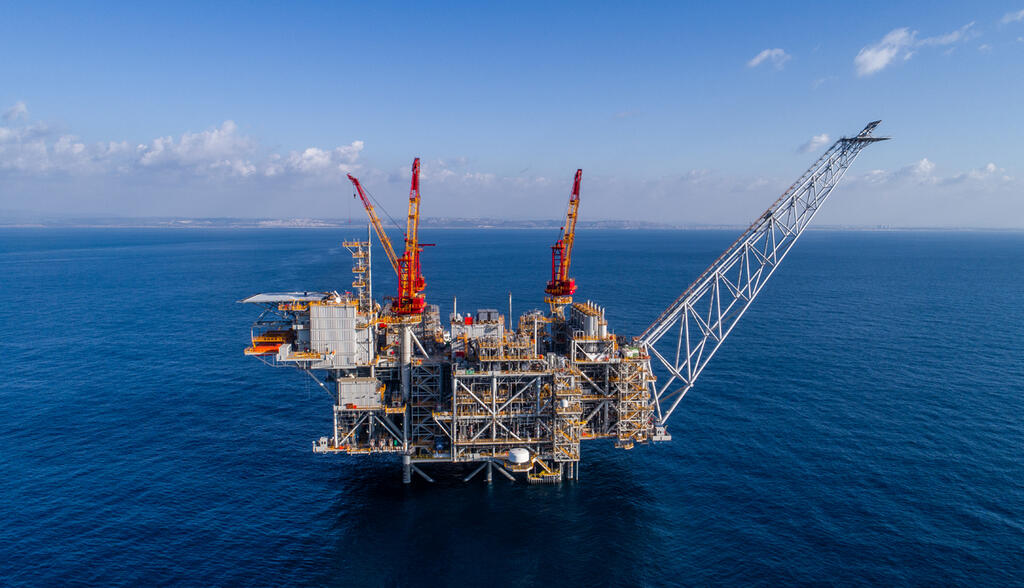
Chevron is the dominant player in Israel’s natural gas market, controlling around 90% of the country’s gas reserves. The company owns a 25% stake in the Tamar reservoir, where it also serves as operator, and operates the Leviathan reservoir, in which it holds a 40% stake. Tamar contains an estimated 300 billion cubic meters (BCM) of natural gas, while Leviathan contains approximately 600 BCM.
The Dayan Committee’s approach reflects an attempt to avoid recommendations that could significantly disrupt the natural gas sector, even in the name of increasing competition. While the market remains highly concentrated, with only a small number of players, the committee appears set to prioritize maintaining a stable regulatory environment that could encourage future investment.
"Regulatory changes would put us in a terrible situation," a senior energy economist familiar with the committee’s work told Calcalist. "These are companies that came here and invested billions of dollars in Israel based on a certain regulatory framework. To come back now and tell them we have decided to change the rules of the game is something that cannot happen. We are not a third-world country."
This consideration is particularly relevant ahead of Israel’s fifth offshore natural gas exploration tender, announced by the Energy Ministry a month ago. Officials believe significant regulatory changes could undermine the willingness of global energy companies to participate in the tender, sending the opposite message from the one the ministry is trying to convey, that Israel remains an attractive market with a stable investment environment.
The debate is taking place against the backdrop of geopolitical instability in the Middle East, a regional war that has lasted nearly three years, and declining expectations that Israel will discover another gas field on the scale of Leviathan. According to Energy Ministry assessments, Israel’s economic waters may still contain hundreds of BCM of undiscovered gas, but likely across multiple smaller reservoirs rather than another giant discovery.
"We are walking on eggshells"
These assessments appear to be strengthening the committee’s preference for regulatory continuity. Without a stable framework, officials fear international energy companies may hesitate to invest the massive amounts of capital required to develop smaller discoveries.
"We will need to be much less draconian if we want to achieve the competition we are seeking in the gas market," a senior analyst familiar with the committee’s work told Calcalist. "We are in a difficult situation and we are walking on eggshells. The fact that the committee will not touch the existing regulatory reality sends an enormously important message to international players."
In recent weeks, the Energy Ministry has pointed to ongoing discussions between U.S. energy giant ExxonMobil and Energean, which produces gas from the Karish reservoir, as a potential sign of growing international interest in Israel’s gas sector.
Officials hope ExxonMobil’s involvement could mark the beginning of a broader trend, with additional global energy companies entering the market and creating competition naturally rather than through regulatory intervention.
The ministry’s preference is to avoid a situation in which Israel achieves short-term gains in competition but damages its long-term ability to attract investment.
A month ago, when Energy Minister Eli Cohen announced the launch of the fifth offshore exploration tender, covering six blocks across 8,600 square kilometers of Israel’s economic waters, Dayan appeared before the Knesset Economy Committee to discuss government policy in the gas sector.
The discussion took place amid concerns from MK Yasmin Sacks Friedman (Yesh Atid) about long-term management of Israel’s gas resources, while the government simultaneously approved expanded gas exports to Egypt and Jordan.
At the time, Dayan said the committee’s final report would be published "within days." Weeks later, the report has yet to be released. A month ago, the Energy Ministry said it expected publication within two weeks.
Promoting the Egyptian gas deal under Trump pressure
When Dayan published the committee’s interim conclusions last April, representatives from the Finance Ministry and Environmental Protection Ministry boycotted the press conference, signaling their opposition to what they viewed as recommendations overly favorable to gas companies and lacking meaningful steps to increase competition.
"Under the current American administration, Chevron will not leave Tamar," a senior official familiar with the committee’s work told Calcalist. "We learned that what upsets Chevron also upsets President Trump, and apparently nobody wants to upset Trump."
These comments relate partly to the massive agreement to export 130 BCM of gas from Leviathan to Egypt’s Blue Ocean Energy. The deal, valued at NIS 112 billion, was celebrated by Prime Minister Benjamin Netanyahu and Energy Minister Cohen as "the largest export deal in the history of the Israeli economy."
However, it later emerged that the agreement was advanced amid significant pressure from the U.S. administration on Israel, partly to benefit Chevron.
The deal was promoted without extensive public debate, during an ongoing regional war, and while the Dayan Committee was still examining Israel’s long-term gas policy.
The committee was established in early 2024 by the Netanyahu government, but the government advanced the export agreement before waiting for its final recommendations.
While the committee’s mandate includes examining how to preserve Israel’s energy security amid expanded gas exports, critics argue that the Egyptian agreement could ultimately weaken that security while strengthening the position of gas producers.
Since the committee was formed, Israel’s energy landscape has also changed dramatically. The ongoing crisis around the Strait of Hormuz, rising electricity demand, and the rapid expansion of artificial intelligence infrastructure have created new challenges.
In recent weeks, the Electricity Authority halted new applications to connect data centers to the electricity grid for 140 days while it reassesses policy. Demand for connections has reached 27,000 megawatts, roughly three times Israel’s average electricity consumption.
Sources familiar with the committee’s discussions said the final report will also address the surge in demand from data centers and question whether the economic benefits justify the enormous energy requirements.
Building the dozens of power plants needed to support such demand could take a decade or longer. Meanwhile, it remains unclear whether the current AI infrastructure boom represents a permanent shift or a temporary wave.
One reason for the rush into data centers is Israel’s relatively cheap electricity prices, supported by access to inexpensive natural gas.
The Dayan Committee is expected to weigh competing interests: preserving gas reserves for Israel’s long-term energy security versus allowing entrepreneurs and global technology companies to benefit from large-scale consumption of domestic energy resources.
During discussions, officials considered whether data center activity should effectively be treated as a form of gas export, given that much of the electricity would ultimately support AI services consumed abroad.
"A situation cannot arise in which the state invests limited resources such as electricity and natural gas to benefit entrepreneurs seeking to maximize profits at the expense of Israeli citizens’ energy security," a source involved in the discussions told Calcalist.
Sources close to the committee said disputes that delayed publication of the final recommendations have largely been resolved and that the report is now being drafted.
However, uncertainty remains over whether the recommendations will be implemented, given the upcoming elections scheduled for October 27 and the possibility that major decisions will be left to the next government.
In June, State Comptroller Matanyahu Englman warned that Israel’s energy independence could be severely compromised within 22 years due to expanded gas exports, delays in implementing long-term policy, and insufficient preparation for future gas imports and storage infrastructure.
Natural gas currently accounts for more than 70% of Israel’s fuel mix.



