








“Younger people are getting cancer more and more. We have to make kinder medicines.”
As AI hype accelerates, oncology’s real progress is happening quietly, driven by data, regulation, and the slow work of making cancer treatment more precise and sustainable
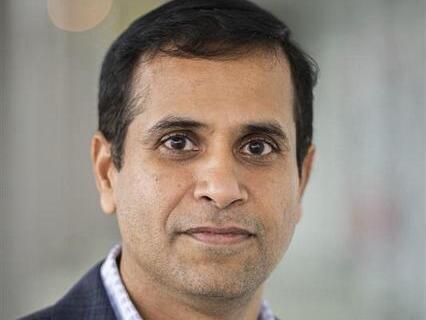
“Younger people are getting cancer more and more,” said Sai Jasti, senior vice president and head of data science and AI at Bayer. “And what that means is people may have to stay on therapies for longer than what we traditionally have been used to.”
That demographic shift is one of several forces shaping how artificial intelligence is being applied in oncology as 2025 draws to a close. While generative AI has captured public attention, executives and clinicians working in cancer research say the more consequential changes are happening in less visible ways, driven by machine learning, deep learning, and large-scale data integration aimed at making cancer treatment more precise and, in some cases, less harmful.
At Bayer, Jasti oversees the use of AI across pharma R&D, from early discovery through clinical development. His core argument is that rising cancer incidence among younger patients raises the bar for drug design. If patients are expected to remain on treatment for years rather than months, toxicity and long-term side effects become central considerations.
“That translates to the fact that we also have to make kinder medicines,” Jasti said. “So that is one of the hypotheses behind our oncology strategy, to go towards precision drug development.”
Precision, in this context, does not mean a sudden leap to bespoke drugs for every patient. Instead, it reflects a gradual shift toward understanding disease biology in finer detail, using large, multimodal datasets that include molecular, cellular, clinical, and real-world evidence. AI systems are then used to detect patterns across those datasets that would be difficult for humans to identify unaided.
That incremental pace is not accidental. For clinicians and AI developers alike, one of the defining realities of oncology is how slowly new technologies move from promise to practice. Ofer Sharon, MD, a physician and CEO of precision oncology company OncoHost, said the adoption curve in medicine remains fundamentally different from what the public associates with consumer AI.

“With medicine, we are still behind,” Sharon said.
Unlike generative AI tools that can be deployed and iterated quickly, clinical AI systems must be validated through long, expensive trials to ensure they do not cause harm. Regulatory pathways were built for static products, not models that evolve as new data is incorporated. As a result, progress in oncology has been shaped less by headline-grabbing applications and more by careful integration of AI into existing clinical frameworks.
The most tangible advances to date, Sharon said, have come from machine learning systems designed to integrate complex biological data, including genomics, proteomics, imaging, and clinical records, to identify patterns that are difficult or impossible for clinicians to detect on their own.
“The data is there,” Sharon said. “AI holds a huge promise in being able to identify patterns that are not visible to the human eye.”
Those capabilities are gradually pushing oncology toward more personalized care, but within tight constraints. Most cancer patients are still treated according to high-level clinical guidelines derived from large cohort trials, a structure that prioritizes consistency over individual variation.
“I'm very, very positive about the progress that we are making, but I think that in most cases, if you look at the way patients are being treated, it's still done the old way,” Sharon said. “Namely, we treat patients as groups, as cohorts, not as individuals.”
Rather than overturning that system, Sharon said the near-term trend is toward increasing its resolution, breaking broad categories into smaller subgroups defined by molecular, clinical, or protein-level characteristics. Biomarkers, he argued, are emerging as the practical bridge between AI insights and routine clinical decision-making.
“If we want to see AI implemented into the clinical day-to-day,” Sharon said, “it needs to be part of the mainstream.”
Regulators are beginning to move in that direction. Sharon pointed to growing momentum at agencies such as the US Food and Drug Administration to require biomarkers alongside new drugs and to streamline approval pathways for diagnostic tools that support treatment decisions.
At large pharmaceutical companies like Bayer, those shifts are already influencing how AI is deployed across the oncology value chain, though unevenly. Jasti said the greatest gains so far have come in early-stage research, including AI-first molecule design and target validation. Clinical development remains more challenging, while patient identification using real-world data is an area of growing momentum.
Bayer is currently developing a Microsoft-backed agentic AI framework for the Israeli market that is designed to improve access to its medicines by coordinating diagnosis, economic assessment, policy considerations, and care pathways, with the goal of bringing the system to market next year.
“All in all, it is contributing towards achieving that ambition,” Jasti said, referring to precision medicine. “But I do think in my estimation, we are at least three to five years away from realizing the full potential of it.”
Both executives pushed back on more futuristic visions, such as fully personalized drugs produced on demand. Human biology, Jasti emphasized, remains too complex for that level of predictability.
“Biology is super, super complicated,” he said. “It’s not an internet world wherein you can just scrape through the entire wide web, train a big model, and come up with a large language model.”
For now, the trajectory of AI in oncology is defined less by spectacle than by infrastructure: better data, better models, and tighter integration between diagnostics, drug development, and clinical decision-making. As cancer increasingly affects younger populations, the pressure to make treatments not only effective but sustainable over the long term is likely to intensify.
That, more than hype cycles or chip shortages, is what executives say is driving the field forward.



