










DataAgent emerges from stealth with $10 million pre-Seed to build self-healing infrastructure
The Israeli startup is taking aim at the cost and complexity of observability by putting autonomous agents directly inside production environments.
DataAgent, an Israeli startup developing AI agents that autonomously fix failures inside companies’ own cloud infrastructure, has emerged from stealth with $10 million in pre-Seed funding, taking aim at an increasingly expensive part of running modern software systems.
The Tel Aviv-based company is building what it describes as a remediation-first platform for Kubernetes and connected infrastructure. Rather than simply alerting engineers when something breaks and helping them diagnose the problem, DataAgent is designed to identify faults and apply a verified fix itself.
The distinction goes to the heart of the company’s proposition. Modern observability systems collect enormous quantities of logs, metrics and other telemetry generated by applications and infrastructure, typically sending that information to an external vendor for analysis. DataAgent argues that this approach creates both cost and complexity as the amount of data generated by increasingly large systems grows.
Its alternative is to put the software directly inside the customer’s infrastructure, allowing it to act on the system where the relevant data already exists.
"The real product is a self-healing infrastructure," said Ishay Yaari, DataAgent’s co-founder and CEO.
The company’s $10 million pre-Seed round was led by MizMaa Ventures and Alicorn Venture Partners. DataAgent said it will use the funding to bring its platform to market and accelerate customer adoption in North America.
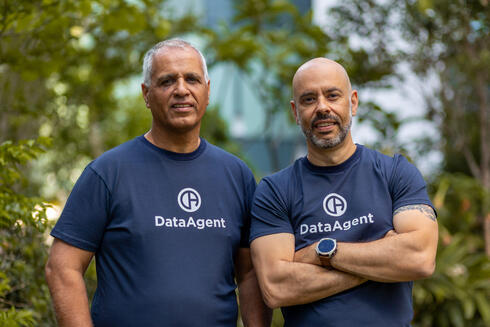
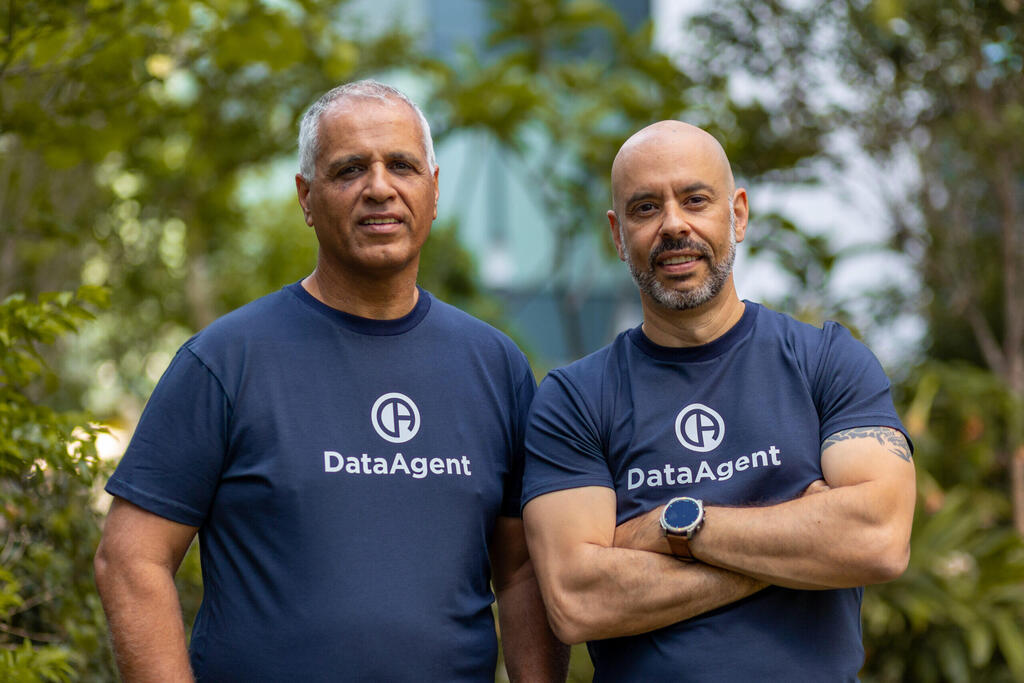
The company is led by Yaari and co-founder and CTO Nati Shalom, who previously worked together at Cloudify, a cloud orchestration company acquired by Dell in 2023.
DataAgent currently has 15 employees and is recruiting additional go-to-market staff in the United States and Israel.
The company's approach amounts to a reversal of the conventional sequence for handling software failures.
Under the traditional observability model, a system detects a problem, sends information about it to an observability platform and ultimately alerts an engineer. The engineer then investigates the incident and determines how to fix it.
DataAgent instead wants to restore the service first.
Its platform reads the live state of a system, including its topology and configuration, identifies the cause of an incident and applies a verified fix. More extensive root-cause analysis can then take place offline after the service has been restored.
The objective is to reduce mean time to resolution, or MTTR, by avoiding the need to wait for a lengthy diagnostic process before taking action.
The company also argues that its architecture can reduce the cost of observability. Because the agents operate inside the customer's environment, telemetry does not have to be continuously transferred to an external cloud for analysis.



