











“We are investing significantly in energy weapons, including a powerful aerial laser”
Elbit CEO Bezhalel Machlis says wartime experience is reshaping the company's product strategy, as the defense company reports a record $30 billion backlog, surging profits, and rising demand from Europe amid a global rearmament wave.
“Elbit is in good shape,” Bezhalel Machlis, president and CEO of Elbit Systems, told Calcalist after the company reported another quarter of record results. “The company is advancing and working to continue improving its achievements in the markets while taking advantage of the many opportunities that arise.”
He added that lessons from the war in the Middle East are already reshaping the company’s product development strategy.
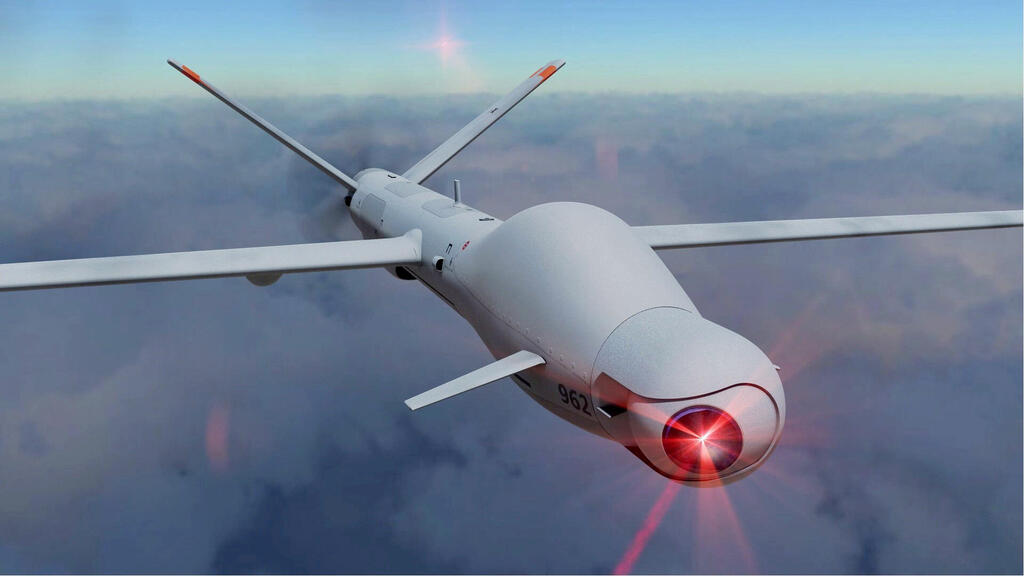
“The war in the Middle East is generating deep learning for us, which is leading to a change and expansion of the product portfolio, alongside significant annual investment in research and development,” Machlis said. “All of this will allow us to provide the future generation of products in all of the company’s areas of activity, including energy weapons - the weapons of the future - including a powerful aerial laser. We are working hard on this.”
The comments came as Elbit reported a sharp jump in profit, a record order backlog exceeding $30 billion for the first time, and a new $1.4 billion military modernization contract with an unnamed European country.
Investors responded enthusiastically. Elbit shares surged 9.5%, lifting the company’s market value to approximately NIS 113 billion ($40B) and making it the third-largest company on the Tel Aviv Stock Exchange after Palo Alto Networks and Teva, ahead of both Bank Leumi and Bank Hapoalim.
Although the stock remains below the record valuation of NIS 143 billion reached in March, the latest rally values the 41.3% stake held by controlling shareholder Michael Federmann at approximately NIS 46.7 billion ($16.5B) on paper.
At the center of the latest results is a sweeping five-year defense contract in Europe valued at approximately $1.4 billion. The agreement includes advanced battlefield systems designed to improve maneuverability and survivability, including fleets of unmanned vehicles, some capable of autonomous operation, alongside precision-guided munitions, electronic warfare systems and electro-optical technologies.
The deal joins a growing list of major European contracts secured by Elbit as governments across the continent rapidly expand military spending amid the ongoing war between Russia and Ukraine.
It closely resembles another major agreement the company announced last August to upgrade the Serbian military in a deal worth more than $1.6 billion. Last month, Elbit also signed a contract with the Greek government to supply precision rockets valued at approximately $700 million.
The European push is increasingly becoming a central growth engine for the company. In the first quarter of 2026 alone, sales to European customers exceeded $500 million, accounting for 23.4% of Elbit’s total revenue.
“Europe continues to hold record opportunities for us,” Machlis said. “Countries across the continent are investing heavily in building independent defense capabilities, and we are well positioned thanks to our extensive network of subsidiaries, which have become an integral part of local industries and are building production capabilities for the long term,” he said.
Alongside the new contract, Elbit reported that its order backlog crossed the $30 billion mark for the first time, reaching $30.2 billion. By comparison, the backlog stood at $28 billion at the end of the fourth quarter of 2025 and $23 billion in the corresponding quarter a year earlier.
Approximately 71% of the backlog comes from customers outside Israel.
The company posted first-quarter revenue of approximately $2.2 billion, representing a 15% increase compared with the same quarter last year. The results were particularly notable because the first quarter outperformed even the fourth quarter of 2025, which is traditionally considered the strongest period for defense companies as governments tend to exhaust procurement budgets before year-end.
Growth was led by Elbit’s land systems division, where activity rose 27% year over year. The company’s ICT, cyber, electronic warfare and intelligence sectors recorded a 17% increase in sales during the same period.
Improved operational performance pushed operating profit to $222 million, equivalent to 10.1% of revenue, compared with 8.7% in the first quarter of 2025.
Net profit climbed 59% year over year to $186 million, while net profit attributable to shareholders rose approximately 50% to around $161 million.
The company also generated operating cash flow of more than $280 million during the quarter, supported by increased sales volumes and advance payments from customers worldwide.
Those advances are helping Elbit manage growing debt owed to it by Israel’s Ministry of Defense. In the first quarter, sales to the Israeli defense establishment accounted for 37.4% of total company revenue and amounted to nearly $820 million, up from 32% in the corresponding quarter last year.
As previously revealed by Calcalist, Israel’s Ministry of Defense currently owes approximately NIS 13 billion to the country’s major defense contractors. The largest liabilities are owed to Rafael Advanced Defense Systems, at around NIS 6 billion, and Israel Aerospace Industries, at roughly NIS 4 billion. Elbit is owed approximately NIS 3 billion.
According to Machlis, the company remains confident that the Ministry of Defense will ultimately meet its obligations, while international customer advances are currently easing cash-flow pressures.
The swelling debt reflects an ongoing dispute between the Ministry of Defense and the Ministry of Finance over expanding Israel’s defense budget amid the prolonged regional conflict. Israel’s current 2026 defense budget stands at NIS 144 billion, but defense officials are demanding an increase to NIS 184 billion in order to finance urgent procurement plans and continued military operations across multiple fronts. A meeting on the issue held last week with Benjamin Netanyahu ended without a decision.
Elbit currently employs approximately 20,000 people worldwide, including around 15,000 in Israel. According to Machlis, the company added roughly 2,000 employees over the past year as production accelerated to meet growing customer demand.
The company plans to recruit another 2,000 employees over the coming year, including as part of the expansion of its industrial complex in Ramat Beka in the Negev.



