










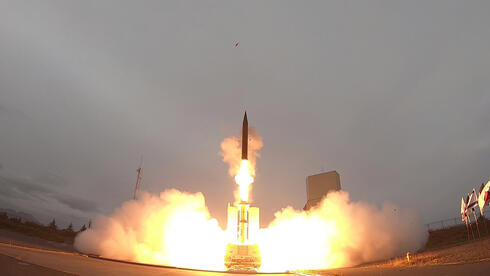
Israel races to build the next generation of Arrow missile defenses after Iran conflict
Arrow 4 is nearing serial production while Israel prepares to launch full-scale development of Arrow 5 as repeated missile battles reshape its defense strategy.
Repeated missile battles with Iran are pushing Israel into the most significant overhaul of its ballistic missile defense network since the Arrow system first entered service a quarter-century ago.
After spending the past two years relying heavily on Arrow interceptors to defend against hundreds of ballistic missiles launched from Iran and Yemen, Israel is now moving beyond replenishing its stockpiles and toward building an entirely new generation of interceptors. According to new details published by Business Insider, one successor is approaching serial production while another is preparing to enter full-scale development.
The shift comes only months after the Israeli government approved a significant expansion of Arrow 3 production following months of delays caused by budget disputes between the Defense and Finance ministries. That decision reflected the immediate need to replenish interceptor inventories after prolonged combat. The latest plans point to a broader objective: redesigning the country's highest layer of missile defense for the next decade.
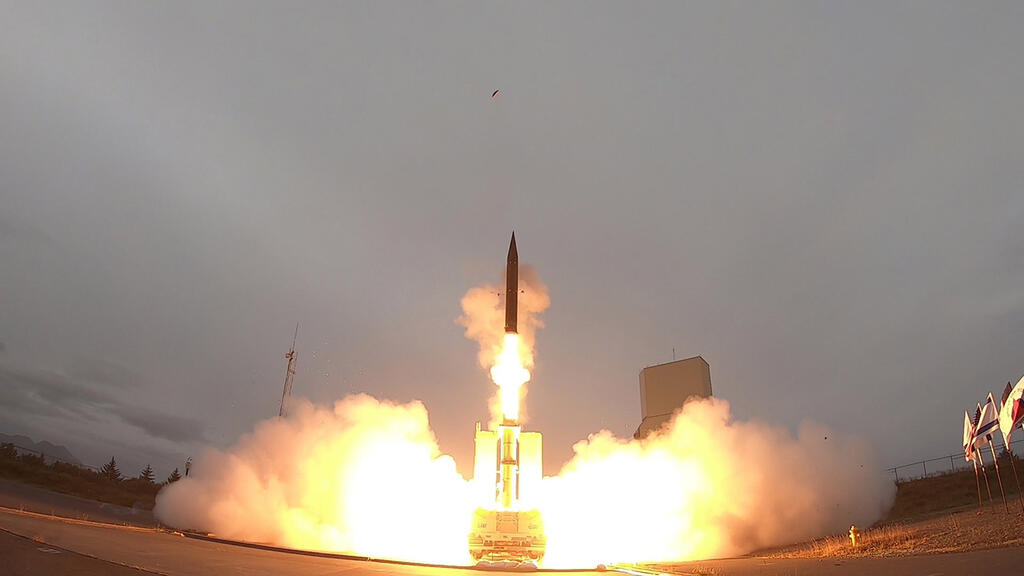
"We are in the very, very advanced stage of development of Arrow 4," Moshe Patel, director and general manager of the Israeli Missile Defense Organization, told Business Insider.
According to Patel, the interceptor is approaching serial production, the transition from prototype manufacturing to a repeatable production process capable of delivering missiles at scale. While he declined to provide a timeline, he said preparations for that phase have already begun.
Arrow 4 will replace the Arrow 2 interceptor, which entered operational service in 2000 and is designed to destroy ballistic missiles in the upper atmosphere. Its successor will retain that mission while incorporating artificial intelligence technologies and updated capabilities. Like previous Arrow programs, it will be manufactured jointly in Israel and the United States.
The modernization reflects lessons learned during repeated confrontations with Iran. Since the October 7 war began, more than 1,300 ballistic missiles have been fired toward Israel from Iran and Yemen. Arrow systems have carried much of the burden of defending against those attacks, supplemented by U.S. systems including THAAD and Aegis and, in some cases, David's Sling interceptors.
The intensity of those campaigns exposed the importance not only of interceptor performance but also of production capacity. Earlier this year, the government approved a major acceleration in Arrow 3 manufacturing after senior defense officials warned that existing production rates were insufficient for a prolonged regional conflict. Previous procurement agreements for Arrow interceptors have already been estimated at several billion shekels, with each Arrow 3 interceptor believed to cost more than $2 million.
But even as Israel expands production of its current interceptor, planning is already moving beyond it.
Patel told Business Insider that Israel also intends to advance Arrow 5, an even newer interceptor that incorporates AI-based capabilities. Unlike Arrow 4, which is designed to replace the aging Arrow 2, Arrow 5 is not expected to replace Arrow 3. Instead, it is intended to add another defensive layer capable of dealing with future generations of ballistic missile threats.
"The plan is that it'll ease our battle in the future," Patel said.
According to Patel, Arrow 5 began as an internal research and development project at Israel Aerospace Industries before being adopted by the Israeli government. Israel now plans to finance its continued development while coordinating the program with the U.S. Missile Defense Agency, its longtime partner in the Arrow program.
"We still have the process to do so, but at least our intention is to go ahead and get into full-scale development," Patel told Business Insider.
The evolution of the Arrow family mirrors broader changes in the global defense market.
Governments across Europe and the Middle East are investing heavily in ballistic missile defense following Russia's invasion of Ukraine and escalating instability across the region. Germany remains the only foreign customer for the Arrow system after purchasing Arrow 3 in a deal worth roughly $6.5 billion, but Patel said Israel has received significant interest from additional countries as European governments seek stronger protection against long-range missile attacks.
Israeli officials have also cited the Arrow system's battlefield performance as validation of its continued development. According to figures shared with Business Insider, during Israel's two most recent rounds of fighting with Iran, earlier this year and in June 2025, Arrow intercepted at least 90% of the ballistic missiles it engaged.



