









Unity shuts down ironSource ad network, selling Supersonic three-and-a-half years after $4.4 billion merger
The moves leave little of the Israeli ad-tech firm within Unity, marking a quiet unwind of one of the sector’s most high-profile mergers.
The decision by Unity Technologies to shut down the ironSource advertising network marks a quiet but decisive end to one of Israel’s most prominent ad-tech stories, less than four years after a merger that was meant to reshape the mobile advertising landscape.
In an investor update released Thursday, Unity confirmed that the ironSource Ad Network will close on April 30, while the company has also begun the process of divesting Supersonic, its casual game publishing arm. The moves, Unity said, are designed to “simplify the business,” as it refocuses on its core operations and newer technologies.
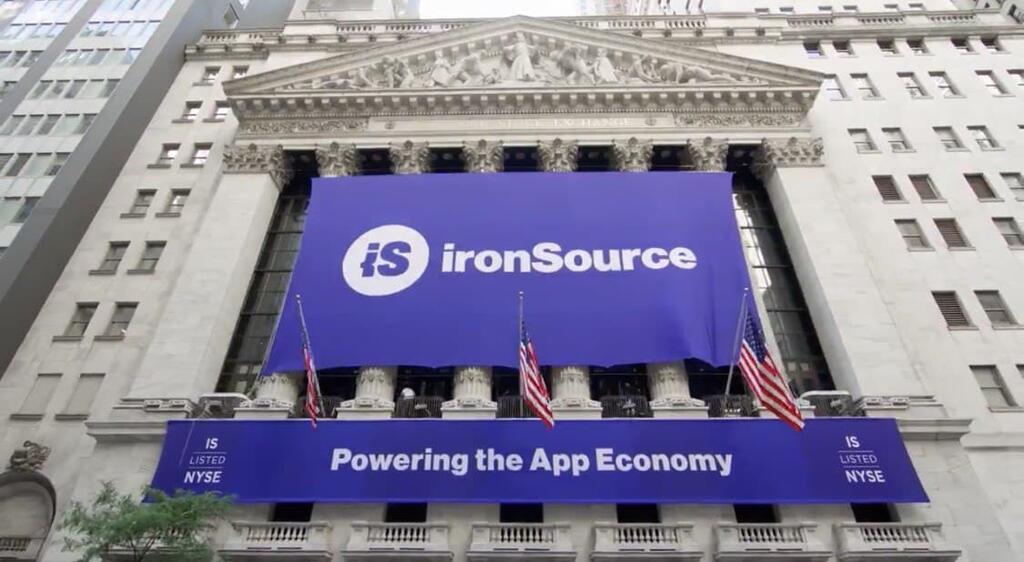
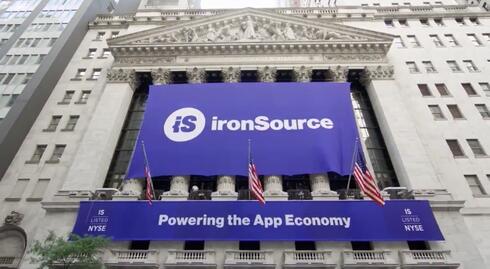
The changes leave little remaining of ironSource within Unity. When the companies merged in 2022 in a deal valued at $4.4 billion, ironSource brought with it three central divisions: Sonic, Aura and Supersonic. At the time, ironSource’s advertising business was expected to take a leading role within the combined company. Instead, the opposite unfolded.
In the years since, Unity has increasingly prioritized its own advertising infrastructure. Rather than building on ironSource’s network, it invested in its legacy platform, eventually transforming it into an artificial intelligence-based system rebranded as “Unity Vector.” The decision to shut down the ironSource network formalizes a shift that had been underway for some time.
Leadership changes accelerated that transition. At the start of 2024, ironSource’s remaining founders, including former CEO Tomer Bar-Zeev, departed Unity. In early 2025, Nadav Ashkenazy, a former ironSource executive who had been appointed to lead Unity’s advertising activity in Israel, also left the company.
The closure of the ad network, alongside the planned sale of Supersonic, the label behind mobile hits such as Bridge Race, Going Balls and Build A Queen, signals a broader dismantling of ironSource’s footprint within Unity. Supersonic is now being marketed for sale with the help of a financial advisor, according to the filing.
Financially, the restructuring comes at a moment of relative strength. Unity said its preliminary results for the first quarter of 2026 exceeded expectations, with revenue projected at $505-508 million, above prior guidance of $480-490 million. Adjusted EBITDA is expected to reach $130-135 million, significantly ahead of earlier forecasts of $105-110 million, representing year-over-year growth of 58%.
The unwinding of ironSource inside Unity contrasts with the trajectory of its founders, who have already moved on to a new venture. Earlier this month, several of the company’s original executives, including Tomer Bar-Zeev (Chairman), Omer Kaplan (CEO), Assaf Ben Ami (CFO & COO), Nadav Ashkenazy, and Daniel Shinar, raised $58 million in Seed funding for ZyG, an AI platform aimed at helping entrepreneurs build and scale e-commerce brands.



