









Mobileye acquires Shashua’s robotics startup for $900 million
The Intel-controlled company, founded by Shashua, moves into humanoid robots with the acquisition of Mentee Robotics, also founded by Shashua.
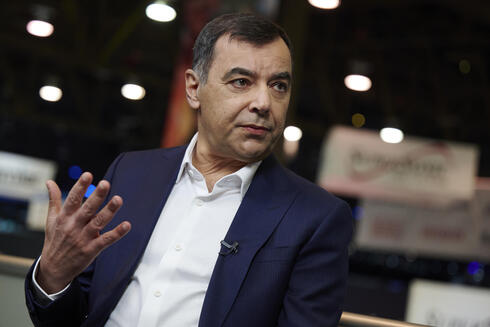
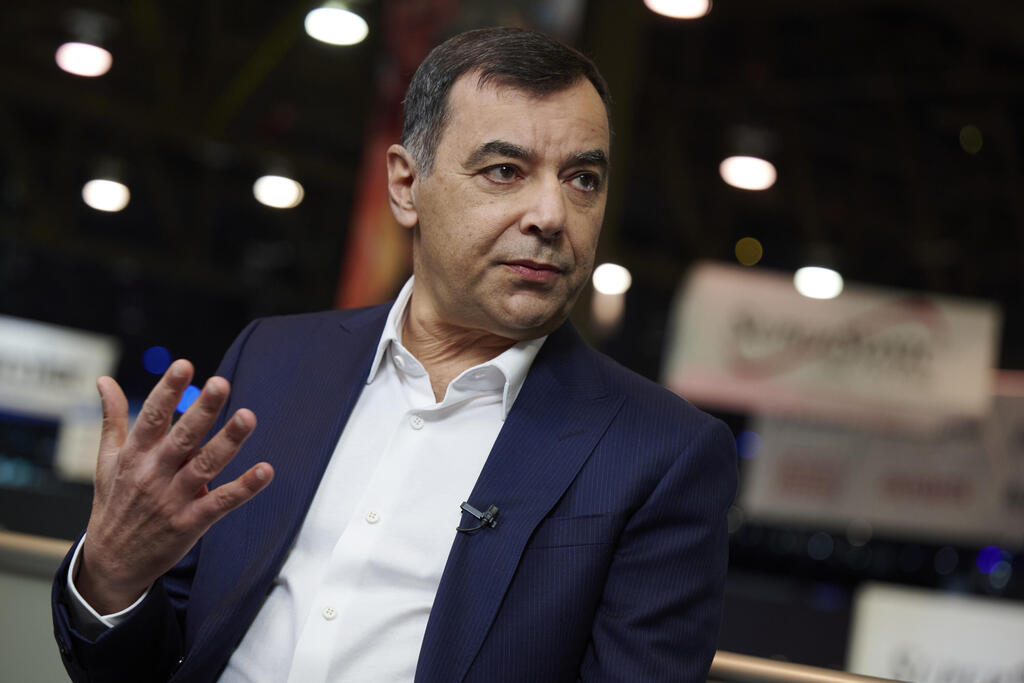
Mobileye, the autonomous driving company founded by Amnon Shashua and majority-owned by Intel, has agreed to acquire Mentee Robotics, a robotics startup also founded by Shashua, in a deal valued at $900 million. The transaction includes $612 million in cash and 26.2 million Mobileye shares for the four-year-old company, which has no reported revenue.
The transaction was approved by Intel’s board of directors, which controls roughly 85% of Mobileye. Shashua, who serves as chairman of Mentee Robotics and is also a member of Mobileye’s board and its CEO, recused himself from the vote. He personally owns about 1% of Mobileye, which is currently traded on Wall Street at a market capitalization of around $10 billion.
Mobileye said it had made a strategic decision to acquire a robotics company and evaluated several candidates before selecting Mentee, citing what it described as superior technology. Following the acquisition, Mentee will continue to operate as an independent unit within Mobileye. The company said the deal is expected to increase Mobileye’s operating expenses by a few percentage points in 2026.
For Mentee’s shareholders, the acquisition represents an extraordinary exit. The company has raised just $17 million to date, in a single funding round led by Ahren Innovation Capital. Its shareholders include its founders, CEO Prof. Lior Wolf, formerly a senior scientist at Facebook AI Research; and Prof. Shai Shalev-Shwartz, Shashua’s longtime partner, who is also Mobileye’s chief technology officer. Shashua is the largest shareholder. Separately, Shashua and Shalev-Shwartz recently co-founded another artificial intelligence startup, AAI, which has already reached unicorn status.
Strategically, the acquisition is intended to reposition Mobileye beyond autonomous vehicles into what is increasingly described as “physical AI,” a term popularized by Nvidia CEO Jensen Huang. The concept refers to artificial intelligence systems embodied in the physical world, including humanoid robots, autonomous vehicles, and non-humanoid robotic systems.
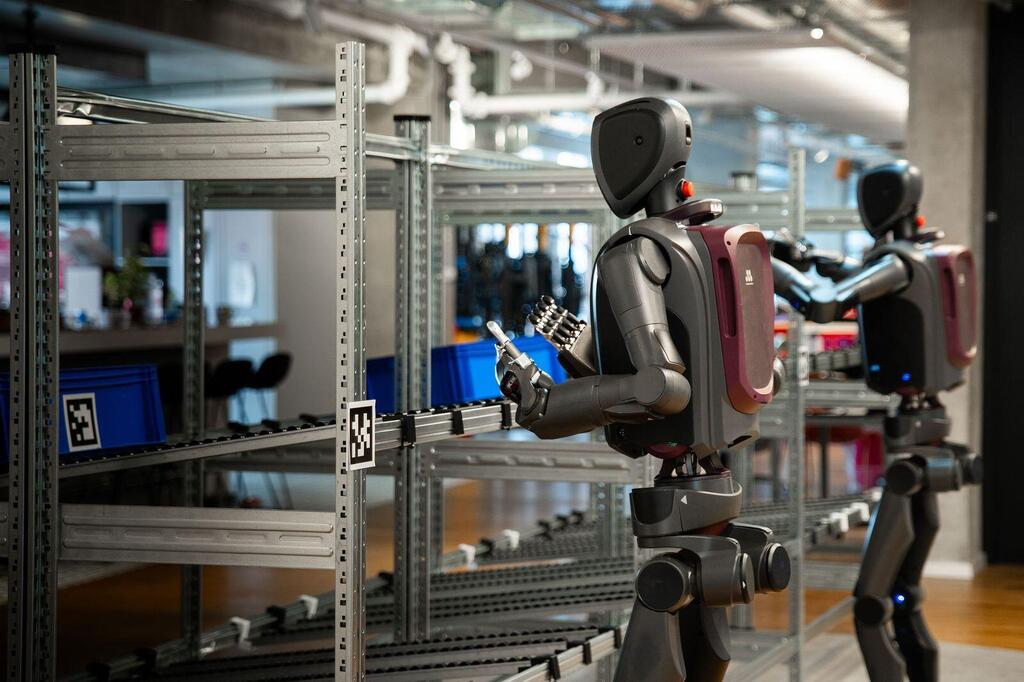
Mobileye estimates that by 2028 it could begin commercial sales of humanoid robots, initially for industrial applications such as logistics centers and manufacturing lines rather than consumer use. The company sees potential synergies not only at the technological level, combining Mobileye’s chips and software with robotics, but also at the customer level. Automakers that already purchase Mobileye’s driver-assistance systems, for example, may also become customers for factory automation robots. Notably, Mentee currently relies on Nvidia chips, underscoring Nvidia’s ambitions in robotics as a future growth engine.
In 2024, after roughly two years of stealth development, Shashua unveiled the “Menteebot,” a humanoid robot designed to execute complex tasks from natural-language commands. The system is intended to handle a full action cycle, including navigation, spatial awareness, object recognition, contextual understanding, and physical manipulation.
The connection between autonomous vehicles and robotics may not be obvious at first glance, but in practice an autonomous vehicle is a form of “robot on wheels.” Advances in artificial intelligence have further narrowed the gap between the two fields. Path-planning algorithms that help vehicles avoid collisions, for example, are closely related to those that allow a humanoid robot to place its foot without stumbling. The key distinction is that autonomous vehicles typically operate in structured environments, while humanoid robots must function in far less predictable settings. Tesla, for instance, uses similar computing architectures for both its vehicles and its Optimus humanoid robots.
Shashua is widely regarded as one of the leading visionaries in autonomous driving and machine vision, yet the realization of fully autonomous vehicles has been slower than anticipated. Mobileye’s revenues still derive primarily from advanced driver-assistance systems (ADAS). Over the past two years, the company has faced a slowdown after building up excess inventory at customers and has carried out several rounds of layoffs, including a cut of about 200 employees, roughly 4% of its workforce, announced last month.
This year, Mobileye expects the first autonomous taxi services based on its technology to begin operating in the United States. On Monday, the company announced a major agreement with a large U.S. automaker, identified by General Motors, to purchase 9 million chips for advanced ADAS systems enabling hands-free driving. That order follows a similar agreement with Volkswagen. Mobileye said its current order backlog stands at approximately $24 billion.
Shashua’s broader portfolio has seen mixed results in recent years. Activity at Orcam has largely stalled, the digital bank One Zero has incurred significant losses, and last week Calcalist reported that Shashua is in advanced talks to sell AI21 to Nvidia for $2-3 billion. While substantial in absolute terms, such a sale would mark a disappointing outcome for a company once viewed as a potential challenger to AI leaders such as OpenAI and Anthropic. Shashua’s most ambitious bet today appears to be AAI, a year-old startup operating largely under the radar that has already raised hundreds of millions of dollars at a valuation exceeding $1 billion.



