









From Mobileye to doubleAI and beyond, Amnon Shashua is preparing for his next act
As he steps away from day-to-day management, the entrepreneur behind Israel’s largest technology deals may turn more attention toward his latest AI venture, doubleAI.
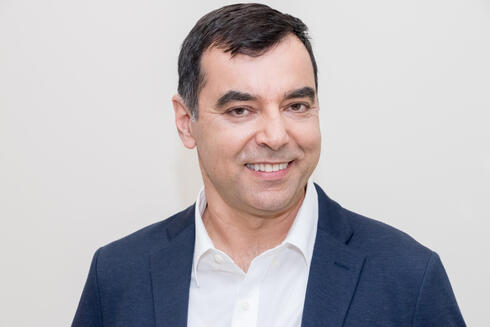
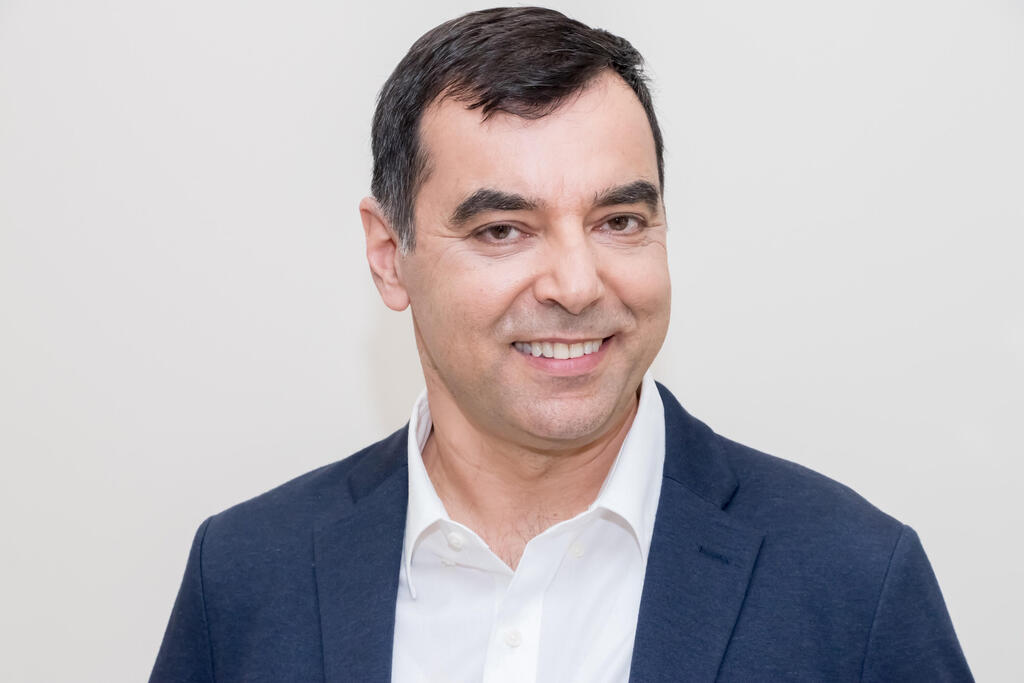
Prof. Amnon Shashua’s announcement that he intends to retire as CEO of Mobileye did not come as a surprise to those who have followed the company in recent years. After more than a quarter of a century in which he transformed Mobileye from a small academic venture into one of Israel’s largest technology companies, Shashua appears to have concluded that the company’s next stage requires a different type of leader.
Shashua’s business career began in the 1990s, when he applied his research in computer vision at CogniTens, which developed optical measurement systems for the automotive and aerospace industries and was later acquired by Hexagon. At the same time, he was involved in founding CogniTech, which developed image-processing and video-analysis technologies for forensic investigations and identification. The experience gained from these ventures helped lead to the founding of Mobileye in 1999 alongside Ziv Aviram, based on the vision that a single camera combined with advanced computer vision algorithms could help prevent traffic accidents.
Mobileye went on to develop its EyeQ chip and advanced driver-assistance systems (ADAS), becoming a global leader in automotive vision technology. The company went public in 2014 at a valuation of approximately $5.3 billion before being acquired by Intel in 2017 for $15.3 billion, at the time, the largest technology acquisition in Israeli history. In late 2022, Mobileye returned to the Nasdaq as an independent public company, expanding beyond driver-assistance systems into autonomous driving solutions and physical AI.
During a conference call announcing his planned retirement, Shashua said the managerial burden had become “too much of a burden.” Running a company with approximately 4,200 employees, while overseeing a transition from technology development into a global business with robotaxi initiatives, commercial partnerships, and ambitions in robotics, requires a different skill set from that of a scientist and entrepreneur.
That may ultimately be the central reason behind his decision. Shashua appears to have recognized the distinction between technological leadership and operational management. His desire to return his focus toward strategy and innovation, while handing day-to-day management to new leadership, reflects a reality faced by many founder-led companies: the person who created a successful technology company is not always the person best suited to manage it once it becomes a global corporation.
But the decision also comes against a backdrop of growing pressure from investors. In recent years, shareholders have struggled with Mobileye’s heavy research and development spending and the long timelines required to fully commercialize autonomous driving technology. At the same time, Shashua’s involvement in other ventures, including AI21 Labs and One Zero Bank, has repeatedly raised questions among some analysts about whether his attention was sufficiently focused on Mobileye, concerns he has rejected.
Another area that attracted investor scrutiny was the acquisition of Mentee Robotics. Shashua presented the move as a strategic investment that could position Mobileye as a player in humanoid robotics, arguing that only companies with deep expertise in areas such as perception, artificial intelligence, and computing, including Mobileye and Tesla, possessed the technological foundation required to build advanced humanoid robots. The company said it aims to introduce humanoid robots as early as 2028, creating a potential new growth engine.
For investors, however, the robotics push highlighted Mobileye’s broader strategic dilemma. Wall Street has increasingly sought greater focus, profitability, and predictable growth from the company’s core ADAS business, while management continued investing in long-term, capital-intensive technologies. The gap between the market’s shorter-term expectations and Shashua’s long-term technological vision likely contributed to the decision to separate technological leadership from day-to-day management.
Mobileye’s second-quarter 2026 results provide a mixed picture. At first glance, the company appeared to be entering this transition period from a position of strength, raising its non-GAAP operating profit forecast by approximately 88% at the midpoint. However, much of the improvement came not from accelerating business growth, but from regulatory changes.
The new Israeli “R&D Law,” introduced in the second quarter as part of the implementation of the OECD’s Pillar Two rules, reduced Mobileye’s research and development expenses by more than $90 million during the quarter and is expected to lower costs by up to $200 million annually. While the change significantly improved profitability, revenue remained largely flat at $508 million, compared with the same period a year earlier.
Mobileye’s average selling price per unit also declined slightly, partly due to increased sales to Chinese automakers and the growing share of complex hardware systems such as SuperVision, which carry lower profit margins. The picture that emerges is of a core business that remains stable, with annual revenue approaching $2 billion, but without the growth rates investors typically expect from a high-growth technology company.
Shashua’s decision not to immediately assume the role of chairman, and instead wait until a new CEO is appointed, indicates his intention to give his successor full authority to lead the company. Intel, which owns approximately 77% of Mobileye’s shares, is expected to support a transition focused on managerial stability and operational discipline.
Shashua’s departure as CEO does not mark the end of Mobileye, but rather the beginning of a new phase. The company is moving from an era defined by the technological vision of its founder toward one in which it will need to demonstrate operational efficiency, generate stronger cash flow, and translate decades of research investment into commercial results.
The challenge for the next CEO will be balancing Mobileye’s technological ambitions with investors’ demand for clearer financial performance.
The next chapter: doubleAI
Alongside Mobileye, another major venture remains on Shashua’s agenda: doubleAI, founded in 2024. The company operates with a relatively low public profile but has already raised hundreds of millions of dollars at a valuation exceeding $1 billion from investors including Pitango, BRM, Dell Capital, and Lightspeed.
Unlike many AI companies focused on scaling models through additional computing power and data, doubleAI is attempting to develop AI systems with deeper reasoning capabilities designed to solve complex scientific and engineering problems. The company is focused on systems capable of reasoning, trial and error, and optimization processes that could eventually rival the work of human experts.
According to information published by the company, one system it developed for engineering graphics processors was able to generate and optimize code for Nvidia’s advanced architectures, including Blackwell, achieving performance that surpassed approximately 99% of manually written code by expert engineers.
Shashua is supported by a senior team that includes Professor Shai Shalev-Shwartz, who also serves as CTO of Mobileye, Prof. Yoav Levine, Prof. Or Sharir, Dr. Noam Weis, and Dr. Gal Benןamini, a group of leading researchers across computer science, mathematics, physics, and biology.
Shashua has emphasized that his full attention remains dedicated to Mobileye. However, his retirement as CEO is expected to free up significant time, potentially allowing him to devote greater attention to doubleAI, or even pursue another entrepreneurial venture in the future.
Throughout his career, Shashua has repeatedly demonstrated that completing one technological challenge often marks the beginning of the next.



