











Palo Alto to cut over 500 CyberArk jobs after closing $25 billion deal
Employees given three to 12 months’ notice as the company moves to streamline operations.
The ink had barely dried on Palo Alto Networks’ $25 billion acquisition of CyberArk when the restructuring began.
Last Thursday, one day after the transaction officially closed, employees across the combined organization received emails outlining the status of their employment. For most, the message confirmed continuity. For an estimated 500 CyberArk employees worldwide, including roughly 100 in Israel, it signaled the end of their roles.
1 View gallery
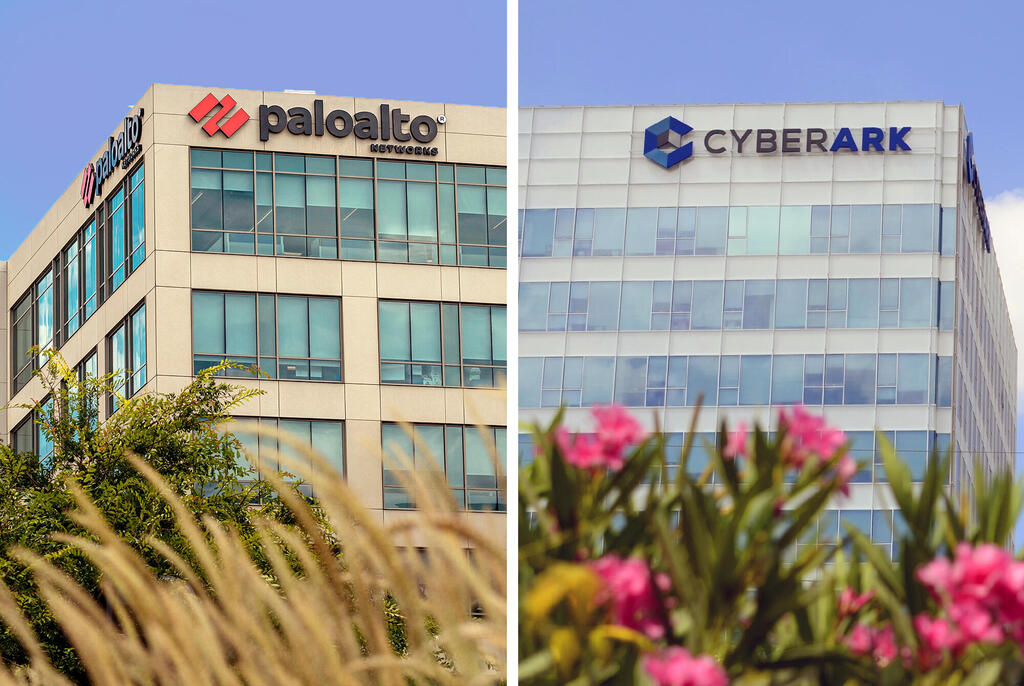
Palo Alto building alongside CyberArk building.
(Photo: David Paul Morris/Bloomberg, ShU studio/Shutterstock)
The reductions amount to about 10 per cent of CyberArk’s Israeli workforce and a significant portion of its almost 4,000 global employees. Those affected were informed that their positions would be terminated, in many cases with notice periods ranging from three to 12 months, along with several months of salary.
The notifications, employees said, were sent directly by Palo Alto Networks.
The scope of the cuts provides the clearest picture yet of how Palo Alto intends to absorb the Israeli cybersecurity company, in what is both its largest acquisition and its first takeover of a major publicly traded firm. While earlier reports indicated that “hundreds” of positions would be eliminated, the confirmed figures point to a broader global restructuring.
Notably, no layoffs are planned in research and development. The reductions appear to focus on overlapping roles created by the merger, a typical feature of large-scale corporate integrations, particularly where two established organizations combine sales, operational and administrative structures.
The acquisition itself is a landmark. At $25 billion, it ranks as the second-largest deal in Israel’s technology sector and marks a strategic expansion for Palo Alto into identity security, a field in which it previously had no direct product offering. CEO Nikesh Arora had publicly signaled that the transaction was designed to strengthen the company’s platform rather than shrink it, emphasizing investment in technology and growth.
Israel remains central to Palo Alto’s global operations. Prior to the acquisition, the company employed about 1,600 people in the country and had said the CyberArk purchase would effectively double that footprint. During a visit to Israel two months ago, his first in three years, Arora described the country as an engine of cybersecurity innovation and highlighted continued hiring even during wartime conditions.
The absence of R&D cuts is consistent with that strategic narrative. For Palo Alto, engineering talent, particularly in Israel, is an asset to be retained. Yet the elimination of more than 500 roles underscores the economic realities of consolidation at scale.



