










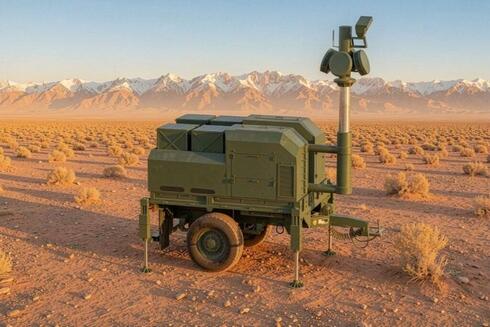
Iron Dome architect unveils new system designed to counter drone swarms
Skapion says its system can engage more than 100 targets simultaneously, as militaries seek more affordable ways to defend against mass drone attacks.
As inexpensive attack drones become an increasingly persistent feature of modern warfare, defense planners face a problem that is as much economic as it is technological. How can they stop large numbers of incoming aircraft without exhausting the interceptors and budgets needed to protect against them?
Israeli defense technology startup Skapion says it is building an air-defense system specifically for that challenge. The company has unveiled a platform designed to detect and engage coordinated drone swarms, arguing that systems developed primarily to intercept individual or smaller numbers of threats are not necessarily suited to attacks involving dozens or hundreds of drones at once.
Skapion describes its platform as the world’s first “Native Counter-Swarm” defense system, designed from the outset to coordinate multiple interceptors against multiple targets simultaneously. The company recently announced a $36 million Seed funding round led by UP Partners and Khosla Ventures to accelerate the system’s development and validation.
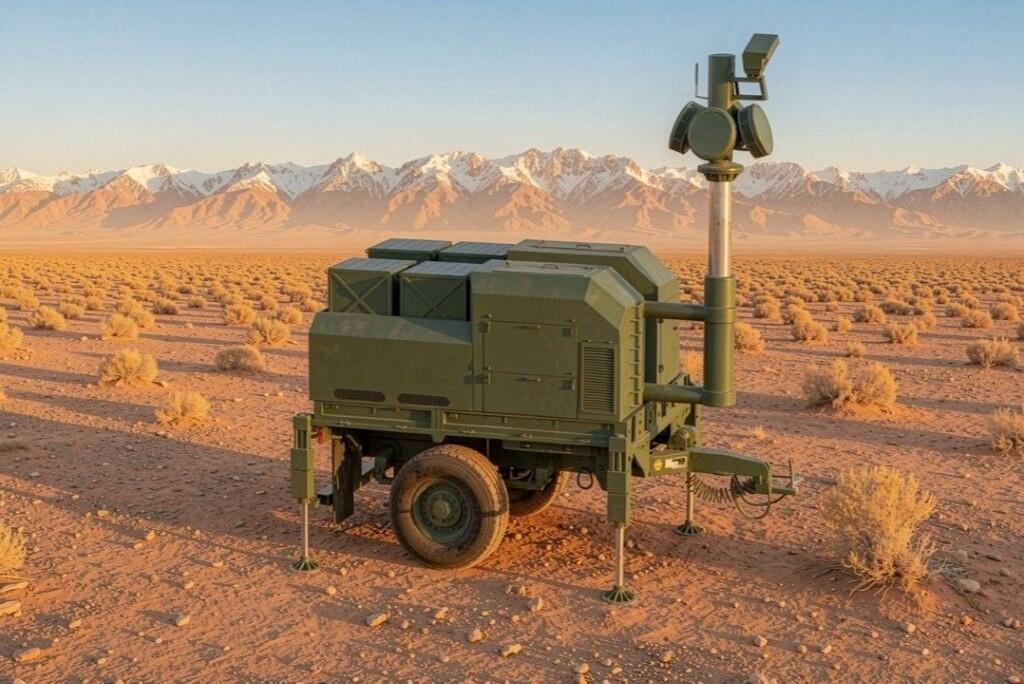
The central proposition is that defending against a swarm requires more than deploying additional interceptors. A system must identify and prioritize numerous threats, allocate defensive weapons and coordinate engagements quickly enough to prevent an attack from overwhelming its capacity. The cost of each interception matters, too, particularly when the incoming weapons are relatively inexpensive and can be launched in large numbers.
Skapion says its mobile, fully kinetic system is designed to engage more than 100 targets simultaneously, with an interception rate above 97%. It also claims that its cost per interception will be significantly lower than that of conventional air-defense systems.
The company has not provided independent test results or details of operational deployments to substantiate those figures in its announcement. Its ability to deliver the stated interception rate while maintaining the claimed cost advantage will be central to determining whether the system can meet the challenge it is designed to address.
The problem has become more prominent as drones have evolved from relatively limited tactical tools into weapons that can threaten military forces, bases and critical infrastructure.
Skapion’s system is built around what the company calls a native many-to-many architecture. Rather than treating each interception as a largely separate engagement, it is designed to allow multiple interceptors to engage multiple targets at the same time. An artificial intelligence-based command-and-control system processes data from the company’s own detection and tracking sensors or from third-party systems, then prioritizes threats, allocates interceptors and manages engagements in real time.
The system is designed to operate autonomously from detection through interception or with a single human operator supervising its actions, depending on customer policy. Skapion says its open, sensor-agnostic architecture can also integrate external threat data, existing command-and-control systems and other counter-drone technologies.
The company is targeting several potential uses, from standalone air-defense batteries protecting critical infrastructure and military forces to systems that could complement national air-defense networks or fill gaps in existing coverage. Its vertical-launch architecture is designed to provide 360-degree engagement capability, and the company says the platform could be deployed across ground, airborne and maritime platforms.
Skapion also says its kinetic approach is designed to engage autonomous drones that do not depend on communications links. That capability could matter against threats for which disrupting a communications or navigation link is not a sufficient response, although the announcement does not provide test data demonstrating the system’s performance against such targets.
The company’s founding architect is retired General Pini Yungman, a former general manager of Rafael’s Air and Missile Defense division who worked on programs including Iron Dome and David’s Sling. CEO and co-founder Ido Bar-On previously led defense and government business at drone technology company XTEND and served as a reserve lieutenant colonel in the Israel Defense Forces’ special operations. The founding team also includes CTO Gal Goren, renewable energy entrepreneur Zafrir Yoeli and defense entrepreneur Yaron Karp. Skapion is headquartered in Washington, D.C., with its research and development center in Ramat Gan.
Bar-On said the company’s approach reflects what he sees as a fundamental change in the demands placed on air-defense systems.
“The next generation of threats cannot be defeated by simply stacking yesterday’s air-defense solutions,” he said. “A swarm is not just a larger number of discrete drones. It changes the dynamics of the engagement, the number of simultaneous decisions, the speed at which they must be made and the economies of every interception.”



