










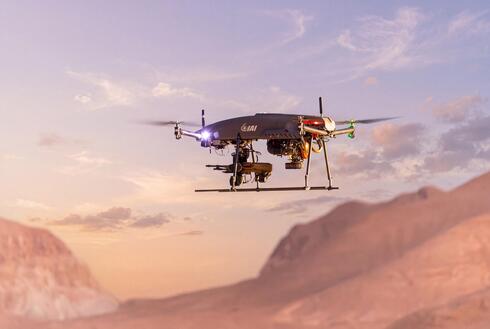
Israeli drone packs a machine gun, 200 rounds and three hours of flight time
IAI and SIG SAUER have completed a firing test of the FIRE STORM 250, which can identify targets from the air while leaving firing decisions to a human operator.
Israel Aerospace Industries and U.S. firearms manufacturer SIG SAUER have completed a firing test of a tactical drone equipped with a remotely controlled machine gun, combining aerial surveillance and target identification with the ability to engage targets from the air.
The system, called FIRE STORM 250, was tested ahead of its presentation at the Association of the United States Army’s AUSA 2026 exhibition in Washington, D.C. The companies said the test demonstrated the drone’s ability to hover over a simulated battlefield, identify targets using an onboard camera and fire in both single-shot and semi-automatic modes from different distances and altitudes.
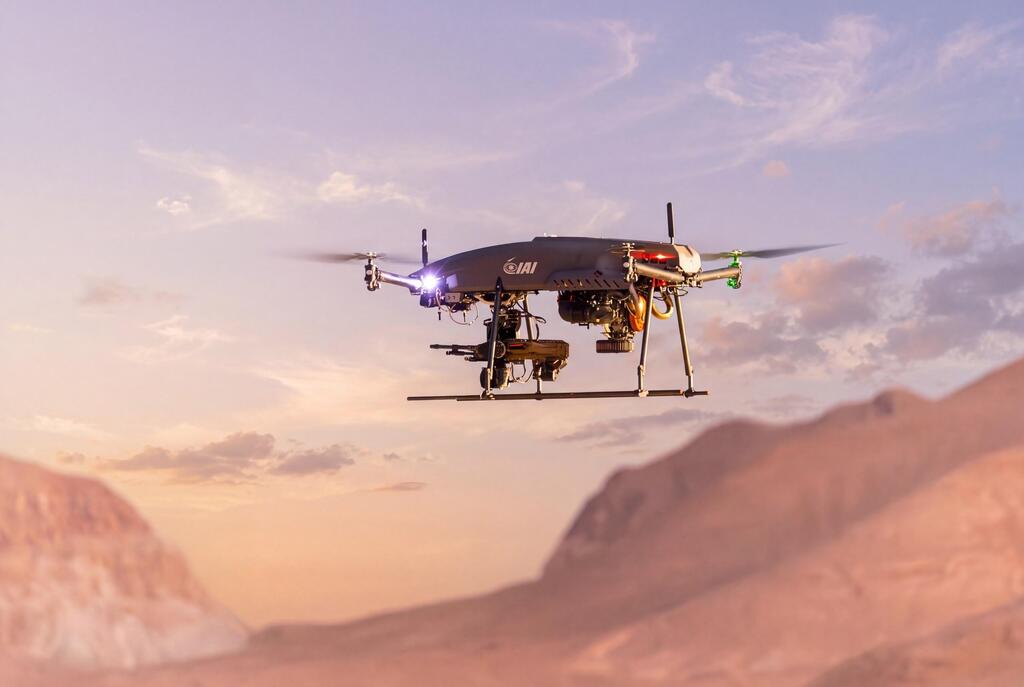
The platform is designed to give small military units an airborne surveillance and weapons capability without the need for a runway or dedicated aviation infrastructure. It can remain airborne for up to three hours and carry 200 rounds of ammunition, according to the companies.
The announcement highlights a broader shift in military technology toward smaller, more rapidly deployable unmanned systems that combine reconnaissance with the ability to act on information gathered in the field. IAI has been developing other systems that integrate sensors, drones and strike capabilities, including platforms designed to help military forces respond to threats along borders.
FIRE STORM 250 combines an IAI drone with SIG SAUER’s MICROLIGHT remote-controlled weapon station, fitted with the company’s M250 machine gun. The complete combat-ready system weighs 53 pounds, including the weapon station, machine gun and ammunition, according to the companies.
The drone uses a vertical takeoff and landing configuration, allowing it to operate from forward positions without a runway. It is powered by a multi-fuel internal-combustion engine, which the companies say enables field refueling using commonly available operational fuel rather than relying on battery-charging cycles.
The system’s targeting process combines sensor imagery and fire-control data to give an operator a real-time view of the operational environment. The companies said the weapon remains under human control: an operator receives imagery, target-tracking information and engagement options and must authorize the use of fire.
That is significant as military forces increasingly incorporate automation into weapons systems. In this case, the companies describe an integrated process linking detection, identification and engagement, while retaining a human decision-maker at the point of firing. The announcement, however, did not disclose independent test results, accuracy figures, the system’s effective firing range or whether it has entered operational service.
IAI said the platform is intended for missions including surveillance, force protection, border defense, protection of strategic sites and support for maneuvering troops. Multiple systems could operate simultaneously to provide day-and-night surveillance, according to the company.



