










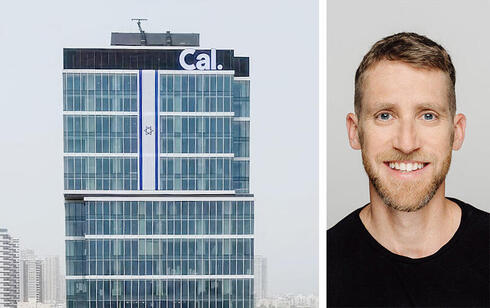
After McDonald’s, Wiz founders explore a deal for credit card company CAL
Assaf Rappaport and his co-founders are considering an acquisition of CAL, adding another major Israeli business to their expanding interests. Their inquiry comes as Discount Bank weighs its options after the collapse of the original deal.
Bank Discount was surprised by the level of interest in the sale of credit card company CAL following the collapse of the deal with George Horesh and Harel. “We didn’t anticipate such a wave,” bank officials admitted on Tuesday, referring to the unexpectedly large number of interested parties. Calcalist has learned that two additional groups are exploring an acquisition: Assaf Rappaport and his Wiz co-founders, who, as previously reported by Calcalist, are nearing a deal to secure the McDonald’s franchise in Israel, and Direct Insurance Group, owned by Mooky and Doron Schneidman.
Representatives of both groups have spoken with senior Discount Bank officials involved in the sale to discuss a possible acquisition and request information about the company. The Wiz founders would likely seek to join a larger entity capable of passing the Bank of Israel’s regulatory scrutiny to carry out the transaction. Discount is not meeting new prospective buyers until the November 1 deadline for Horesh and Harel to fulfill the conditions for completing their deal has passed.
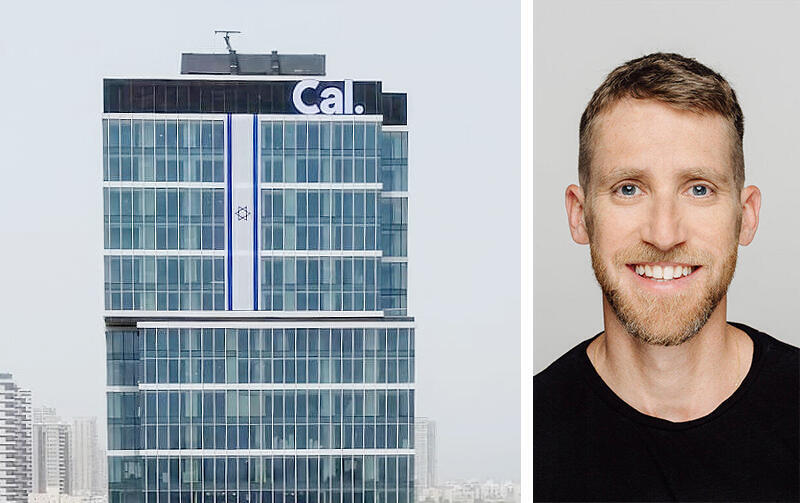
CAL had been slated to be sold to Horesh and Harel for NIS 3.75 billion to NIS 4 billion. However, the Competition Authority blocked the transaction in its proposed form, conditioning approval on Horesh selling his stake in Super-Pharm, which competes with Shufersal’s pharmacy chain. Shufersal operates a customer loyalty program whose credit cards are issued by CAL, formally known as Israel Credit Cards.
Yesterday, Calcalist reported that Delek Automotive, controlled by Gil Agmon, is also exploring an acquisition of CAL, specifically a stake of 50% to 55%. The Centerbridge fund is also expected to submit a bid, while Zvi Barak, Ayalon and Bank of Jerusalem, controlled by the Shoval family, are among the other potential bidders.
The Gallatin fund is also pursuing the deal. Gallatin, which previously controlled Phoenix alongside Centerbridge, had held discussions with Horesh and Harel. However, Calcalist has learned that Gallatin representatives recently met with Agmon, raising the possibility of a joint bid valued at approximately NIS 3.4 billion. A partnership between Agmon and Gallatin could put them at the front of the race even before a formal tender begins. Delek Automotive confirmed yesterday Calcalist’s report that it was interested in acquiring CAL.
Meanwhile, Horesh has not given up on the transaction. He is willing to accept a minority stake alongside a foreign or Israeli partner that would take the lead and assume control, provided the acquisition goes ahead. The arrangement would also include Harel, which would remain a minority shareholder. Horesh and Harel also face a NIS 187 million penalty if their deal fails to materialize, giving them a potential advantage over other bidders in terms of pricing flexibility.
The deadline for Horesh and Harel to meet the conditions for completing the transaction is November 1. Although Discount is not negotiating with other prospective buyers before that date, it is preparing for the possibility of a new tender. Within the bank, two approaches are emerging. One favors quickly closing a deal with Horesh, while the other supports launching a rapid tender in the hope of securing a better price than could be achieved through negotiations with a single buyer, even one that has already conducted extensive due diligence on CAL.
The renewed interest raises a question: why are so many potential buyers circling CAL now, when Discount struggled to attract bidders during the previous sale process just 18 to 24 months ago? The interest is particularly striking given the setbacks CAL has faced over the past year, most notably losing its major Fly Card loyalty program to rival Isracard. The loss, along with uncertainty over its loyalty program with Shufersal, has fueled speculation that Horesh and Harel could negotiate a discount on their original agreed-upon price.
There are several possible explanations. First, prospective buyers may believe they can acquire CAL for less than the price previously agreed with Horesh and Harel, given the loss of Fly Card and uncertainty surrounding the Shufersal relationship.
Timing may also play a role. The previous sale process took place too close to October 7, when foreign investors and some Israeli buyers were still assessing the economy’s prospects following the attack and the wars that followed. Today, the market may look different to investors considering a major Israeli financial acquisition.
CAL’s technological infrastructure is another attraction. It is considered the most advanced among Israel’s three credit card companies, potentially giving a new owner a valuable platform for growth.
The main draw, however, may be the scarcity of financial assets of this scale available for purchase. CAL is one of the last remaining opportunities for investors seeking a major financial platform comparable to a bank or a credit card company.
There may also be a powerful psychological factor. As some potential bidders have reportedly put it: “If George Horesh and Yair Hamburger, both billionaires, market leaders and seasoned, highly experienced veterans, have signed off on this deal, then it must be a good one for me, too.”



