










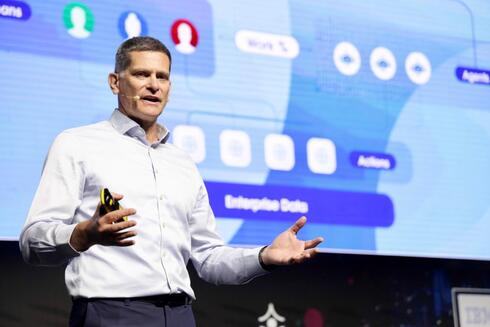
Salesforce says AI agents are doing the work it would have needed 400 employees to handle
The company says its agents contact potential customers who previously went unanswered, generating more than $88 million in revenue. The approach depends on combining automation with human involvement, reliable data and changes to existing business processes.
Salesforce says AI agents helped generate more than $88 million in revenue by contacting potential customers who would otherwise have gone unanswered, offering a concrete example of how companies are beginning to measure the business impact of artificial intelligence. But the company’s experience also points to a less straightforward challenge, getting value from AI may require changing how an organization operates, not simply adding new technology.
“At Salesforce, we had 100 million leads, and prior to integrating AI agents, about 75% of them went unanswered,” said Itai Margalit, Area Vice President, Sales, Israel, speaking at the Israel Information Technology Conference 2026 in Tel Aviv.
“Customers wanted to hear from us, but we lacked the capacity to reach everyone in a timely manner. Today, thanks to AI agents, no lead is left behind. The agent initiates the first contact and hands off the interaction to a human whenever a personal touch is required.”
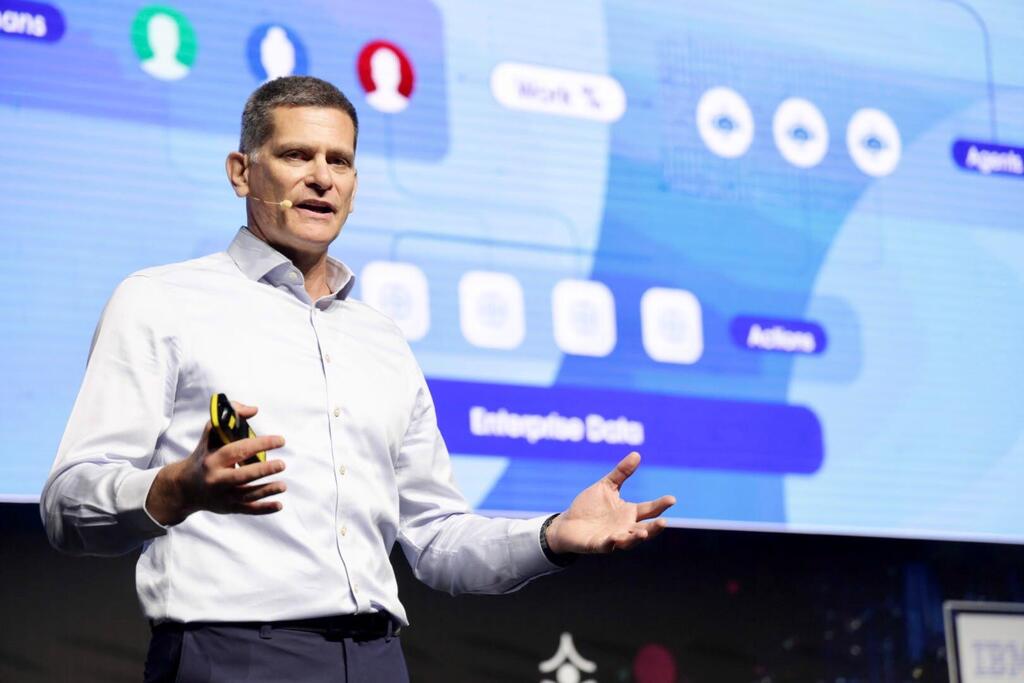
According to Margalit, the initiative has generated more than $88 million in revenue. Handling a comparable volume of initial responses through conventional staffing, he said, would have required approximately 400 additional employees.
The company has not provided further details on the calculation behind the $88 million figure, including the period over which the revenue was generated or how much can be attributed directly to the agents.
Margalit’s broader argument is that businesses risk getting AI adoption wrong when they focus on the technology before identifying the problem they want it to solve.
“Many AI projects fail because they start from the end, rushing toward results before defining what they actually aim to achieve,” he said. “It is better to start small, selecting use cases that deliver significant business value while considering how easily they can be implemented.”
That advice reflects a central challenge for companies moving from AI experimentation to routine use. A system may be technically capable of performing a task, but the value it creates depends on whether it fits into existing operations, has access to reliable information and can be trusted to act within appropriate boundaries.
“You cannot simply keep an organization and its business processes as they are and just layer AI on top,” Margalit said. “You must adapt your ways of working so that the technology can truly drive the organization forward.
“Today, AI agents can be deployed directly from within the work environment, whether for internal tasks or customer-facing activities. There is no need to switch to a separate application; you can work right from Slack, where our team collaboration takes place,” he said.
The promise of AI agents depends on more than their ability to carry out instructions. To operate usefully across an organization, they need access to information that is accurate, current and consistent. Without that foundation, automation can reproduce errors or act on an incomplete picture of the business.
“The foundation is an accessible, reliable data infrastructure that provides a single source of truth regarding customers, employees, and organizational activity,” Margalit said. “This infrastructure is shared by both humans and AI agents, enabling the organization to operate continuously and maintain productivity around the clock.”
Security and reliability are equally important, he said, because companies need confidence not only in the technology but also in the processes it follows and the outcomes it produces.
The question is particularly relevant as AI tools move beyond generating text or answering questions and begin carrying out tasks across business systems. Companies must determine which activities can be delegated, when a human should intervene and how to maintain oversight without undermining the efficiency that automation is intended to deliver.
“Today, humans and agents work side-by-side; the challenge lies in managing this integration so that each focuses on what they do best, thereby maximizing their combined productivity,” Margalit said.



