









“If Israel doesn’t change course, it could end badly”
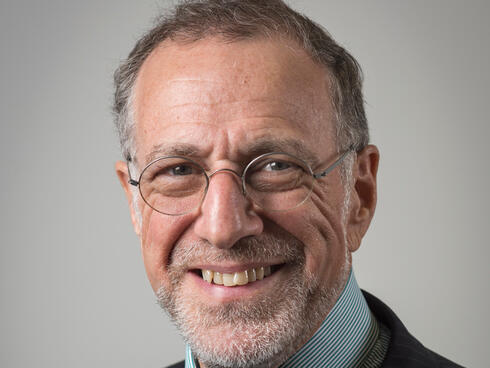
Sir Mick Davis, former Chief Executive of the Conservative Party and chairman of the Jewish Leadership Council in Britain, warns that although Israel is displaying huge military strength, it rests on an economic and social base that is being steadily eroded. He talks about relations with the US, Israel’s standing in the world and rising antisemitism, and explains why the current government cannot do what is needed.
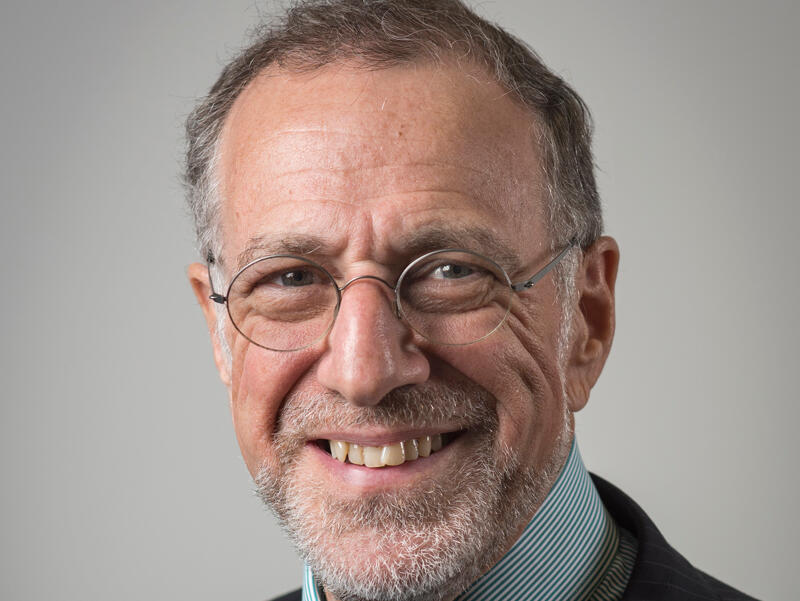
Israel may be displaying impressive military strength, but economically, diplomatically and socially it is being gradually eroded, says Sir Mick Davis, regarded as one of the leading voices in the Jewish world. Born in South Africa, he was chief executive of Xstrata, one of the world’s largest mining companies, and today heads the investment company Vision Blue Resources, which focuses on minerals and resources. In his public life he served as chief executive of the Conservative Party in Britain and led the country’s Jewish community. Unless Israel scales back its commitments, repairs its relationship with the US and makes a political and diplomatic change, he warns, it could reach a point of no return.
You argue that Israel is not weak but in fact strong. So where is the problem?
“Power is an asset, but the problem starts when a political leadership confuses power with security. Power gives a sense of security, but it isn’t permanent. Below the surface, processes are at work that deepen the country’s structural insecurity. A country can be strong – with advanced weapons, military strength and technological ability – and believe it can always make up for its weak points. But power is not security.“
When does resilience turn from a source of strength into a source of vulnerability?
“As long as you are strong, you believe you can always make up for your weaknesses. But there comes a stage where that ability wears out, and then a decline begins that is hard to stop. At that stage, strength no longer papers over the cracks. If you don’t understand that being strong is not the same as being safe, in the end you may reach breaking point.”
Has Israel already reached that point?
“My whole thesis is that Israel is dealing with a series of challenges at the same time. Its commitments keep growing, while the economy’s productive capacity is being worn down. Hundreds of thousands of reservists are away from their jobs, and significant parts of the population don’t take part in the labour market. The way the West Bank is run also places a heavy economic burden and exacts a price in lost output. So the productive base becomes narrower and more stretched, and in that situation Israel will struggle to fund its many fronts over time. Add to that the deep dependence on the United States – not only for aid but also for the supply of weapons – and you see that Israel is approaching a dangerous threshold.”
Is this in effect strategic overstretch?
“Yes. Israel’s commitments – against Iran, Hezbollah, the Palestinians, the Houthis and other threats – require a strong economy and enormous financing capacity. The question is whether the economy can go on bearing this over time. At some point the bill comes. This is the double whammy: American support may shrink, and Israel will have to devote a larger share of its productive capacity to producing weapons, just when its economic base is being worn down. I’m not saying it will necessarily end badly, but if we don’t recognise reality and change course, the risk grows significantly.”
What warning signs do you see at the moment?
“There isn’t one flag, but several. The reality today is that Israel’s debt-to-GDP ratio has risen from 61% to around 68–69%. That is not a good trend. There have been five rating downgrades in the last two years. At the peak there were more than 300,000 people in the reserves. Between 1.5% and 2% of GDP goes on supporting the West Bank. The amount of money available for investment in technology has fallen sharply. So the signs are there, and this is no longer the robust place it once was. Add to that everything else – for instance, how the region sees Israel after the confrontation with Iran. Before, there was a strong, almost all-powerful force here. And suddenly, after Iran, it doesn’t look so impressive. To that you can add the polarisation in Israeli society around ultra-Orthodox conscription and the judicial overhaul, and the emigration from Israel too.”
And yet the shekel is at a record high, the stock market is up and the capital market is working. Why don’t the markets reflect this risk?
“Yes, some will say Israel has a vibrant economy, that the shekel has never been stronger, that the stock market is solid, and so on. Those figures hide a whole series of weaknesses within the Israeli economic structure. These are not the right indicators to look at. The country’s productive capacity is the story. On one side, there are more and more commitments. On the other, the base of those who produce and pay taxes keeps shrinking. Reservists, the part of the community outside the labour market, emigration, the withdrawal of investment, defence spending – all of these reduce productive capacity. At a certain point the economy will no longer be able to produce the goods, and that is the moment the bill comes.”
If the danger is clear, why doesn’t the leadership change course?
“Politicians don’t recognise the direction of travel until it’s too late. Gorbachev understood they had to change only after the collapse of the oil price in the mid-1980s, but by then it was too late. Within six years of making all those changes, the Soviet Union was gone. Second, you don’t see all the information, because sometimes it’s deliberately hidden. Just as in the Soviet Union, where nobody wanted to bring the leaders bad news. In a country like Israel, sometimes the information isn’t reported because it’s not convenient to report it. So people don’t see it. It takes a leadership that will say: we see the full picture, this is not good for the country, and so we are going to do something.”
If you were advising the Israeli government, what would you advise?
“I would advise doing everything possible to stop the change in political sentiment in the United States. This is an existential matter. Netanyahu managed to take a positive bipartisan consensus toward Israel and break it into a partisan position – positive for the Republicans, negative for the Democrats – and from there into a bipartisan consensus that is wholly negative toward Israel. The majority of Democrats have a negative view about Israel and an increasing number of Republicans from the ages of 18 to 50 now have a negative view. That is a dangerous trend.
“Second, some of the open military fronts need to be closed. On Iran there is a limited range of options for what can be done. But on Hezbollah there is no such limit. Dropping bombs on Hezbollah will not destroy it. You kill one leader, another rises in his place. That doesn’t take the oxygen out of the organisation. We have to work with the Lebanese government, with regional players, with France, the United States, in a way that removes Hezbollah as a player within Lebanese society.
“And then the Palestinian issue has to be dealt with. You can’t live with a situation where the West Bank becomes ungovernable. You can’t carry on with a situation where there is no attempt to find some basis for Palestinian self-determination, so that Israel can get back into a position where it can hold a constructive dialogue with the Sunni powers in the region, and also improve its standing in the international arena. The last thing: find a coalition in Israel that isn’t dependent on ultra-Orthodox votes. If they find such a coalition, they will be able to do what is needed on ultra-Orthodox participation, not only in defending the state but also in the labour market.”
Is the current government capable of doing all this?
“This government isn’t capable of it, so it has to be replaced. A broad government could do it if it wanted to. There may be ultra-Orthodox in the government and there may be a religious party, but if you depend on them, you’re stuck.”
Some will say this is the analysis of a leftist…
“It would be ironic to accuse me of being left-wing, given that I’m a well-known member of the Conservative Party and held a role in running it. I’m not making a moral argument here. This is an argument about an existential risk and a way of dealing with it. It’s neither left nor right; it’s simply an attempt to look at the facts on the ground and at what needs to be done to resolve them.
“The challenge in Israel’s political situation is twofold. First, they aren’t even willing to analyse what the real problem is. Second, even if they did analyse it, they would ignore it, because the solutions are politically uncomfortable for them. You can’t refuse to do things simply because they’re uncomfortable. The world around Israel is changing, but Israel goes on working to the same formula.”
Is the antisemitism now emerging a strategic threat?
“I grew up in the golden age of being a Jew. For almost all of my childhood and working life I didn’t feel antisemitism. I could do anything, I was accepted everywhere, we were admired. I remember myself as a teenager, someone stopping me in the street on my way home from shul and saying: ‘Jews are fantastic.’ It was a completely different world. Today we are in a situation where antisemitism has penetrated deeply. It rests on the one hand on a supposedly intellectual leftist proposition, and on the other hand a determined anti-Jewish Islamist approach and these two meet together in a shared hatred. In Britain, Corbyn’s leadership of the Labour Party gave permission for the new era of antisemitism. It normalised things that had not been acceptable to say in society. Now the ancient hatred is bursting out. This is very dangerous for Jewish communities around the world. Not only because of the physical danger that exists, as we’ve seen examples in the last year, but also with the violence of language being used, which creates fear and a sense of delegitimisation among Jews that undermines Jewish life in the Diaspora.”
Is this government contributing to that?
“Antisemites do not exist because of anything Israel does, but some of the actions of the Israeli government and its ministers give them far more oxygen to thrive.”
At the same time, we are seeing the populist right growing stronger around the world. How does that connect?
“I am very troubled that there are people in Israel who support extreme elements simply because they sound like supporters of Israel. That is dangerous, because it undermines our system of values. The most extreme expression of it was when Minister Amichai Chikli invited the British far-right activist Tommy Robinson to speak at a conference against antisemitism. It disturbs me that a platform is given to people like that.”
Sir Mick Davis (68)
Married, three children. Divides his time between Britain and Israel.
Born in Port Elizabeth, South Africa
Bachelor of Commerce from Rhodes University, South Africa; honorary doctorate from Bar-Ilan University
Former chairman of the Jewish Leadership Council in Britain; Former Treasurer and Chief Executive of the Conservative Party
Knighted for his contribution to Holocaust education and commemoration
Chairman of MacSteel; founder and managing partner of Vision Blue Resources
Co-founder of The London Initiative



