










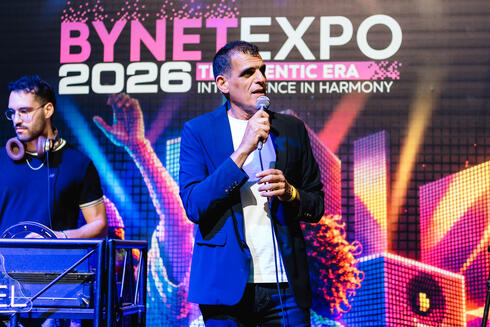
“Human intelligence must stay in control of AI”
Bynet CEO warns that autonomous agents could reshape the balance between people and machines.
“The AI revolution differs from previous technological revolutions in both its speed and its ability to disrupt global order. It is not merely a tool, but introduces machine entities that compete with humans. The greatest challenge for humanity and the IT industry is finding the right balance in human-machine integration,” said Alon Ben-Zur, CEO of Bynet Communications.
“We must ensure that human intelligence controls technology, and not the other way around,” he added.
According to Ben-Zur, this is essential so that human workers do not lose skills and knowledge required to maintain control over increasingly autonomous systems. “At Bynet, we help organizations across all sectors absorb this revolution correctly, develop AI and automation environments, and ensure a broad ecosystem of computing resources, communications, and cybersecurity.”
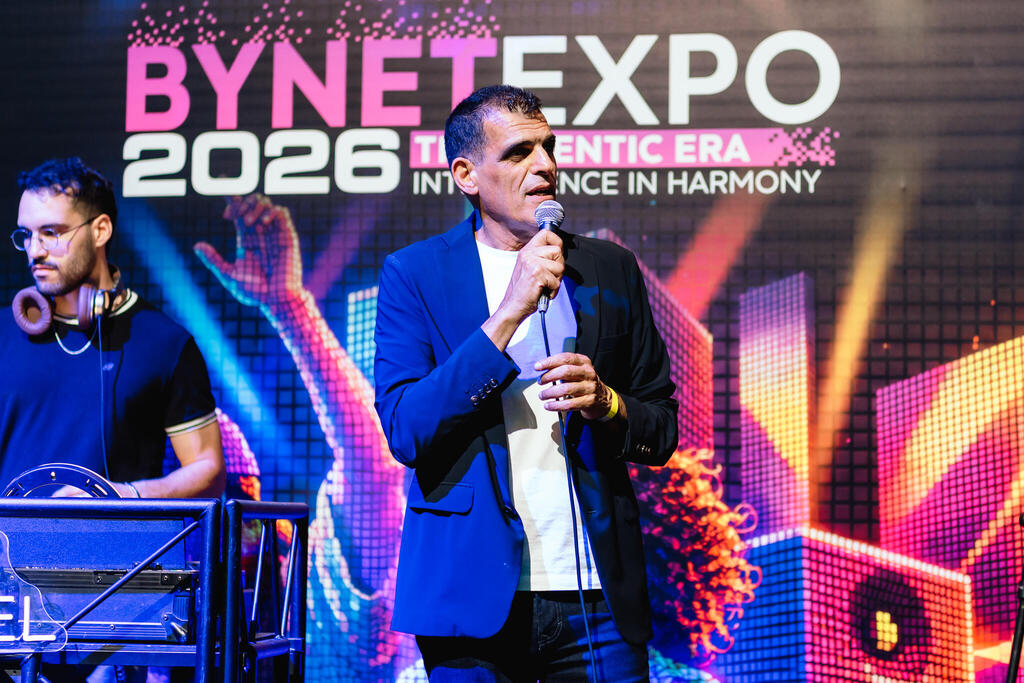
Ben-Zur spoke at the Bynet EXPO 2026 conference, which focused on the “Agentic Era” and the transition from AI as assistive tools to autonomous agents that initiate and execute tasks as part of organizational workflows.
Brig. Gen. (res.) Erez Askal, head of the Head of Israel Artificial Intelligence Directorate, addressed the national implications of the AI revolution. According to him, Israel’s advantage does not necessarily lie in building massive infrastructure or the next large language model, but in the ability to rapidly connect technology, applications, and real-world problem-solving.
“The world talks a lot about infrastructure, energy, and large models, but the important question is what we actually do with AI in real life,” said Askal. “The goal is to transform Israel from a startup nation into a nation spanning all layers of AI, from models, through applications, and all the way to integration with the physical world.”
Roy Zisapel, chairman of RAD Data Communications, discussed the dramatic changes in computing infrastructure alongside unprecedented cyber challenges driven by the expansion of AI agents.
“We use the adversary’s strength to defeat him. The core principle in judo is to use the opponent’s power and momentum to your advantage. In AI-based cyber defense, we apply the same principle, leveraging the attacker’s capabilities and the vulnerabilities AI exposes. This creates an automated defensive shield with minimal human intervention, designed for the ongoing battle against malware. It will provide an effective response to attackers from Iran and any hacker using AI for offensive purposes,” Zisapel said.
He also noted: “AI is the new oil. In this new world, several critical components are required, including dedicated infrastructure and advanced data processing capabilities. A significant infrastructure shift is needed to meet the demands of this era. As a group, we are investing in Israel to ensure we remain global leaders in AI-driven innovation.”
Oren Sagi, Managing Director of Cisco Israel, emphasized that organizations are now facing a surge of autonomous AI agents generating, on average, 450% more network traffic than humans performing similar tasks.
“This is no longer just an AI challenge, it is an architecture and infrastructure challenge. The transition to the AgenticOps era requires unified management and automation solutions,” Sagi said.
According to him, the goal is not only to consume AI, but to empower organizations to build and manage their own customized AI agents in natural language.
“We give customers the factory to produce agents, so they can lead this future with full confidence,” he said.



