











“If we don’t do it great, they’ll shut us down”: Inside Intel’s wartime chip and subsequent stock surge
As Intel shares jumped after political backing in Washington, the processor it unveiled at CES was completed in Israel under extreme pressure.
LAS VEGAS - On the main stages of the CES 2026 exhibition in Las Vegas last week, Intel executives presented what they described as a decisive leap forward for the personal computer. New processors, they said, would soon enable laptops to run for up to 27 hours on a single charge, deliver smoother gaming performance, and support artificial-intelligence applications that no longer require a constant connection to the cloud.
Technology journalists and professional YouTubers moved between Intel’s booths with visible enthusiasm, drawn to demonstrations of the company’s latest Core Ultra processors from the 3 series. But behind the dense technical specifications and polished demos lies a far more precarious story, one shaped by geopolitical tension, wartime disruption, and high-stakes industrial risk.
The architectural “brain” of Intel’s new client processors, codenamed Panther Lake until recently, was designed and developed largely in Israel. Much of that work took place during a period when the country’s airspace was frequently closed, engineers were called up for extended reserve military service, and development schedules collided with the realities of war.
The processors are expected to reach the market next month, shipping across roughly 200 different laptop models. Their most visible consumer benefit is energy efficiency. According to Intel data presented at CES, systems equipped with the new chips can reach up to 27 hours of battery life under typical usage conditions.
Itzik Silas, a senior vice president at Intel who leads the Client Products Program Office (CPPO), said the processors are able to intelligently “route” everyday tasks, such as video calls or streaming video, to highly efficient cores, leaving the more power-hungry components dormant. Under light office use, he said, a laptop could operate for “several days” without being plugged in.
For gamers, Intel showcased a new “Frame Generation” capability, described by Dan Rogers, VP/GM PC Products at Intel, as a major shift in how performance is delivered on thin, lightweight machines. The processor uses AI to generate multiple synthetic frames for every real one, producing smoother motion without the need for a discrete graphics card in some cases.
The third, and strategically most significant, advance involves artificial intelligence itself. Until now, most generative AI tools have relied on cloud infrastructure, sending user data to remote servers for processing. Intel’s new processors are powerful enough to run these models locally, on the device.
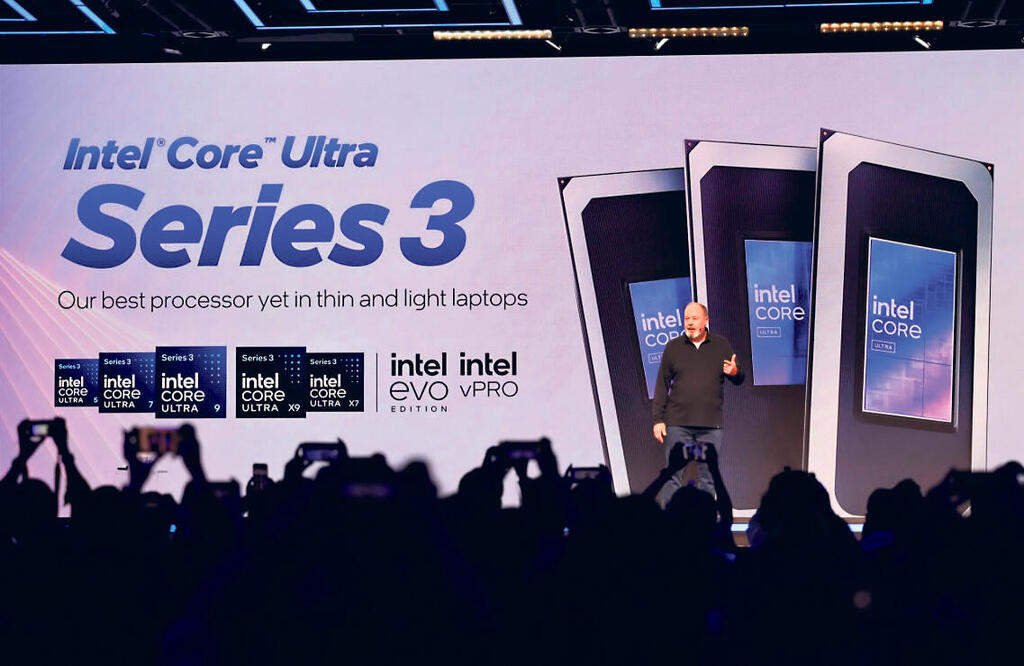
On stage at CES, Aravind Srinivas, CEO of Perplexity, demonstrated an enterprise version of the product running entirely on the processor. The implications are straightforward: faster response times, greater privacy, and independence from network connectivity. Silas described a future in which “intelligent agents” operate continuously in the background, managing calendars and information while consuming minimal power.
That vision arrives at a moment when Intel’s strategic importance extends well beyond consumer electronics. Intel shares jumped 10.7% on Friday, and are up 20% so far this year after surging 84% in 2025, after U.S. President Donald Trump posted a celebratory message on social media following a meeting with Intel’s CEO Lip-Bu Tan.
“I just finished a great meeting with the very successful Intel CEO, Lip-Bu Tan,” Trump wrote. “Intel just launched the first SUB 2 NANOMETER CPU PROCESSOR designed, built, and packaged right here in the U.S.A.” Trump added that the United States government, now a shareholder in Intel, had already made “tens of billions of dollars for the American people, in just four months,” calling the arrangement “a GREAT Deal.”
For investors, the message was less about the precise technical claims than about political backing and Intel’s role at the center of Washington’s effort to re-establish domestic leadership in advanced semiconductor manufacturing. Intel has become a symbol of U.S. industrial policy as much as a chipmaker.
Yet while Trump emphasized American manufacturing, much of the engineering intelligence behind Intel’s latest processors was developed thousands of miles away, under conditions that bore little resemblance to a victory lap.
According to Mitch Lum, Intel’s Product Manager for both Core Ultra Series 3 and Core Series 4, the development process was marked by repeated crises. As the Israeli team approached the critical phase of transferring the design to production at the end of 2024, during the height of the war, hundreds of engineers were called into reserve service.
“It was a miracle,” Silas said. “We had to rely on teams in India for a period, but the heart of the development remained here. Despite the missiles and the alarms, we didn’t miss a single milestone.”
The war was not the only obstacle. Early production data initially showed performance well below target. Engineers faced a choice: halt development and wait for improvements in the manufacturing process, or press forward on schedule and accept the risk. The team opted for what Intel described internally as “speculative execution,” continuing development on the assumption that production issues would be resolved in time.
They were. The processors ultimately received final production approval two months ahead of the original deadline.
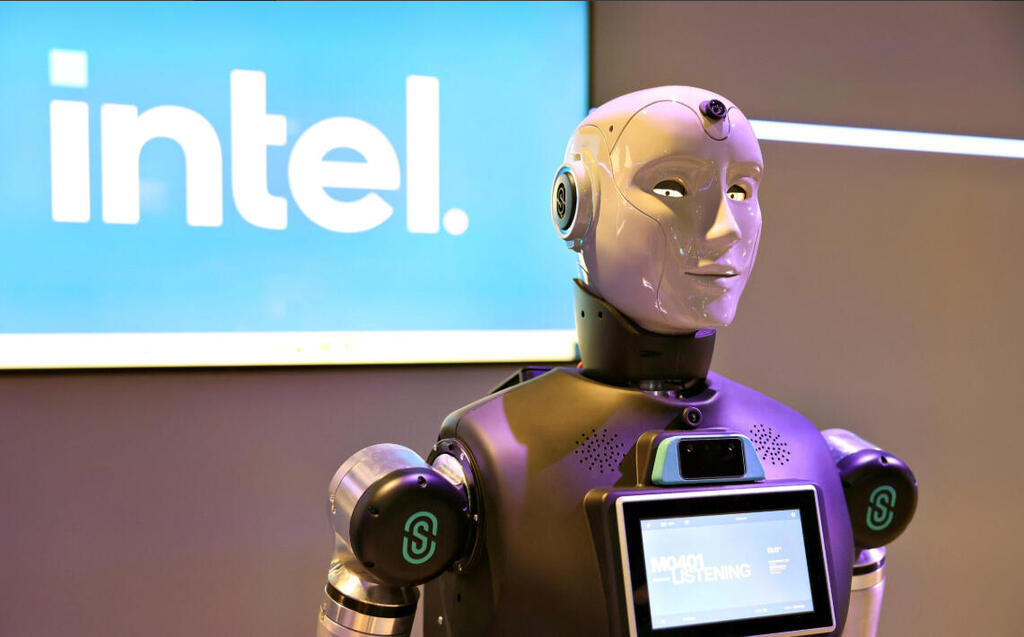
Intel also revealed that the new chip will be deployed beyond laptops, including in advanced robotics systems where it replaces the need for two separate processors, one for motion control and one for vision, reducing cost and complexity. The company confirmed plans to enter the handheld gaming console market later this year using the same architecture.
For Silas, the motivation of the Israeli teams was deeply personal. “They understood they were fighting for their home, literally,” he said, invoking a line often attributed to Intel’s legendary former CEO Andy Grove: “Only the paranoid survive.”
“In this business,” Silas added, “if we don’t do it great, they’ll shut us down.”



