










HR The Next Leap
Imperva: “A hybrid and flexible model is no longer a perk, it is an essential part of maintaining balance”
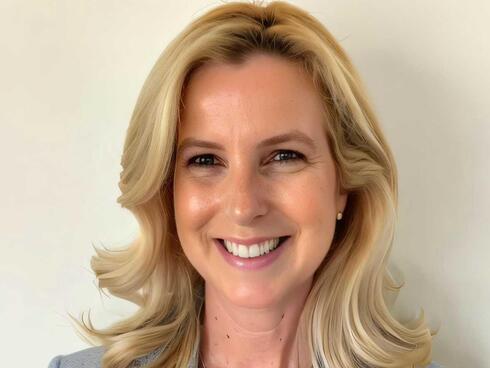
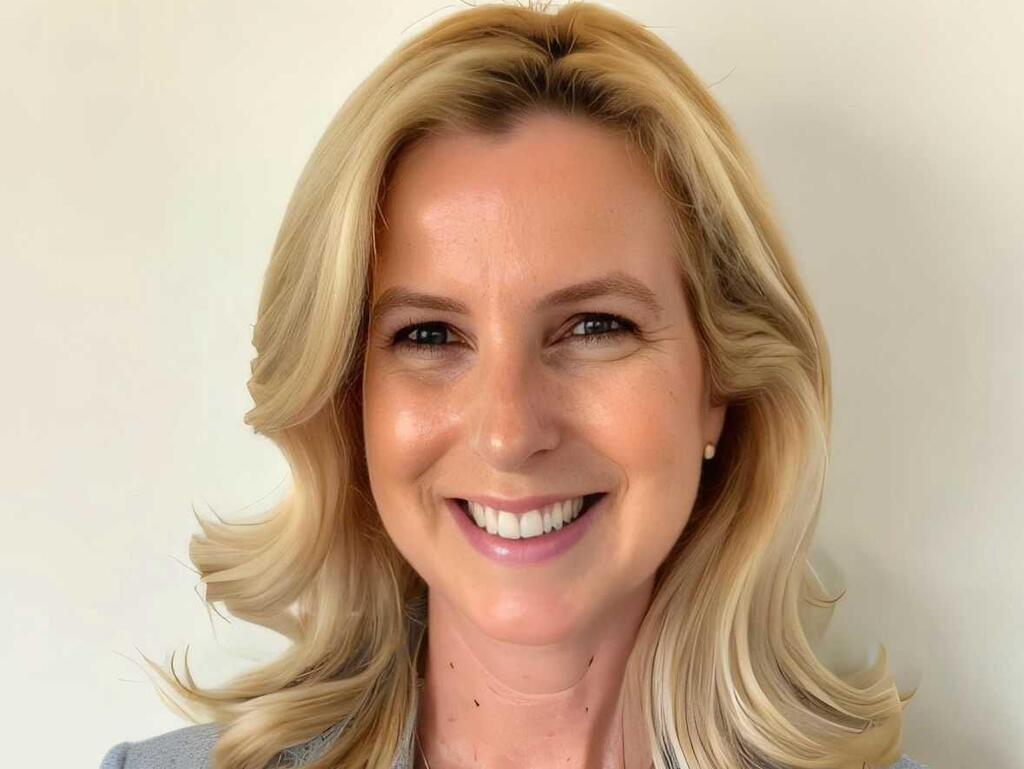
Einat Leham-Livnat, VP HR and CSP Site Manager Israel at Imperva-Thales, discusses the benefits of flexibility over traditional corporate work perks, and why the company prizes internal global mobility, as part of CTech’s HR: The Next Leap series.
“For many of our employees, the ability to work in a hybrid and flexible model is no longer a perk, it is an essential part of maintaining balance and reducing daily stress,” says Einat Leham-Livnat, VP HR and CSP Site Manager Israel at cybersecurity company Imperva-Thales. Given the state of the local industry over the past few years, with Startup Nation's workforce enduring an ongoing emergency state on top of more macro burnout trends, Leham-Livnat believes this flexibility “allows people to be present for their families and personal life while continuing to contribute and perform at a high level.”
From active and looming war threats, to AI rapidly and constantly redefining what it means to be productive, running a company in Startup Nation brings with it its own category of challenges and rewards. HR: The Next Leap takes a glimpse into the heart of Startup Nation via the HR professionals shaping its culture. We survey the executives whose jobs are more demanding and more vital than ever, as they heed the future-proofing of their workforce, while simultaneously ensuring business continuity and employee wellbeing during relentlessly unprecedented times.
Turning to AI alongside other recent trends affecting the workplace, while Leham-Livnat describes the tech as a "tool for augmentation" whose “role is to amplify human capabilities, creativity, and productivity, not replace them,” she does predict “organizations' structure will look different in the coming years.” She continues: “Our approach is to stay curious, learn from the market, and continuously review the skills we need now and for our future.” Consequently, she explains the company is “evolving our hiring approach to assess an AI mindset, including systems thinking, critical reasoning, agility, curiosity, and the ability to connect technology with people.”
You can read the entire interview below.
Company Name: Imperva
Sector: Cyber
Founders: Amichai Shulman and Mickey Boodaei
Year of Founding: 2002
Investment stage: Acquired
Total investment to date: $139M
Investors: French multinational company Thales acquired Imperva for $3.6 billion in 2023
Current number of employees: 500
Website: https://www.imperva.com/
Social Media: LinkedIn
As of March 2026, the market officially shifted into an 'employer's market'. How have your screening criteria changed, and do candidates - including senior-level ones - still hold any leverage in negotiating salaries and terms?
While the market has shifted toward employers in 2026, one thing hasn't changed: exceptional talent still has choices.
In cyber security, AI, and technology leadership, the very best candidates continue to be in demand. They may receive fewer calls than during the hiring boom, but they still have leverage because their expertise, leadership, and ability to create impact remain rare and highly sought after.
Today, hiring is about much more than matching skills to a job description. We invest significant time in personal touch and in understanding who the person is, how they lead, how they think, how they adapt to change, and whether they have the curiosity, entrepreneurial mindset, and drive to create real impact.
At the same time, candidate experience has become more important than ever. Every interaction is an opportunity to showcase who we are as an organization and to learn from the market. The best candidates are evaluating us just as carefully as we evaluate them.
Compensation remains an important part of the equation, particularly in the cyber security industry, where exceptional talent continues to be highly valued. Even as the market shifts toward employers, we remain committed to offering competitive packages. We want our people to feel valued, recognized, and confident that their contribution matters. Beyond that, we continue to offer an extended package of social benefits that goes well beyond the market benchmark. These benefits are particularly valued by employees who are planning for the long term and looking for stability, security, and support for themselves and their families.
That said, the strongest candidates understand that long-term career decisions are about much more than salary. They look at the full picture: the opportunity to influence strategy, drive innovation, grow professionally, learn from great leaders, and be part of a culture they genuinely believe in.
The best talent is not simply searching for the next role. They are looking for a place where they can make a meaningful impact, build something significant, and continue evolving. Organizations that create that environment will continue to attract exceptional people, regardless of where the market cycle stands.
How have/are you managing operational continuity and recruitment while the economy navigates the emergency state triggered by the conflict with Iran? With the threat of escalation looming at any moment, how are you and have you been handling everything from interviews interrupted by sirens to managing teams thinned by massive, ongoing reserve duty?
The reality in Israel has taught us that business continuity and employee care are not competing priorities, they go hand-in-hand.
Throughout the conflict, we continued hiring and supporting the business, but we did so with a great deal of flexibility, empathy, and respect for what people were experiencing. Interviews were rescheduled and moved virtual because of sirens, offices were temporarily closed, and many conversations moved online. We adapted to candidates' realities rather than expecting them to adapt to ours. We transitioned from a face-to-face onboarding model to a virtual one, delivering the required equipment directly to new employees' homes and maintaining close, frequent, and personal contact with them until their first day.
Candidate experience became even more important during this period. From the very first interaction, we wanted candidates to feel the same care, support, and sense of belonging that we provide to our employees. Many candidates told us they felt at home from the first conversation. They appreciated the personal touch and our commitment to maintaining business continuity and keeping the hiring process moving forward despite the challenges.
Internally, our first priority was our people and their families. We maintained ongoing communication, provided around-the-clock HR support, and gave managers the flexibility to support employees based on individual needs. This was not a time for rigid policies or tracking hours. Employees were trusted to manage their responsibilities while caring for themselves and their families.
At the same time, the level of commitment demonstrated by our teams was extraordinary. Employees on reserve duty were supported by their colleagues, and global teams stepped in to help cover critical work when local resources were unavailable. Despite the stress, uncertainty, and burnout that naturally come with such circumstances, people consistently showed up for one another and for our customers.
What stands out most is the sense of mutual responsibility that emerged. People supported each other without being asked. Teams rallied together. Customer commitment remained a top priority. When employees feel genuinely cared for and trusted, they give that trust back many times over.
For me, that has been one of the most inspiring lessons of this period. Resilience is not built through processes or policies. It is built through people, trust, and a shared sense of purpose.
Related articles:
Beyond the role of empowering employees, which roles has AI eliminated over the past year, what percentage of your workforce was reskilled to avoid being phased out, and how has this impacted entry-level hiring?
We have not eliminated roles as a direct result of AI adoption over the past year. We see AI as a tool for augmentation. Its role is to amplify human capabilities, creativity, and productivity, not replace them.
This philosophy shapes our approach to AI adoption. We have invested heavily in education, workshops, experimentation, and practical use cases that help employees integrate AI into their daily work.
One initiative we are particularly proud of is the AI Innovation Room we created for employees. It provides a secure environment where teams can experiment, brainstorm, test new tools, and learn together. This has been a powerful way to reduce concerns, build confidence, and accelerate adoption across the organization.
At the same time, we are building internal AI capabilities, creating a shared knowledge base, and encouraging teams to continuously explore how AI can enhance their work, improve decision-making, and accelerate outcomes. A key part of this journey is the creation of our "Company Brain" – a centralized knowledge ecosystem that captures business context, expertise, and institutional knowledge, enabling employees and AI tools to work from a trusted and consistent source of truth
We are also establishing secure frameworks, governance models, and AI-enabled workflows that allow employees across technical and non-technical functions to safely experiment, learn, and continuously build new skills. The goal is to amplify human capabilities and potential, not substitute for them.
That said, I believe organizations' structure will look different in the coming years. Roles will evolve, required skills will change, and some work will be performed differently. Our approach is to stay curious, learn from the market, and continuously review the skills we need now and for our future, rather than simply following every trend or headline.
We are evolving our hiring approach to assess an AI mindset, including systems thinking, critical reasoning, agility, curiosity, and the ability to connect technology with people. These capabilities are essential in a world of continuous technological change.
We have also enhanced our job descriptions to include AI-related skills and technologies. In addition, we have introduced new dedicated AI-focused roles including Data Scientists and Product Managers, who are responsible for developing, advancing, and scaling AI-driven products and solutions.
There are different market predictions regarding entry-level hiring. We do see high value in early-career talent. This generation is growing up with AI and often approaches technology in a very natural and intuitive way. They learn quickly, challenge assumptions, and bring fresh perspectives that help accelerate adoption across the organization.
For me, the conversation is no longer about junior versus senior talent. The real question is: what skills, mindset, and learning agility does a person bring? The organizations that succeed in the AI era will combine experienced professionals with a new generation of AI-native talent, creating teams that can learn, adapt, and innovate together.
Against the backdrop of the unstable security and political climate, are you seeing an increase in relocation requests or 'quiet quitting' by top-tier talent moving abroad, and what is the most proactive step you are taking to retain them in Israel?
Despite the challenging security and political environment, we are not seeing a significant increase in relocation requests or a broad "brain drain" trend. We continue to see a small number of relocation cases each year, similar to what we have experienced historically, and they are often driven by personal or family considerations rather than a direct reaction to current events.
One of our greatest advantages as a global company is the ability to offer employees diverse career opportunities across countries, business units, and functions. We actively encourage internal mobility and view it as a positive outcome and a win-win for both the employee and the organization. When talented employees choose to continue their careers within the company, even if that means relocating internationally, we retain their expertise, leadership, and knowledge while supporting their personal aspirations.
A recent example involved a senior engineering leader whose family decided to relocate to the United States. Rather than losing this talent, we worked together to create a solution that allowed him to remain with the company, expand his scope, and support our growing North American business and customer base. It was a win for the employee, the business, and our customers.
People stay where they see opportunities to grow, lead, innovate, and make an impact. Our focus is on creating an environment where exceptional talent can build long-term careers, whether that journey takes place in Israel or elsewhere within our global organization.
In an era where stability has replaced flashy perks, how are you addressing the deep mental burnout of employees torn between the professional and security fronts, and what is the most critical benefit you offer today in place of the bonuses that have vanished?
When employees are balancing professional commitments, family responsibilities, and an ongoing security reality, the most valuable benefit we can offer is trust and flexibility. For many of our employees, the ability to work in a hybrid and flexible model is no longer a perk, it is an essential part of maintaining balance and reducing daily stress. It allows people to be present for their families and personal life while continuing to contribute and perform at a high level.
We have also made significant investments in health and wellbeing. Most recently, we expanded our health insurance coverage to include a broader range of services and support for employees and their families, introduced an enhanced life insurance program, and added an annual wellbeing budget that employees can use in ways that best support their physical and mental wellbeing.
At the same time, burnout is not solved through benefits alone. People need a sense of purpose, connection, and belonging. We invest heavily in community involvement, mentorship programs, innovation initiatives, diversity and inclusion activities, and partnerships with organizations such as the Cyber Education Center, the LGBTQ community, organizing Cyber Support bootcamp for injured veterans,. These are examples of initiatives that allow employees to contribute beyond their day-to-day role and create meaningful impact while strengthening their own sense of purpose and wellbeing.
If I had to identify the single most important benefit today, it would be our working model flexibility combined with a culture of trust. In periods of uncertainty, employees value knowing that their organization understands their reality, supports their wellbeing, and gives them the freedom to manage both their professional and personal responsibilities. That support creates pride, engagement, and loyalty in a way that no one-time bonus ever could.



