










“Your org chart is your problem today”: NFX’s Gigi Levy-Weiss on re-founding companies for AI
Using AI tools isn’t the same as being an AI-native company, the NFX co-founding partner told founders and executives, and their own thinking may be the biggest constraint.
Gigi Levy-Weiss wants founders to start over. “If you founded your company today, would it look the same?” the NFX co-founding partner asked. “I think the reality is that for 99% of companies, the answer must be no.”
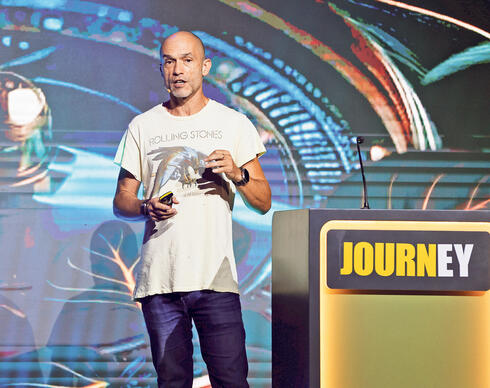
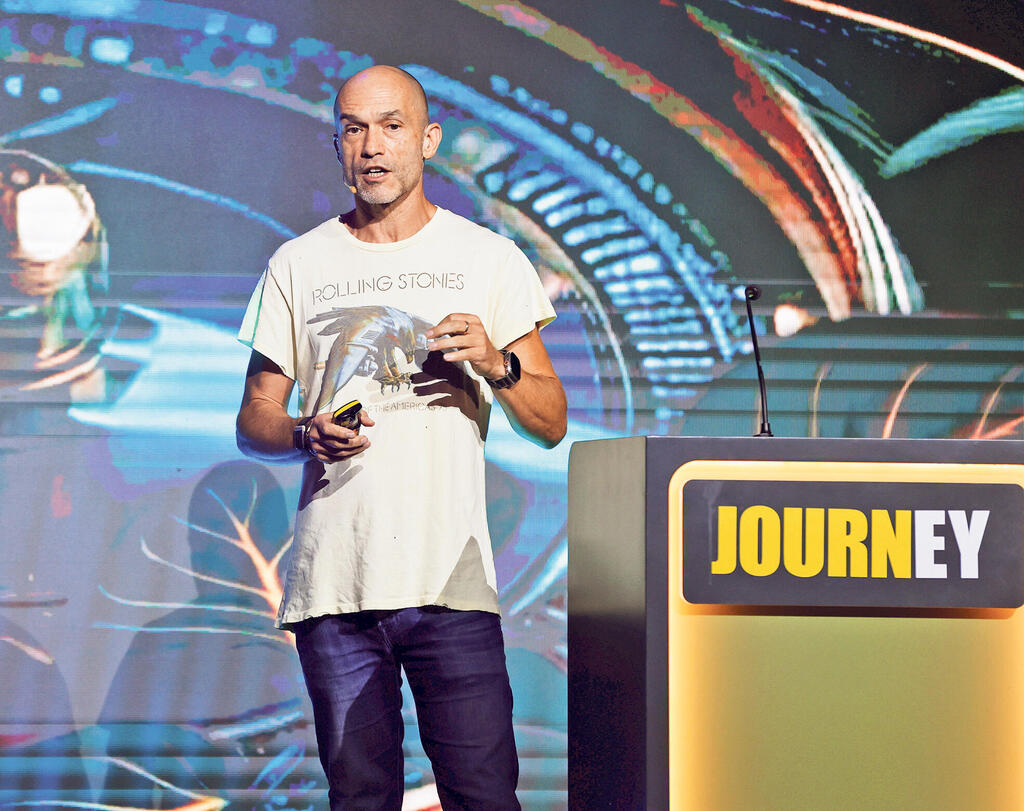
Levy-Weiss was opening the afternoon session at EY Israel’s JOURNEY 2026 conference at the Hilton Tel Aviv on Tuesday. The reason companies need rethinking, he said, is that “the world has changed. The constraints have changed. What you can do is different. The kind of people you need is different.”
NFX calls the response “the second founding,” and Levy-Weiss stressed that it isn’t incremental. “This is not just about making changes. This is not just about adopting a little bit. This is about rethinking how your company works.” Using ChatGPT or Claude to write code or prepare decks speeds up individual tasks, he said, and mandating the tools is “of course table stakes.” But “today if you’re not a native AI company, you’re falling behind.”
His test for the difference is a single question: “Has the path from identifying a customer need to actually putting a solution in the hands of the customer changed dramatically?”
By that measure, the obstacle is structural. “Your org chart is your problem today, because your org chart basically encodes the standards of the past,” he said. Departments made sense when each person held narrow, specialized knowledge, but every handoff between them carries a cost: “every time that you do a handoff from the product guy to the product marketing guy to the tech guy, every time you lose something.” His alternative is pods, “a small team that takes full responsibility for everything from need discovery all the way to putting the value in the customer’s hand.” That’s possible now, he argued, because people have become “orchestrators more than actually doing the specific tasks.”
That flips how problems get solved. “When we can automate everything, everything is a technology problem,” he said. The first question becomes “how do we automate it using AI? How do we automate it using agents?” Only after that comes the question of which people are needed to run and govern those agents. It also changes how speed is measured: “The only speed that matters is the speed of actually putting a solution in the customer’s hand.” Faster cycles, he added, mean more experiments, and “more experiments mean more shots at goal.”
The hardest edge of the talk was about people. “Every role needs to be a builder role. We no longer have employees that are not builders,” he said, finance and marketing included. He didn’t soften the consequence: “many of the people that work for us today are not necessarily the right people to work for us in the future.” It’s a moral question he raised and then explicitly set aside.
Nor did he exempt the people in the room, himself included. “Our ambition was limited by what was possible in the past,” he said. “You as founders and you as executives are also a limitation.” His closing advice: “You need to build a company that will beat you, because if you’re not going to build that, guess what? Somebody else will.”



