










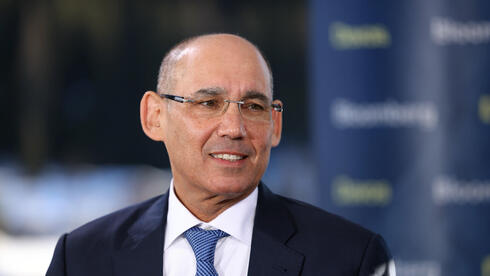
“If a rate decision is 100% clear, you’re probably late”: Amir Yaron on cutting interest rates
The Bank of Israel governor explains why uncertainty is built into monetary policy.
After cutting interest rates for a second consecutive meeting, Bank of Israel Governor Prof. Amir Yaron laid out a broader case for Israel’s economic resilience, arguing that productivity driven by high-tech and artificial intelligence can sustain growth even with higher real interest rates, while the central bank keeps a cautious eye on inflation, housing, the shekel, and fiscal risks.
Bank of Israel Governor Prof. Amir Yaron, this is probably one of the days when you will gain the most public sympathy: you lowered the interest rate for the second time in a row and surprised many. How does it feel?
"I have been here in the Governor’s office for quite a few years. We do what we think is most correct professionally. When it was right to raise the interest rate, we raised it. When it was right to keep the interest rate high, we held it. I am truly proud to be in this institution, which works by the book and is based on data and economic developments. Some decisions are clear, and some are a little less clear, and you have to manage risks. I will say one more thing: if your decision, especially when changing the interest rate path, is completely 100 percent clear, then there is a big chance that you are late."
At the press conference, you said that the neutral interest rate in Israel is 1.5% above inflation or more. This basically means that after many years (2009-2021), when we had a real interest rate of zero, Israel will now have a real interest rate of around 1.5%. Will Israel be able to grow like this over time?
"I already said in the previous decision that we are probably not returning to the pre-pandemic interest rate regime. We are probably not in secular stagnation, an economic situation that existed before the pandemic, in which there was a low investment rate and therefore a low interest rate was needed to encourage investment and growth. Certainly, we are not in that situation in Israel, given productivity here and the strength of high-tech.
"The neutral interest rate here is probably higher than in the U.S., and the AI revolution could push it even higher. Therefore, I can definitely see the Israeli economy growing even at a real interest rate of 2%. But we have to remember that interest rates have a lag effect. We want to see the impact of the two interest rate cuts, and then move forward in a balanced way, and assess whether the neutral interest rate is indeed much higher than before the pandemic or whether we need to continue lowering it."
You mentioned Israeli high-tech as a driver of productivity and growth. Isn’t high-tech also an inflationary factor? We’ve seen exits that ultimately flow into the housing market, pushing prices higher.
"High-tech is truly the engine of the economy. It brings exits, and with those exits come people who have made significant profits, which does increase inequality to a certain extent. And clearly, in certain areas, it can have an impact and raise prices. But inflation is still largely influenced by what can be called the ‘center of the economy.’ High-tech may have an impact, but we see moderation in inflation, and we are trying to guide it toward the target range while maintaining maximum economic activity."
You often emphasize the difference between inflation, the rate of price increases, and the price level, or cost of living. Prices are rising more slowly, but the cost of living in Israel remains high.
"That’s true. When it comes to the cost of living, there is a need for infrastructural and structural changes. We are an island economy and import many goods, so import barriers need to be lowered and more players need to enter the market, whether in food or other sectors.
"We also need to expand transportation infrastructure. This is expected to have an effect, as improved transportation allows for more construction in the periphery, which can lead to more accessible housing prices for the broader population. This is connected to the fact that there is already a stock of unsold apartments due to increased supply and expectations of price declines."
You sounded particularly optimistic about the housing market, even suggesting that the interest rate cut will not cause a surge in prices. How confident are you?
"First of all, this is another reason why the move is considered and cautious. The housing market is very important, and we want to monitor developments closely. Today, the market is characterized by low transaction volumes, and we have seen a cumulative price adjustment over the past eight months.
"We also see many construction starts and completions, as well as supply expected two-plus years from now, following land purchases made as recently as the end of 2025. Therefore, we believe there is sufficient supply, and if there is further price adjustment, it is likely to happen in a relatively orderly manner."
Related articles:
- "We all understand high-tech is our locomotive. Therefore, we must maintain Israel as an open, competitive economy"
- "Cutting interest rates too early would be like stopping a course of antibiotics halfway through, it could backfire"
- Bank of Israel Governor: "Strong institutions are key to economic prosperity"
The real estate market is also critical for financial stability, both for households and for developers struggling to sell apartments. Stability is part of your mandate. What do you see there?
"We often talk about the ‘burden on mortgage holders,’ but in our analyses, the monthly payment as a share of income has actually declined for most borrowers. That’s because interest rates have barely changed over the past two years, while wages have increased.
"In addition, arrears remain at very low levels. Of course, we also monitor developers’ debt to the banking system. This is our responsibility, and at this point, we do not see a problem there."
You were asked about the strengthening shekel and whether, and when, you might intervene. Some felt the answer was unclear.
"I think I answered very clearly. The foreign exchange intervention tool exists as part of the Bank of Israel’s toolbox, but currently it is used to support price stability, that is, to fight inflation and ensure proper market functioning. Exporters, at this stage, know how to cope with the appreciation."
I hope I understood your point correctly.
"We want the market to function on its own. We know how and when to act in the foreign exchange market, whether for stability, market functioning, or to support price stability, if we believe it is a tool that can help us."
You called for advancing budget approval without increasing the deficit, but placed less emphasis on the fact that the approved deficit is relatively high and moves Israel away from a gradual reduction in the debt-to-GDP ratio.
"Throughout, whether in interest rate decisions, budget discussions, or government deliberations, we have consistently called for a low deficit ceiling, in the lower part of 3%, around 3.2% to 3.4% of GDP. That was the initial target, and we believe it was the right deficit level for 2026.
"We also believe that in 2027 there should be continued efforts to reduce the debt-to-GDP ratio. Period."
But in today’s decision, you emphasized something else.
"That’s correct. We are in a period of ongoing debate in the Knesset over the budget. The main concern now is that some revenues may not materialize, given proposed tax measures, and there is uncertainty on the spending side, particularly if a geopolitical event requires higher security expenditures. Alternatively, funds from the Wiz deal may not come in.
"Given the current situation, it was important to me that the budget be approved as proposed and not exceed a deficit of 3.9%. That is the context. But we clearly believe it is very important for public debt to be on a downward trajectory."



