










“It’s hard to find an Apple product without an Israeli touch”
Apple Israel manager Rony Friedman says local teams are embedded in chips, cameras, modems, and AI at the heart of the company’s devices.
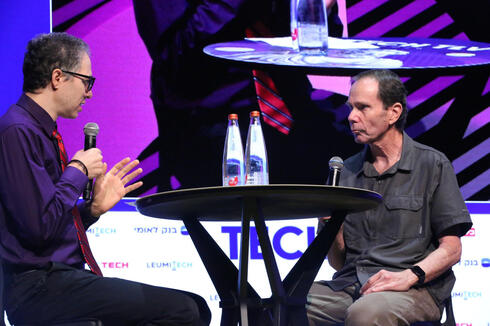
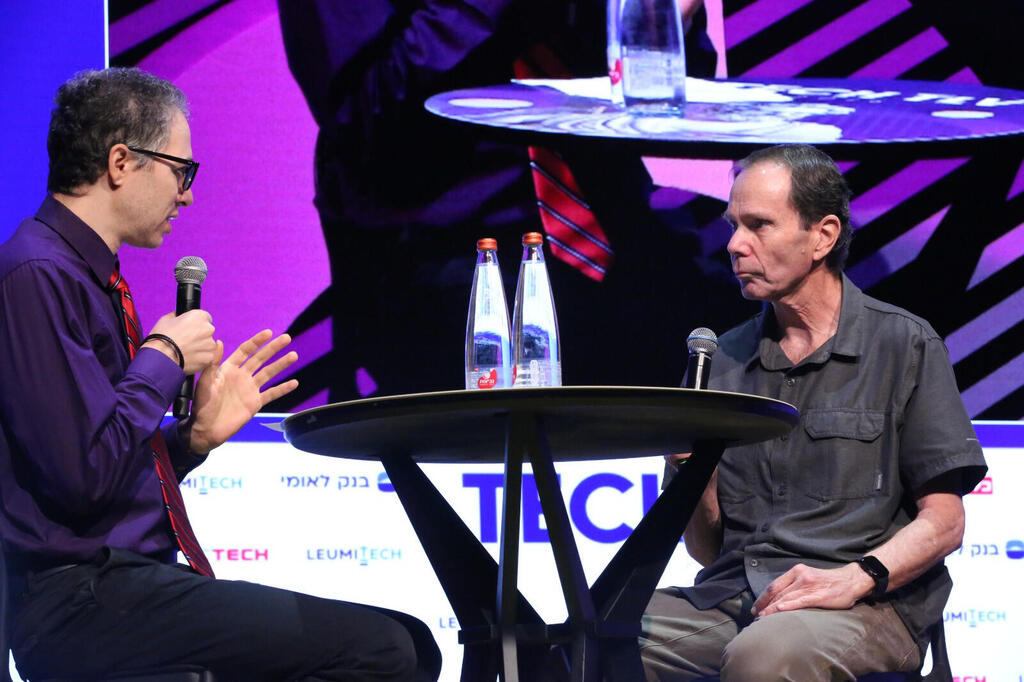
"It's hard to find an Apple product that doesn't have some kind of touch from Apple employees in Israel," said Rony Friedman, vice president at Apple and manager of Apple Israel, at Calcalist's Tech TLV conference held in collaboration with Leumi. Friedman made the remarks in a conversation with Calcalist reporter Omer Kabir. According to him, Apple's development centers in Israel have become an integral part of the company’s core innovation over the years, contributing to chips, connectivity, cameras, and more.
The latest major news regarding Apple and Israel concerns the acquisition of the startup Q.ai, which was reported last month at an estimated value of $2 billion, the second-largest deal in Apple’s history.
What can you say about the acquisition?
Friedman: “We are very happy about this acquisition. Aviad Maizels, the founder and CEO, has built an impressive company, and in the past he was also a co-founder of PrimeSense, which was acquired by Apple. We are confident that we will hear more about their technology in the future. This is a company that has been around for about three years, with a very interesting team and high potential. We believe in technology and in people, and as an Israeli I am proud to see another significant acquisition of an Israeli startup.”
Q.ai is expected to be integrated into Apple’s R&D centers in Israel. To what extent is local activity involved in Apple’s core developments?
“The contribution of the teams in Israel is reflected in a very significant way in Apple’s core products. We are very proud, for example, to have taken part in the development of Apple’s first cellular modem, the C1 modem, the first that Apple developed independently. This is a highly complex technology that took years to develop. Moreover, this modem is about 30% more energy-efficient in comparable operations than other cellular modems, which directly translates into better battery life.
“Teams in Israel worked together with teams abroad on N1 technology in the field of connectivity. It was first launched in the iPhone 17 family and is expected to be integrated into additional products in the future. Here too, there was a strong emphasis on performance and energy efficiency, it is part of Apple’s DNA.”
How significant is the Israeli contribution to these developments in practice?
“The contribution is almost always multidisciplinary, spanning both software and hardware, and is reflected in nearly all of Apple’s products. We work as part of global teams, not on a single isolated component but on entire systems.”
Apple has development centers in Jerusalem, Herzliya, and Haifa. What products and areas are they involved in?
“We are involved in a wide range of fields. It has previously been reported that the teams developing chips are working on the M-family processors that power the Mac lineup, including the MacBook Pro and other high-end models. In addition, there are teams working on standard cameras and depth cameras, which have contributed to features such as Face ID, Cinematic Video, and low-light photography. Over the years, these teams have also integrated machine-learning capabilities, enabling them to play a significant role in Vision Pro, including hand and eye tracking and object recognition.”
Can we say that almost every Apple product has a component developed in Israel?
“Yes, absolutely. It’s hard to find an Apple product that doesn’t have some Israeli touch. There has also been Israeli involvement in AirPods for years, both in hardware and software. Recently, features such as heart-rate measurement in the earphones and capabilities that assist people with mild to moderate hearing loss have been added, and that’s something we’re very proud of.”
Is this already starting to replace dedicated hearing aids?
“Not necessarily a replacement, but it definitely helps people in their daily lives. Another area is storage. Apple acquired Anobit at the end of 2011, its first acquisition in Israel. Today, every Apple product’s storage system includes Israeli developments.”
It’s impossible not to ask about AI. What is Apple’s strategy in the field, and how does Israel fit into it?
“Apple believes that advanced technologies should be accessible to users in a simple and seamless way. In our view, AI should be part of operating systems rather than a stand-alone tool. Apple Silicon, the processors Apple designs specifically for its products, plays a central role in enabling on-device AI. Teams in Israel and around the world have been working for years on running AI on devices in a more energy-efficient way through Apple’s GPU, CPU, and memory architecture.”



