











“Sometimes being young and conservative can actually be the bigger risk”
A panel at Calcalist and Migdal's Financial Future Conference explored how longer life expectancy, shifting career paths, and changing attitudes toward work are challenging traditional assumptions about investing, retirement, and financial planning.
“As life expectancy rises, we need to rethink the concepts of risk and conservatism. Sometimes being young and conservative can actually be the bigger risk,” said Dr. Ira Sobel, founder of Longevity Academy and an expert in longevity economics, during a panel moderated by Almog Azar at the Calcalist and Migdal Financial Future Conference.
The panel also featured Yaron Shamay, Deputy CEO and Head of the Long-Term Savings Division at Migdal; Guy Mani, Chief Investment Officer of Meitav Investments; and Hen Gal, financial content creator and founder of Investa.
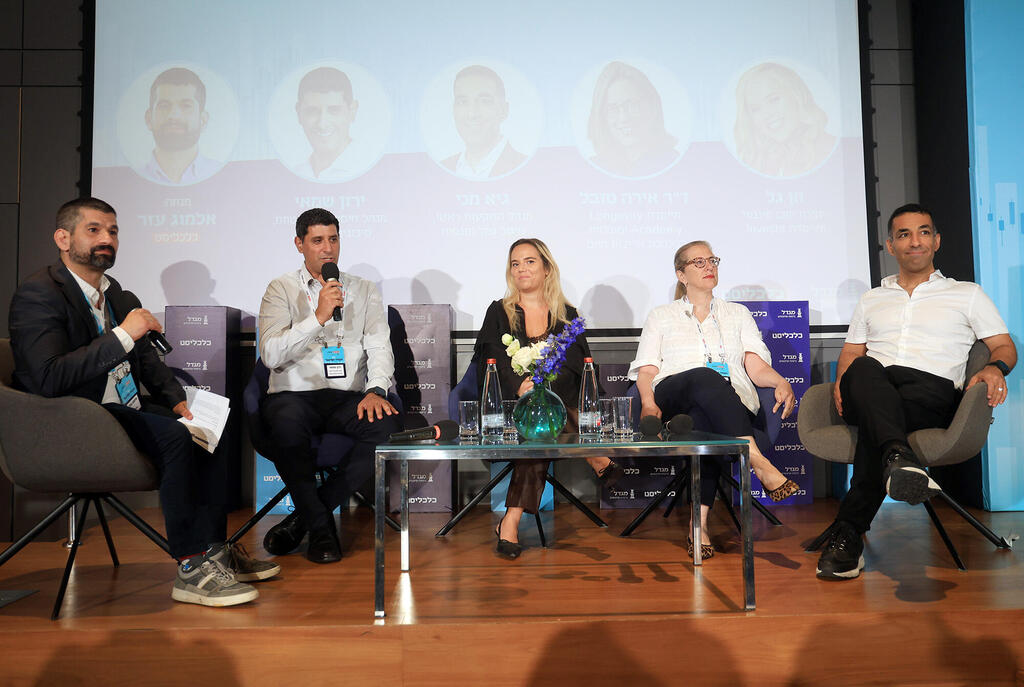
In recent years, more and more young people have been talking about investing, saving, and early retirement. One of the most prominent trends has been the move toward S&P 500 index-tracking investment tracks. Who is that really suitable for?
Yaron Shamay: “The S&P 500 is suitable for people who view their savings as a long-term investment. You can’t take a single year and use it to determine what is right or wrong. But people need to be aware of all the risks embedded in this investment. The public does not always fully understand that there is also exposure to the dollar, which can either erode returns or amplify them. That doesn’t mean the S&P 500 is a bad investment, but people need to understand what they’re getting into.”
So is it still a recommended investment?
Shamay: “I’m not telling anyone to move into the S&P 500. I’m saying they should consult a professional. It is certainly an option, but you shouldn’t take your entire pension and put it there. Diversification is the better approach.”
Guy, there’s a common perception that young people should be invested almost entirely in stocks. Is that really the right formula?
Guy Mani: “The stock market is a place where I believe it is appropriate to invest over the long term. For long-term savings, pension funds, and advanced training funds, the highest expected returns over time are generally in equity-based tracks. The stock market is made up of companies that are constantly trying to improve profitability, and today artificial intelligence is also expected to increase productivity. Over time, that translates into growth and returns. The younger you are, the greater your exposure to stocks can generally be. Don’t panic during downturns, but also don’t get caught up in FOMO when markets rise. The most important thing is to stay invested over time.”
And what about people approaching retirement?
Mani: “As you get closer to retirement and need access to your money, it is generally wise to gradually reduce your level of risk. On the other hand, life expectancy is increasing significantly, and there are retirees who choose to maintain stock exposure if they do not need the money immediately.”
Ira, does rising life expectancy require us to rethink the entire savings model?
Sobel: “The demographic changes are so significant that we need to ask fundamental questions. The Chilean model, which serves as the basis for Israel’s investment tracks, made a lot of sense when it was implemented, but reality has changed. The model assumes that as people age, they should reduce risk. But when people live much longer, we need to reexamine whether that assumption is still equally valid. Sometimes being young and conservative can actually pose a bigger risk. The question is not just how much money you have today, but how many years that money will need to support you.”
What does that mean in practice?
Sobel: “We no longer live in a world where people first study, then work, and then retire. People change careers, return to school, and work in different formats throughout their lives. The entire concept of life is changing. That is why the savings and pension industry also needs to develop a new language and new products suited to a reality of significantly longer life expectancy.”
Hen, some argue that Generation Z has mostly experienced rising markets and therefore takes greater risks.
Hen Gal: “I started investing in 2020. There was COVID, then wars, and every time people said a crisis was coming. I mostly saw opportunities. I bought an apartment as an investment property, then people said real estate prices would fall, and in the end prices rose. I understand why people say our generation has mostly seen markets go up, but we’re also dealing with other challenges: a high cost of living, difficulty buying a home, and uncertainty.”
How do you view the discussion around early retirement?
Gal: “There’s a lot of talk here about retirement. Our generation wants to retire early, raise children, travel the world, and live well. We’re working within a model that doesn’t always feel logical. The desire to retire early isn’t just financial, it’s also a desire to live a more balanced life.”
Ira, is that at all realistic?
Sobel: “When young people talk about early retirement, I’m not sure they mean sitting at home and doing nothing. In my opinion, most of them mean working in a different way. Most people will have to continue working even in older age, not necessarily full-time, but in one format or another. There simply isn’t enough time for most people to accumulate the capital needed to retire completely at a young age.”
Hen, do you agree?
Gal: “I think our generation really wants to retire, not because they don’t want to do anything, but because they want to live differently. They want to raise a family, travel, enjoy life, and not spend all their time working.”
Yaron, is the savings industry prepared for the reality of longer lives?
Shamay: “I agree that this issue still doesn’t receive enough attention. We are institutions whose role is to pay benefits over many years, and life expectancy is one of the biggest challenges we face. Today there are many investment tracks leading up to retirement, but very few designed specifically for the period after retirement. The industry is only now beginning to adapt to this reality.”
Calcalist recently exposed the world of financial influencers. Some argue that their incentive is simply to generate more views and attract more clients in order to make more money.
Gal: “If an influencer is trustworthy, doesn’t say dangerous things, and encourages people to invest responsibly, I have no problem with them making money from it. As long as the information is accurate and transparent.”
Guy, Meitav recently became Israel’s largest provident fund company. Are you concerned about the ‘leader’s curse’ we’ve seen in the industry before?
Mani: “We look at every client’s shekel as if it were the first. Size is less important to us. What matters is continuing to deliver returns, service, and professionalism. Long-term savings require a long-term perspective, both in tradable and non-tradable investments. We try to do that in the most professional and humble way possible.”
Related articles:
What’s the secret that brought you to first place?
Mani: “In the end, a company is measured over time, not only by management fees, but also by returns, service, availability, and the ability to adapt to customers’ needs. We invest heavily in research and technology, including the integration of AI tools, to provide better and more efficient service.”
Finally, real estate or the capital market?
Gal: “I invest in both real estate and the capital market. But the entry costs for real estate are very high today. When there are more accessible investment alternatives, many young people prefer the capital market. For many people, entering the capital market is simply more feasible than entering the real estate market.”



