









Growth+
"You must constantly test yourself against the market and determine whether there is real alignment"
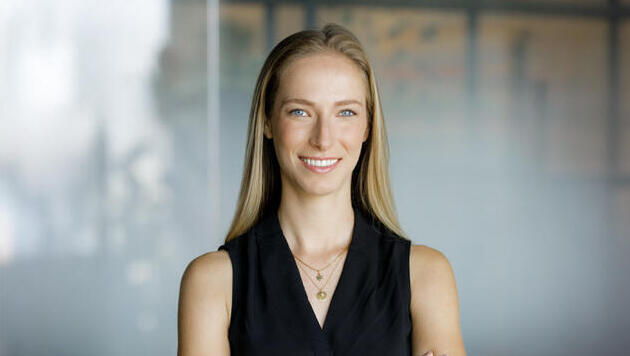
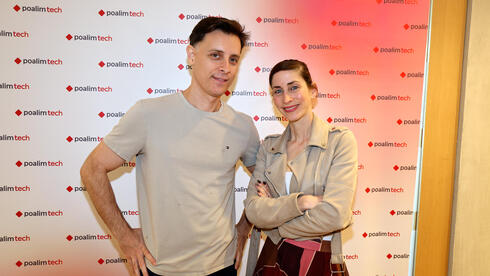
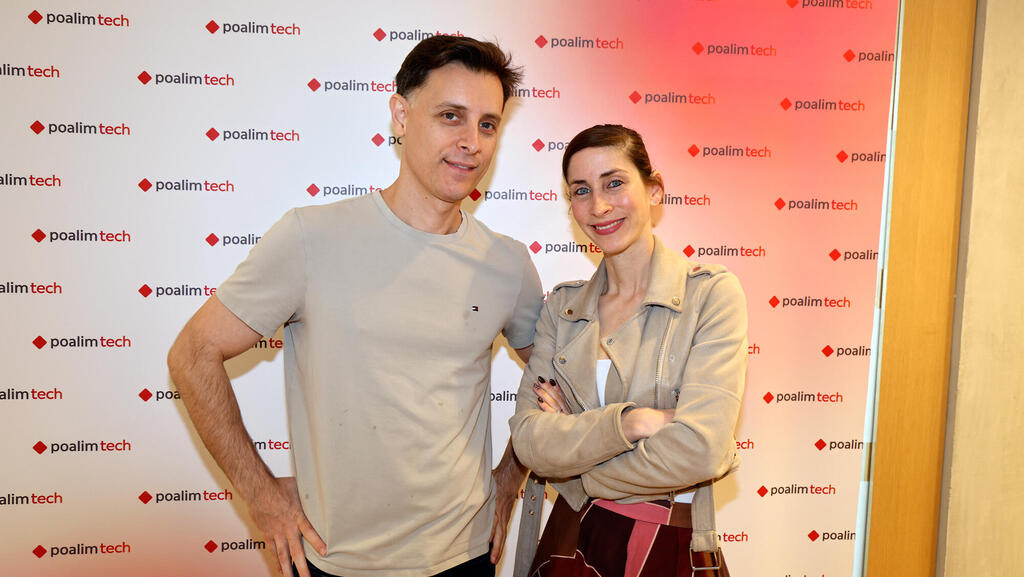
As part of the Growth+ initiative by Calcalist and Poalim Tech, Noam Solomon, co-founder and CEO of Immunai, met with with Michal Cohen-Shelly, founder of SwayV, to offer advice, support, and insights on entrepreneurship, startup management, and scaling companies for growth.
As part of the Growth+ project of Calcalist and Poalim Tech, Noam Solomon, co-founder and CEO of Immunai, met with Michal Cohen-Shelly, founder and CFO of SwayV, which develops advanced machine learning–based decoding for cardiac tests and stress ECGs.
The Growth+ project, now in its third year, includes one-on-one meetings between founders of Israel's leading tech companies and entrepreneurs from promising startups, with the aim of providing advice, support, and practical tools on entrepreneurship, creativity, startup management, and building companies for growth.
Noam, tell us about a crisis or challenge you encountered early on and what you learned from it that could help entrepreneurs at the beginning of their journey?
"Our original goal when we founded the company was to help doctors and hospitals treat patients better, enabling them to tailor immunotherapy precisely and prevent serious side effects. We raised initial funding and began meeting with hospital directors in Israel and abroad. Within a quarter, I realized there was no viable business in this. The healthcare system is not oriented toward value, but rather toward usage.
“We realized that the capabilities we were developing should be directed toward those who truly need them and are willing to pay for them - pharmaceutical companies. We established a lab in New York, made a rapid pivot, and became a company that helps pharmaceutical companies develop better drugs.
“A founder’s original idea is rarely what the company ultimately becomes. You must constantly test yourself against the market and determine whether there is real alignment. If not, you need to change quickly. The founding idea is simply the glue that binds the founding team together, but it must be adapted, especially in the early stages, as quickly as possible."
Michal, what was your most significant challenge this year?
"I think the biggest challenge was simply establishing the company. Unlike Noam’s story, SwayV emerged from a scientific research project at Sheba Medical Center. Commercializing research and turning it into an independent company is a highly complex process, often burdened by bureaucracy.
“It took considerable time from the moment we realized we had a strong idea, a patent, and investors, to the point where we had a bank account, a registered company, and could truly begin operations."
Noam, what advice did you give Michal?
"We discussed Jeff Bezos’ well-known advice that a strong entrepreneur must combine unwavering belief in the goal with complete flexibility regarding the path to achieve it.
“Another point is that in Israel, we are excellent at building innovative technologies, but we tend to fall in love with the technology itself, partly because we are geographically distant from key markets like the U.S. I advised Michal to focus deeply on product-market fit, to actively engage with the market, and to prioritize solving real customer problems rather than becoming overly attached to the technological solution."
What did you learn from each other?
Michal: "We are building a company in the medical field, which presents unique challenges compared to other sectors. Noam and Immunai have already gone through a long and meaningful journey, and there is much I can learn from their experience, how to focus, where to invest time in the early stages, and how to make better decisions. Even if mistakes are inevitable, this kind of mentorship can significantly shorten the learning curve."
Noam: "Michal’s path is fascinating. She started in high-tech and engineering, later became a researcher, and then turned that research into a company. It’s almost the reverse of my own journey, and the problem she is tackling is both important and compelling."
Is there anything surprising you discovered about each other?
Noam: "I have two young children, and Michal shared how she and her husband managed relocating to the U.S. during extended trips while raising two small children. Being both a parent and an entrepreneur is inherently complex, and even more so as an Israeli entrepreneur during wartime, which is something people in the U.S. don’t fully grasp. It was valuable to hear her perspective."
Michal: "I was surprised to learn that Noam was close to becoming a professor before choosing to take a bold step and become the CEO of a startup."
Noam Solomon’s Golden Advice
"Be yourself. You cannot succeed by trying to be someone else. When I started the company without any commercial experience, people told me, ‘You’re too much of a scientist.’ In retrospect, that is exactly what made me the entrepreneur and leader I am today."



