










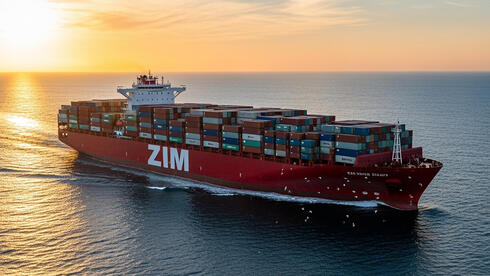
New details of $4.2 billion Zim deal revealed as FIMI and Hapag-Lloyd seek state approval
Revised framework includes a weekly Far East route, tighter state controls over ownership, a 10-year employment safety net and a projected $1.7 billion increase in revenue.
One day after Rolf Habben Jansen, CEO of German shipping giant Hapag-Lloyd, arrived in Israel, the company and Israeli private equity fund FIMI, managed by Ishay Davidi, submitted a significantly improved framework for their proposed Zim deal. The new proposal expands on the original plan in an effort to address the state’s demands and secure approval for the $4.2 billion transaction.
In an official letter to the Government Companies Authority, obtained and published here in full for the first time by Calcalist, the acquiring parties outline ten material improvements. They include adding a Far East route, expanding the protections available to the state, keeping vessel management and professional expertise in Israel, rebuilding the Israeli seafarer workforce and providing additional protections for employees. Under the proposed structure, the envisioned “New Zim” would be wholly owned by the Israeli FIMI fund and operate under full Israeli control.
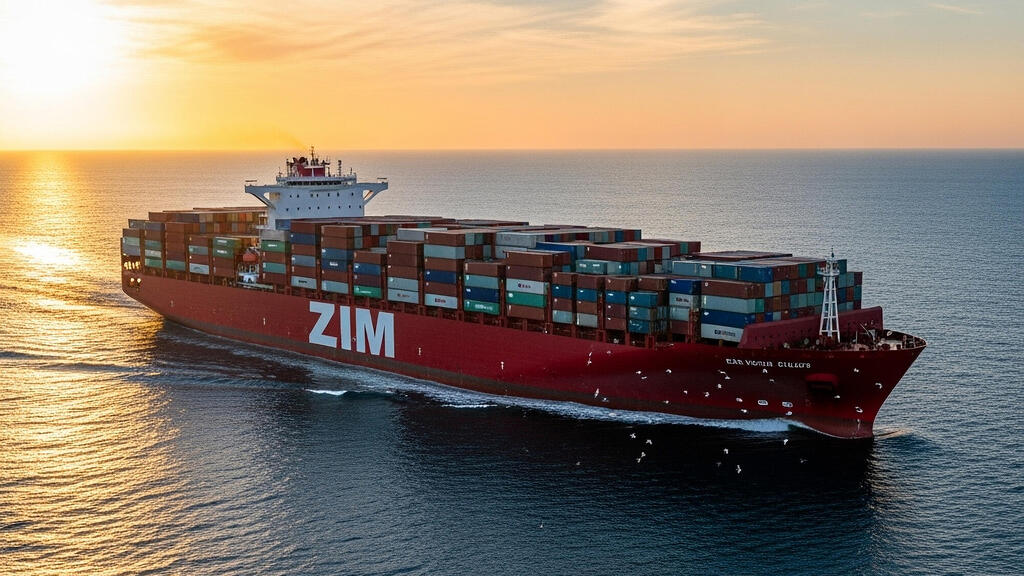
One of the most significant changes from the original proposal is FIMI’s new commitment to operate a weekly route to the Far East, an issue that has been a particular focus of the state. The route would be added to the Atlantic and Mediterranean lines included in the original framework. As a result, Zim Israel’s operations would cover three major trade routes: trans-Atlantic, Far East and Mediterranean.
At the same time, FIMI has committed to proposing revised articles of association that would significantly strengthen the protections available to the state compared with the current arrangement. The articles would require state approval for any relinquishment of control, effectively ensuring that “New Zim” remains under Israeli ownership, while also lowering the threshold at which changes in shareholdings would require government approval. The revised framework would also establish an expanded minimum fleet and a minimum capacity of Israeli-owned containers.
Regarding container operations, Zim Israel would maintain a core container fleet. Its refrigerated container capacity would be twice the level currently owned by Zim, ensuring additional capacity to support Israel’s food supply chain when needed. The company would also operate an independent IT system in Israel.
The acquiring parties have also committed to keeping vessel management and professional expertise in Israel. In addition, the framework includes rebuilding the Israeli seafarer workforce and significantly expanding the pool of Israeli seafarers.
On employment, the revised framework includes a special collective agreement guaranteeing continued employment for the vast majority of current Zim employees, backed by a 10-year safety net. It also provides enhanced terms for voluntary retirement and a commitment to avoid layoffs through the end of 2027.
The acquiring parties present the improved framework as one designed to ensure full Israeli control and stronger protection of the state’s strategic interests, creating a “New Zim” that would remain a robust Israeli shipping company with a stronger financial position, including revenue growth and a significant increase in profit. The framework also includes a long-term commercial agreement between Hapag-Lloyd and Zim Israel.
One of the most striking elements of the revised proposal is the updated business plan that FIMI intends to submit. The letter states: “These changes lead to a significant strengthening of Zim Israel’s structure and an updated, improved business plan, projecting an increase of approximately$1.7 billion in Zim Israel’s revenues over a ten-year period, and an improvement of about $200 million in its net profit over the same period, primarily driven by the additional commercial activity on the new Far East route.”
According to the letter, the full and detailed documentation underpinning the revised framework will be submitted within 45 days. This will include a comprehensive package of materials, including all of the commitments made to the state and the agreements enshrining them.
The letter also reveals the senior global advisers retained by FIMI for the transaction. Among other documents, FIMI intends to submit “an updated report by the leading global consulting firm BCG validating the strategic feasibility of Zim Israel’s business model; an updated report by the leading global consulting firm EY Parthenon analyzing and validating the plausibility of the business plan underpinning the improved framework; and a legal opinion from the international law firm Hengeler Müller regarding Hapag-Lloyd’s corporate governance, confirming management’s exclusive authority concerning future business relations with Zim Israel.”
The acquiring parties hope the proposed changes will alter the position of state officials who currently oppose the deal. The letter concludes: “We firmly believe that establishing Zim Israel under the improved framework represents a unique opportunity for the State of Israel to strengthen its maritime security and resolve the gaps and risks currently associated with the mechanism of Zim’s 'special state share.'”



