










Hapag-Lloyd and FIMI are willing to bend. Will it be enough to save the $4.2 billion Zim deal?
After marathon talks with Israeli officials, the buyers have agreed to major changes to the proposed transaction, including tighter restrictions on foreign ownership. But the state is demanding broader access to shipping routes, separate information systems and greater control over Zim Israel.
September is the deadline for German shipping company Hapag-Lloyd and Israeli investment fund FIMI to submit an updated proposal for their acquisition of ZIM. The two buyers are willing to be flexible with the state in response to the demands they heard during a series of meetings with senior government officials, but it remains unclear whether the changes will be enough to win approval.
Calcalist has learned that representatives of Hapag-Lloyd’s Israeli operation, headed by Samer Haj Yehia, and FIMI, led by Ishay Davidi and Gillon Beck, held marathon meetings on August 18-19 with senior officials from eight government ministries and agencies. The meetings gave the buyers a detailed picture of the various objections to the deal, particularly those concerning the state’s golden share and why the proposed arrangements do not, in the view of several government bodies, adequately meet its requirements.
The week before, the buyers had also held meetings with the Accountant General and the Budget Division at the Ministry of Finance, whose positions on the transaction are not uniform.
Among the government bodies involved in the discussions were the ministries of Economy, Agriculture, Transportation, the Prime Minister’s Office, Defense and Finance, as well as the National Security Council and the Israel Shipping and Ports Authority. Eight bodies are expected to provide positions on whether the deal should be approved, and six have already indicated that they oppose it.
Calcalist has learned that the only body currently supporting approval is the National Security Council, although it has reservations and its position is subject to the Finance Ministry’s advice. The Budget Division at the Finance Ministry is also still weighing the issue and is believed to be leaning toward approval.
The state, and particularly the Shipping and Ports Authority, has so far opposed the deal, mainly because of concerns that it would reduce Zim’s access to major international shipping routes. Another concern is that Zim Israel, which would become a separate company under FIMI, would be relatively small and have limited financial strength, according to professional and government sources.
Following the talks, FIMI and Hapag-Lloyd requested a 45-day extension to formulate a response to the issues and objections raised by the government. The Companies Authority, which is coordinating the discussions with the buyers and is responsible for deciding whether to grant the required permit, agreed to extend the deadline only until September 27 and informed the buyers of the decision on Monday.
Sources familiar with the discussions said the chances of changing the positions of the ministries that currently oppose the permit appear limited. They estimated that meeting the government’s demands could make the transaction economically less attractive for Hapag-Lloyd, raising questions about whether the German company would be willing to accept the additional costs and restrictions while paying $4.2 billion for Zim.
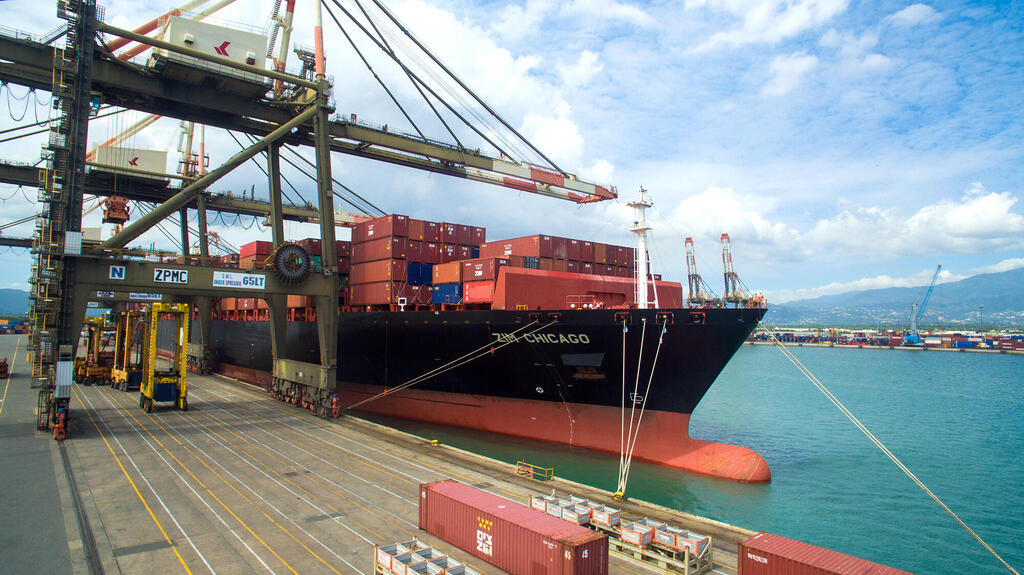
Under the current agreement, FIMI would receive 16 Zim ships and three shipping lines as part of its ownership of Zim Israel.
Zim operates a fleet of 130 ships, some of them leased, and serves 55 shipping lines. The state does not object to the transfer of the 16 ships to Zim Israel. The three shipping lines, however, are a central issue in the approval process. Two serve Greece and one serves the United States.
The state wants Zim Israel to retain access to at least six lines, and potentially as many as 10, with at least one route to the Far East considered essential. The objective is to preserve Israel’s ability to maintain global maritime connections during a regional crisis.
For Hapag-Lloyd, however, giving up additional routes could undermine the economics of the transaction. The German company indicated today that it has been “agreed to strengthen shipping connections between Israel and Asia, ensuring improved maritime connectivity between Israel and key destinations in the Far East,” without providing further details.
Another concern involves Zim’s information systems. The state wants Zim Israel to operate separate information systems from those of Hapag-Lloyd, which would own and operate the parent company after the transaction. Government officials are also concerned about Zim Israel’s dependence on Hapag-Lloyd during the first 10 years of the agreement, particularly in light of concerns over Saudi and Qatari involvement in Hapag-Lloyd.
Hapag-Lloyd argued during the talks that under the terms of the deal there is a “0.0 chance” of any foreign interference in Israel’s maritime shipping capabilities, including the transportation of sensitive cargo and essential goods into the country.
The German company and FIMI have also agreed to tighten a key provision of the golden share. Under the existing terms, up to 24% of Zim’s shares could be sold to a private foreign investor without notification to or approval from the Israeli government. Under the revised proposal, that threshold would be reduced to 10%.
FIMI has also committed not to list Zim Israel shares for trading outside the Tel Aviv Stock Exchange.
The revised arrangement would give the state broader control and authority over Zim Israel, including access to its own fleet of 16 ships. Zim Israel would operate ships with significantly greater refrigerated-container capacity and gain access to Hapag-Lloyd’s global container pool, including its fleet of refrigerated containers.
The buyers would also commit additional funds to Israel’s maritime workforce, including expanding and modernizing maritime education, as well as providing resources to support the country’s maritime industry.
But the government discussions have raised another, more unusual issue: officials have formed the impression that Zim itself, including its board and management, is not displaying the same urgency to complete the transaction as Hapag-Lloyd and FIMI.
According to sources familiar with the discussions, Zim’s board knows that its members are likely to be replaced if the deal is completed, as is the company’s new CEO, Chen Lichtenstein. That could reduce their personal motivation to push for approval of the transaction.
Zim did not respond to a request for comment.
Government officials have also raised concerns that Hapag-Lloyd and FIMI could ultimately seek to delay a decision until after Israel’s elections, in the hope that a new government would take a more favorable view of the transaction. There is no indication, however, that this is the buyers’ stated intention.
Hapag-Lloyd CEO Rolf Habben-Jansen, said: “We have listened carefully to the needs raised during our discussions with the Israeli government and the relevant authorities. Together with our partners, we are now developing an improved proposal designed to further strengthen Israel’s maritime security and independence.
“The revised proposal will secure Israel’s access to key shipping routes, including routes from Asia, and strengthen the protections provided under the Golden Share framework. The agreement will also prevent any foreign interference in the transportation of Israel’s sensitive cargo, representing a significant improvement over the current arrangement. We believe this transaction would mark another important milestone in the close relationship between Germany and Israel.”
The reference to the close relationship between Germany and Israel could be interpreted as an attempt to frame the transaction as part of a broader strategic relationship, rather than simply a commercial acquisition. Whether that translates into political pressure on the Israeli government remains to be seen.



