










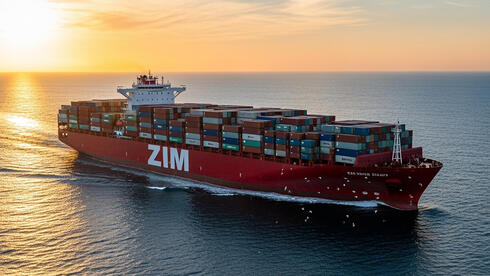
Hapag-Lloyd and FIMI to submit improved bid for Zim
The German shipping company and Israeli private equity fund have been given 30 days to make structural changes to their acquisition of Zim. The proposed revisions include tighter restrictions on foreign ownership, greater government control over Zim Israel and expanded maritime capacity.
Hapag-Lloyd and FIMI are set to submit an improved bid to acquire Zim after the Companies Authority gave the German shipping company and Israeli private equity fund 30 days to make structural changes to the $4.2 billion deal. Calcalist has learned that the changes are intended to address concerns raised by the Israeli government, particularly over the restrictions attached to its golden share in Zim, and could pave the way for state approval.
Hapag-Lloyd, represented by Samer Haj Yehia, and FIMI, represented by Ishay Davidi, agreed to acquire Zim in February in a $4.2 billion deal that was approved by the company's shareholders. The transaction has not yet been completed and is awaiting regulatory approvals, primarily from the Israeli government, which has authority over the deal because of the restrictions attached to its golden share. The state's decision had been expected on Wednesday, September 9.
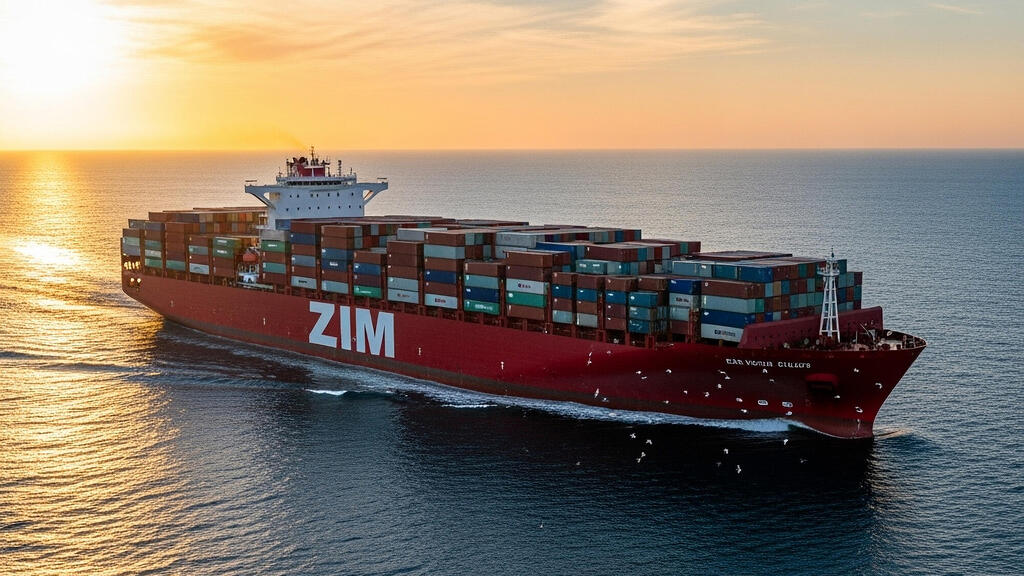
The state, and particularly the Shipping Authority, has so far opposed approval of the transaction, partly because of concerns that it could reduce Zim's access to key international shipping routes. Another concern is Zim Israel, which is expected to operate as a separate company under FIMI's ownership and which, according to professional and government sources, would be relatively small and have limited financial strength. Six of the eight government bodies expected to provide opinions on the transaction have opposed it, including the Ministries of Economy, Agriculture and Transport.
In recent weeks, Hapag-Lloyd and FIMI have held several meetings with government representatives in an effort to change the position that had emerged that the transaction would not receive state approval. As part of the talks, the parties agreed to a 30-day extension, during which they will make structural changes to the transaction in response to concerns raised by Israeli authorities, "with the aim of strengthening Israel's maritime independence and security."
Hapag-Lloyd argued during the talks that under the terms of the transaction, "the chance of any foreign interference in Israel's maritime transport capabilities is zero, including in all matters relating to the transport of sensitive cargo and essential products to Israel."
The German company and FIMI have agreed to tighten a key condition relating to the golden share. Under the existing terms, up to 24% of Zim's shares could be sold to a private foreign investor without notifying the Israeli government or obtaining its approval. Under the proposed changes, that threshold would be reduced to 10%.
FIMI has also committed not to list Zim Israel shares for trading outside the Israeli stock exchange. Under the revised structure, the state would receive broader control and authority over Zim Israel, including access to its own fleet, which is expected to include 16 new ships.
The revised plan would also strengthen connections between Israel and destinations in the Far East, an issue that had been a concern under the existing structure. Zim Israel would operate vessels with significantly greater reefer container capacity and gain access to Hapag-Lloyd's global container pool, including its fleet of modern refrigerated containers.
The parties would also commit additional funding to Israel's maritime workforce, including expanding and modernizing maritime education and investing in initiatives to support the country's broader maritime industry.
The changes are still subject to further review and approval by the Israeli authorities. The 30-day extension therefore does not constitute final state approval of the acquisition, but it represents a significant shift in the negotiations over a transaction that has faced strong government opposition.



