









Boarding Pass
How an Israeli startup plans to outcompete legacy Goliaths in the $27 billion TiO2 market
Following an accidental discovery, Israeli startup GreenTidio found a cleaner and cheaper way to manufacture the hidden ingredient that serves as the invisible backbone of modern life.
“A hidden ingredient in daily life may be getting a cleaner, cheaper way to be made,” says Dr. Uri Stoin, Co-Founder and CEO of GreenTidio, an Israeli startup revolutionizing the historically “dirty” Titanium Dioxide (TiO2) production industry. As Stoin explains, “Titanium Dioxide is among the top 20 most widely used raw materials on Earth. It is the invisible backbone of modern aesthetics and technology.”
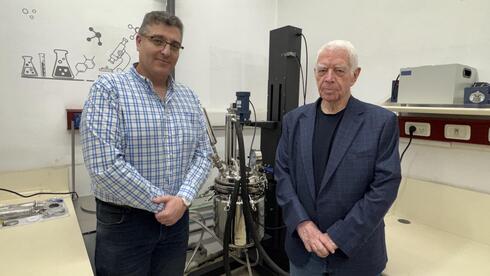
Stoin co-founded the company alongside Prof. Yoel Sasson after an unrelated environmental project led to the “eureka moment” of discovering a vastly more sustainable and cost-efficient production method. By producing TiO2 at room temperature, GreenTidio cuts energy consumption by 90 percent and production costs by 70 percent, ultimately standing to bring manufacturing viability back to the West.
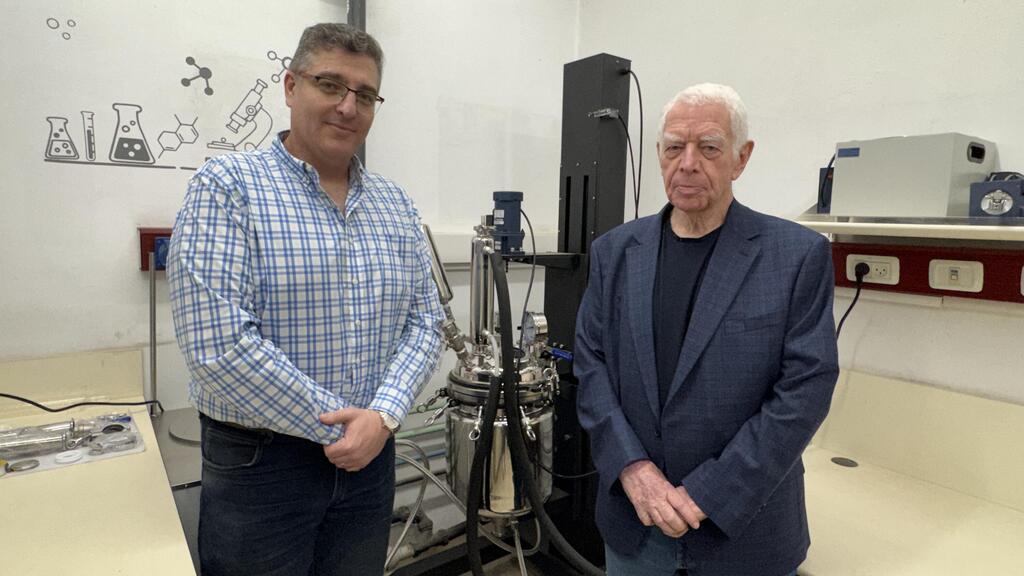
GreenTidio may be a "David" in a field of "Goliaths," but given these giants are often tied to legacy, high-emissions infrastructure, Stoin says, “our lean, green technology allows us to compete on efficiency levels they cannot easily replicate.”
You can learn more about the company below.
Company Name: GreenTidio
Sector: Industry & Energy
Product/Service description:
A hidden ingredient in daily life may be getting a cleaner, cheaper way to be made. GreenTidio is transforming the $27B global titanium dioxide (TiO2) market with what the company claims is the world’s only low-cost, green-manufactured white TiO2. A critical ingredient in paints, plastics, coatings, cosmetics and optical applications, TiO2 is essential to modern manufacturing, yet today’s production methods are energy-intensive, carbon-heavy, and increasingly difficult to operate profitably.
GreenTidio’s breakthrough process produces TiO2 at room temperature instead of 1,500°C, cutting production costs by 70%, energy consumption by 90%, and carbon emissions by 75%. By dramatically lowering the cost and energy required to manufacture TiO2, GreenTidio makes local production far more viable, creating an opportunity for production companies to reduce dependence on concentrated global supply chains and manufacture competitively closer to home.
The result is a cleaner, more resilient, and more economical way to produce one of the world’s most important industrial materials.
Founder Bios:
Dr. Uri Stoin (Co-Founder and CEO) is the Co-Inventor of 30 patents, and Co-Founder of several startups in the EU and Israel, serving as CEO, VP R&D, CTO, CSO, and Chief Chemist.
Prof. Yoel Sasson (Co-Founder and CSO) is the Co-Inventor of 50 patents, and Co-Founder of several startups. He is also the Professor of Applied Chemistry at the Hebrew University of Jerusalem, and served as VP R&D at Makhteshim.
Year of Founding: 2025
Last Investment Round: $800,000
Last Investment Stage: Pre-Seed
Date of Last Investment: 08/01/2025
Total investment to date: $800,000
Investors: NetZero Tech Ventures, Israel Innovation Authority
Current number of employees: 5
Open positions: Process engineer
Website: https://www.greentidio.com/
Social Media: LinkedIn
How was the idea born?
Our breakthrough was born from a "eureka moment" during an unrelated environmental project. We were originally developing a superoxide radical for soil decontamination, but we noticed something fascinating: during the oxidation process, soil metals were also oxidized with remarkable efficiency. Around the same time, I discovered that Titanium Dioxide – a material I assumed was relatively cheap because it’s mined – was actually trading anywhere from $3,000 to $150,000 per ton depending on its purity. I realized the high cost wasn't due to a lack of raw materials, but to the brutal, energy-intensive complexity of refining them. By applying our superoxide oxidation technology, we realized we could bypass the "dirty" traditional methods and produce this premium material in a vastly more sustainable way.
What is the need for the product?
Titanium Dioxide is among the top 20 most widely used raw materials on Earth. It is the invisible backbone of modern aesthetics and technology. It provides the brilliant white pigment in your morning yogurt, your favorite toothpaste, and your household paints, plastics, and ceramics. Beyond consumer goods, it is indispensable for aerospace, military applications, high-grade optics, and next-generation energy storage solutions. Without it, the world would literally look much duller.
How is it changing the market?
We are completely rewriting the manufacturing paradigm. Historically, TiO2 production has been a "dirty" industry: toxic, carbon-heavy, and so expensive to build (CAPEX-intensive) that Western countries have largely offshored it to China. Our technology changes the math entirely. We have reduced production costs by 70%, slashed energy consumption by 90%, and cut the carbon footprint by 75%. Because our process is cleaner and cheaper to build, we are making it possible (and highly profitable) to bring industrial manufacturing back to the US and Europe. It is a critical ability that enhances national economic security.
How big is the market for the product and who are its main customers?
We are operating in a $27 billion global market. Our reach is nearly universal, aiming to serve giants across every major sector. The global market includes chemical and coatings leaders such as AkzoNobel and BASF, consumer goods titans such as Procter & Gamble (P&G) and Unilever, cosmetic manufacturers such as L'Oréal, and high-tech innovators such as Samsung.
From the paint on your walls to the screen on your phone, our customers are the brands that define modern life.
Does the product exist already?
The material exists, but our way of making it is the revolution. We have successfully moved past the laboratory phase and begun semi-industrial-scale manufacturing. This is a pivotal milestone that enables us to secure our first sales to end users and start strategic partnerships with major global market players.
Who are the main competitors in this sector and how big are they?
We are the "David" entering a field of "Goliaths." Our competitors are massive, multi-billion-dollar entities such as DuPont, Chemours, Huntsman, American Elements, Kronos, Tronox, and BASF. These companies employ tens of thousands of people and have dominated the market for decades. However, they are often tied to legacy, high-emission infrastructure, whereas our lean, green technology allows us to compete on efficiency levels they cannot easily replicate.
What is the added value that the founders bring to the company and the product?
Our leadership combines academic depth with "in-the-trenches" startup experience. Prof. Sasson and Dr. Stoin are experts in environmental catalysis who specialize in converting traditional, wasteful industrial processes into lean, environmentally friendly technologies. They don’t just innovate in the lab; they have a proven track record of scaling startups from a blank page to international markets.
What will the money coming in from the round be used for?
This capital injection serves two critical goals. First, it will accelerate our R&D to customize TiO2 for different market "flavors" – adjusting particle size and purity for everything from optical grades to industrial coatings. Second, it provides the runway to scale up to mass production, allowing us to move from semi-industrial batches to global supply volumes.
In the "Startup Boarding Pass" section, CTech will cover the (relatively) small investments made in companies during the early stages of their existence - and the entrepreneurs and startups who have not yet had the opportunity to reveal their stories to the world. Please use the linked form and fill it out according to the guidelines. This form is intended for startups raising between $500,000 and $3 million from venture capital funds, angels, or official grants from Israeli and foreign institutions. If relevant, someone at CTech will be in touch for follow-up questions.



