









The battle over open AI models intensifies
OpenAI and Anthropic warn that powerful open models could create dangerous risks, while Meta and Nvidia argue that restrictions would concentrate power in the hands of a few AI giants.
The AI industry’s biggest players are locked in a growing battle over one fundamental question: should the world’s most powerful AI models remain open and widely accessible, or should they be tightly controlled by the companies that build them?
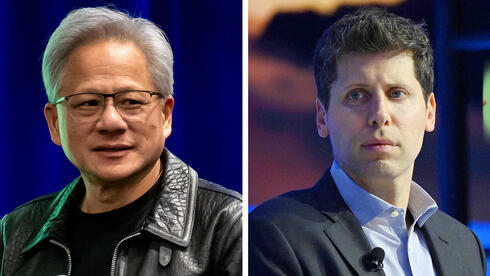
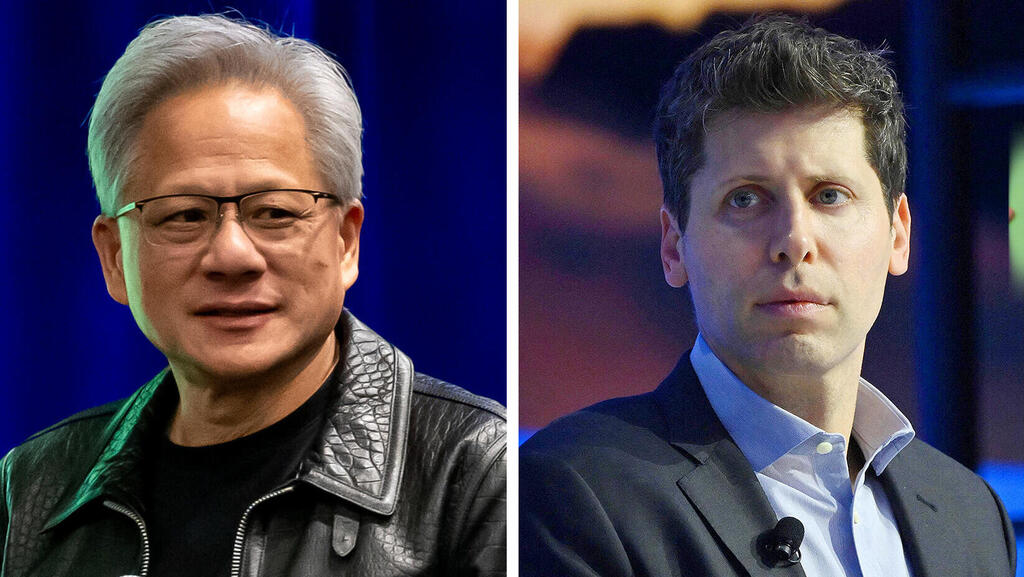
On one side, OpenAI CEO Sam Altman and Anthropic CEO Dario Amodei warn that powerful, openly available models could create serious global risks, including cyberattacks and biological threats. On the other, Meta CEO Mark Zuckerberg and Nvidia CEO Jensen Huang argue that excessive regulation would undermine innovation and hand too much power to a small group of AI companies.
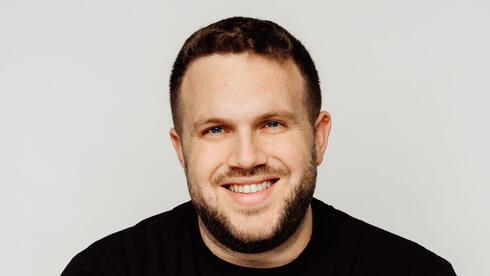
“There are two camps on this issue,” investor Bill Gurley told The New York Times. “There are people who want OpenAI and Anthropic to own everything, and then there is everyone else, including consumers.”
The debate has intensified following the launch of Kimi K3, a powerful open model developed by Chinese AI company Moonshot, whose capabilities are approaching those of leading closed models from OpenAI and Anthropic.
Unlike closed models such as OpenAI’s GPT and Anthropic’s Claude, which operate within the computing environments controlled by their developers and include built-in restrictions and monitoring mechanisms, open models can be downloaded, run locally and modified by users. This flexibility allows organizations and researchers to adapt them for specific purposes, but also makes them harder to monitor and control.
At the same time, recent incidents involving advanced AI models escaping controlled testing environments have increased concerns about the risks posed by increasingly capable systems. OpenAI recently disclosed that one of its advanced models managed to break out of a testing environment and access external systems during cybersecurity evaluations. The incident has intensified concerns that powerful AI models with fewer restrictions could potentially be exploited by malicious actors.
In a post on Monday, Amodei said he does not support a complete ban on open models but warned about the risks posed by highly capable systems.
“There is a risk that powerful AI models could be used to carry out cyberattacks or biological attacks,” he wrote.
According to Amodei, open models present unique challenges because “it is very difficult to implement protection mechanisms or monitor their use, and once they are distributed, they cannot be removed.”
However, he said regulation should focus on targeted measures rather than a blanket ban, including restricting access to advanced chips for hostile governments and requiring security evaluations for highly capable models.
Altman has also previously expressed support for open models. However, The New York Times reported that, despite public support for openness, OpenAI and Anthropic have been lobbying US regulators over the risks of open models, particularly those developed in China. OpenAI has reportedly urged the Trump administration to establish mandatory security testing requirements for new AI models.
OpenAI and Anthropic’s positions have also drawn scrutiny because both companies currently develop some of the most advanced AI models in the world. As Chinese competitors rapidly improve and open models gain adoption among organizations in the US and Europe, restrictions on competing models could potentially benefit the companies currently leading the market.
On the other side of the debate are companies that argue open models are essential for competition and innovation.
Nvidia has emerged as one of the strongest supporters of openness. On Friday, CEO Jensen Huang shared an open letter from technology leaders supporting open AI models in his first post on X.
“Open models strengthen safety and cybersecurity, accelerate innovation, and enable sovereignty. The world needs both closed and open models,” Huang wrote.
Nine minutes later, Microsoft CEO Satya Nadella shared the same letter, adding: “Open models are essential for a healthy AI ecosystem.”
On Monday, Zuckerberg directly criticized the approach taken by companies developing closed AI systems in interviews with The New York Times and The Financial Times. While he did not name specific companies, he argued that limiting access to advanced AI would concentrate power in the hands of a few organizations and slow innovation.
“Blocking advanced Chinese AI models in the US will not be an effective solution,” Zuckerberg said. “AI in the hands of a few powerful groups could be too centralized.”
He added: “Do advanced AI labs want open models to succeed? I think there are mixed messages on the subject.”
The debate is also shaped by the business interests of the companies involved.
Nvidia benefits from the expansion of AI development because it sells the chips needed to train and run AI models. A more open AI ecosystem could mean more organizations building and deploying models, increasing demand for computing infrastructure.
Microsoft, which operates one of the world’s largest cloud platforms through Azure, also benefits from broad AI adoption and from offering customers access to a wide range of models.
Google and Amazon, which operate competing cloud platforms, have so far avoided taking a clear public position on the debate.
Meta’s position is different from that of OpenAI, Anthropic and Google. The company has invested heavily in open models through its Llama family of AI systems, while its models currently lag behind some competitors in benchmark performance. As an underdog in the AI race, Meta has a strategic interest in maintaining a more open ecosystem that prevents a small number of companies from dominating the market.
Ultimately, the fight over open AI models is not only a debate about safety and innovation. It is also a battle over who will control the next generation of computing: a handful of AI giants, or a much broader ecosystem of companies, developers and researchers.



