










UAE reopens trade with Iran while racing to bypass Hormuz
Abu Dhabi resumes maritime commerce with Tehran even as it invests billions to reduce reliance on the Gulf’s most critical chokepoint.
The United Arab Emirates has been signaling a dual-track policy toward Iran and the crisis in the Strait of Hormuz in recent days. On the one hand, it is gradually resuming maritime trade with Iran; on the other, it is accelerating a strategic plan aimed at dramatically reducing its dependence on the Gulf’s most sensitive maritime chokepoint.
According to reports from Iran, UAE ports have resumed receiving commercial vessels from Iran after weeks of disruptions to maritime trade in the Gulf. Khurshid Gazdarazi, chairman of the Bushehr Chamber of Commerce, said that about 90% of maritime trade activity in southern Iran, including in Bushehr province, had either stopped or slowed during the crisis. According to him, Iranian merchants attempted to bypass the disruption by using alternative routes through Iraq’s Umm Qasr port and through Oman, but those routes increased import and export costs.
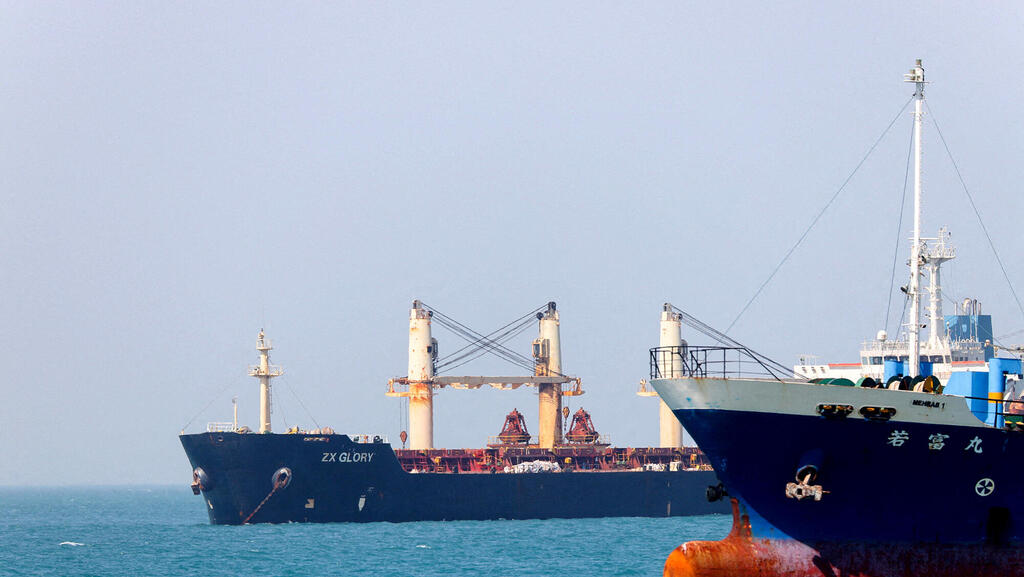
Gazdarazi added that, with the resumption of activity between UAE ports and Iran, Bushehr’s maritime trade is expected to gradually return to normal. He said the move could allow some 2,000 traditional vessels, known as Lenj boats, and approximately 14,000 sailors to return to economic activity. For Iran, this is not merely the reopening of a shipping route, but the revival of an entire commercial ecosystem in the country’s south, including merchants, shipowners, sailors, importers, exporters, and port-related service industries.
At the same time, Iranian Agriculture Minister Gholamreza Nouri Ghezeljeh said that essential goods that had been stranded in Dubai ports had already begun moving to Iran and that “obstacles are being removed.” He added that the entry of essential goods through Iran’s southern ports is now proceeding regularly. For Tehran, this is an important sign that the trade barriers and maritime disruptions created during the crisis are beginning to ease.
From a regional perspective, the move may appear to reflect a short memory. Just weeks after heightened tensions between Iran and several Gulf states, the UAE is allowing maritime trade with Iran to resume. In reality, however, this is less about forgetting and more about Gulf pragmatism. The UAE, and Dubai in particular, is built on trade, logistics, brokerage, transportation, and services. When routes reopen, even partially, economic incentives encourage a return to business. At the same time, Abu Dhabi has not ignored the central lesson of the crisis: dependence on the Strait of Hormuz remains a strategic vulnerability.
That lesson is driving a broader strategic initiative. According to reports from the Gulf, the UAE is pursuing an ambitious goal of reducing its dependence on the Strait of Hormuz to effectively zero. UAE Minister of State for Foreign Trade Thani Al Zeyoudi said the country is moving toward a future in which reliance on Hormuz is eliminated, regardless of whether the strait fully reopens. “It will reopen, and we hope it happens quickly, but we will not stop the new plan,” he said.
The centerpiece of the strategy is the development of the UAE’s eastern coastline, including Dibba, Fujairah, and Khor Fakkan, all of which are located on the Gulf of Oman, outside the Strait of Hormuz. The geographic advantage is obvious: cargo arriving on the east coast can access the open sea without passing through the strait. During the crisis, Fujairah and Khor Fakkan became vital gateways for the Emirati economy, allowing the country to continue importing goods, exporting oil, and reducing its reliance on ports located inside the Gulf.
The most critical sector is energy. The UAE already operates a pipeline that transports crude oil from Abu Dhabi’s fields to Fujairah, bypassing Hormuz. In May, Abu Dhabi announced plans for an additional pipeline that would double its oil export capacity through the east coast, while a third pipeline is reportedly under consideration. Alongside these projects, the UAE plans to invest in roads, railways, storage facilities, port infrastructure, and export capabilities for petrochemicals, liquefied natural gas, and refined petroleum products.
The UAE’s message is twofold. To Iran, it is signaling that trade can continue as long as it supports economic activity and regional stability. To investors and global markets, however, it is sending a different message: the crisis demonstrated that dependence on a single maritime chokepoint carries unacceptable risks.
Even if trade with Iran resumes and the Strait of Hormuz remains open, Abu Dhabi intends to continue investing in alternatives.
For the UAE, this is not a contradiction but a matter of risk management. Dubai and Abu Dhabi understand that trade with Iran remains economically important, particularly for regional commerce, consumer goods, cargo movements, and port operations. At the same time, they recognize that the Strait of Hormuz has evolved from a shipping lane into a strategic pressure point. Any disruption, threat, or uncertainty there immediately affects oil markets, insurance costs, container shipping, food supplies, industrial activity, and investor confidence.
The transition toward the east coast, however, will not be easy. Jebel Ali Port in Dubai remains the UAE’s primary container hub and one of the world’s largest logistics centers. Redirecting substantial trade volumes through Fujairah, Khor Fakkan, and Dibba will require major investments in transportation links, storage capacity, customs systems, labor, and connectivity with Dubai and Abu Dhabi. As a result, the Emirati strategy is not an immediate fix but a long-term structural transformation.
Ultimately, the decision to resume accepting Iranian vessels in UAE ports does not contradict the lessons of the crisis. On the contrary, it highlights the two pillars of Abu Dhabi’s approach: restoring trade whenever possible while simultaneously building the infrastructure needed to function without relying on Hormuz.
In the Gulf, commercial memory may be short, but strategic memory is much longer. The UAE is reopening trade with Iran while investing heavily to ensure that, should another crisis emerge, its economy will no longer depend on a single maritime bottleneck.



