












“Every entrepreneur dreams of growing, but the hardest part is learning to do it globally”
Hilla Ovil-Brenner, founder and CEO of ScaleUp House, described the idea behind the new forum for startups seeking to make the leap into global markets. Noa Tamir, CEO of Calcalist: “The goal is to help companies reach the next level.”
“When I was an entrepreneur, all I dreamed of was growing, and all I didn’t know was how to grow.” That is how Hilla Ovil-Brenner, founder and CEO of ScaleUp House, described her entrepreneurial journey and one of the central challenges facing entrepreneurs once their companies begin to gain momentum.
As a young entrepreneur, Ovil-Brenner said she looked for people who had already made the leap from a local startup to a global company and could show her what that journey looked like. “I was constantly looking around for role models to understand how to do it right, and I didn’t always have anyone to ask,” she said at the initiative’s launch event.
That experience is at the heart of ScaleUp House, a select forum for Israeli startups in the growth and global expansion stages, launched by Calcalist and Showcase IL in collaboration with LeumiTech. The initiative is aimed at startups that have already moved beyond the initial stages of building a company, raised capital and generated significant revenues, but are now facing an equally complex challenge: turning early success into sustained international growth.
4 View gallery
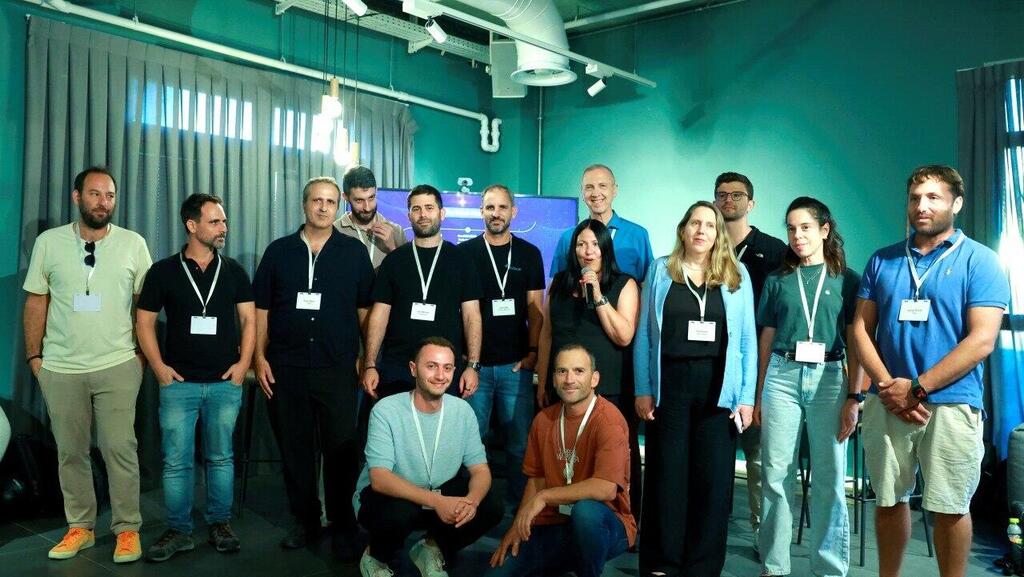
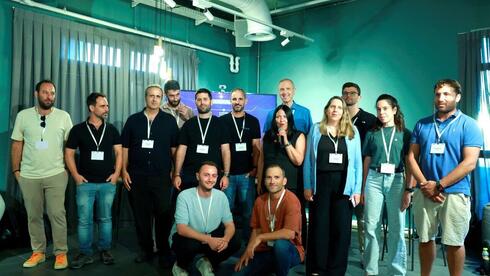
Hilla Ovil-Brenner (holding mic), CEO & founder of ScaleUp House with the startup team
(Dana Kopel)
The challenges at this stage are fundamentally different from those faced by startups in their early years. Companies need to enter new markets, expand their sales and marketing operations, prepare for larger funding rounds and build management teams capable of running a global business.
Throughout the year, participants are expected to gain access to entrepreneurs, investors, managers and other professionals, as well as business connections in Israel and around the world. The program will also include monthly professional meetings, webinars with experts and industry leaders, and joint activities with companies at a similar stage. The goal is to connect founders not only with people who have already made the journey, but also with entrepreneurs who are confronting many of the same questions today.
“We help entrepreneurs build a network of strategic connections in Israel and the US,” Ovil-Brenner told the startups selected for the initiative at its launch event. “You are going to meet the smartest people there are, including the partners you will meet with, but also a broad network of entrepreneurs, investors and experts in all kinds of fields.”
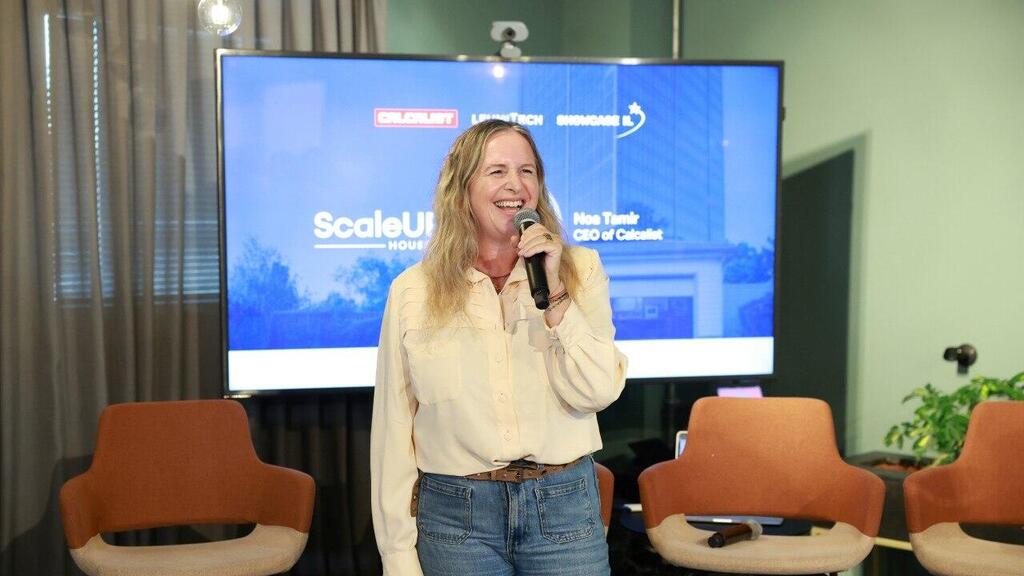
“We dreamed about this project for a long time and knew what we wanted to achieve,” said Noa Tamir, CEO of Calcalist. “Then we started bringing in our partners. When you have a good idea, it’s really easy to bring in partners.”
According to Tamir, the idea for an initiative supporting companies seeking significant growth came from the recognition that startups at the scale-up stage need something different from companies taking their first steps.
“I don’t always like the idea that work is home and family, there needs to be a separation,” she said. “But we really wanted to establish a house in the sense that startups that have already come a long way will receive value.”
The startups selected for the initiative, she added, stood out for their scale and potential. “We saw crazy startups. My mind was blown,” Tamir said. “Startups that had already raised money and were making a lot of money came in. I’m very proud that we were able to create a wonderful group under ScaleUp House. Now our goal is to create real value and help them get to the next level.”
According to Ovil-Brenner, hundreds of startups applied to join the initiative, making the selection process a complex one carried out with the help of investors, entrepreneurs and industry professionals.
“This is our group of startups,” she said. “Amazing companies with incredible fundraising and sales, global potential, and this group is going to fly high.”
The road to global scale, however, has become more difficult. AI is rapidly changing products and business models, investors have become more selective and economic and geopolitical uncertainty has increased.
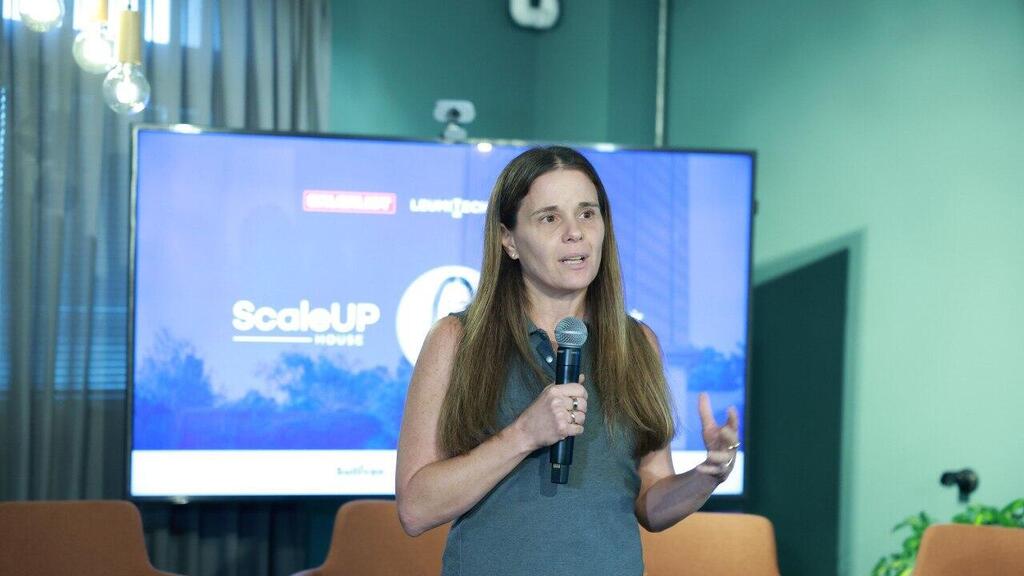
For Maya Eisen Zafrir, CEO of LeumiTech, that is precisely why growing startups need access to partners, experts and people who have already faced similar crossroads.
“We are in a very special time, in the midst of a revolution that I’m not sure many of us understand where it is developing and going,” Eisen Zafrir said. “Our ecosystem is undergoing changes that no one has seen before.”
That uncertainty is increasingly evident in conversations with entrepreneurs, she said. “There are so many question marks, we see entrepreneurs changing, investors becoming more selective. It’s going to be very interesting, it’s creating huge opportunities, but it’s not easy either.”
“The pace of change is increasing. AI is changing the rules of the game, investors are much more selective, and there is great volatility,” Eisen Zafrir added.
As a company progresses, the decisions it makes also become more consequential. Choosing a new market, building a sales organization, recruiting senior managers or bringing in another investor can influence a company’s trajectory for years. At that stage, the difference between a decision that accelerates growth and one that holds it back may come down to having access to the right person at the right moment rather than trying to solve every problem alone.
That is also where, according to Eisen Zafrir, the need for partners from different disciplines comes in.
“In a time like this, you need to create a space that allows you to bring in the different disciplines of the partners,” she said. “You can present complex questions and examine them over time and surround yourself with people you can talk to.”
Shiran Faran, a director at Google Israel, focused on a similar need from the perspective of access to knowledge, infrastructure and people already operating at scale.
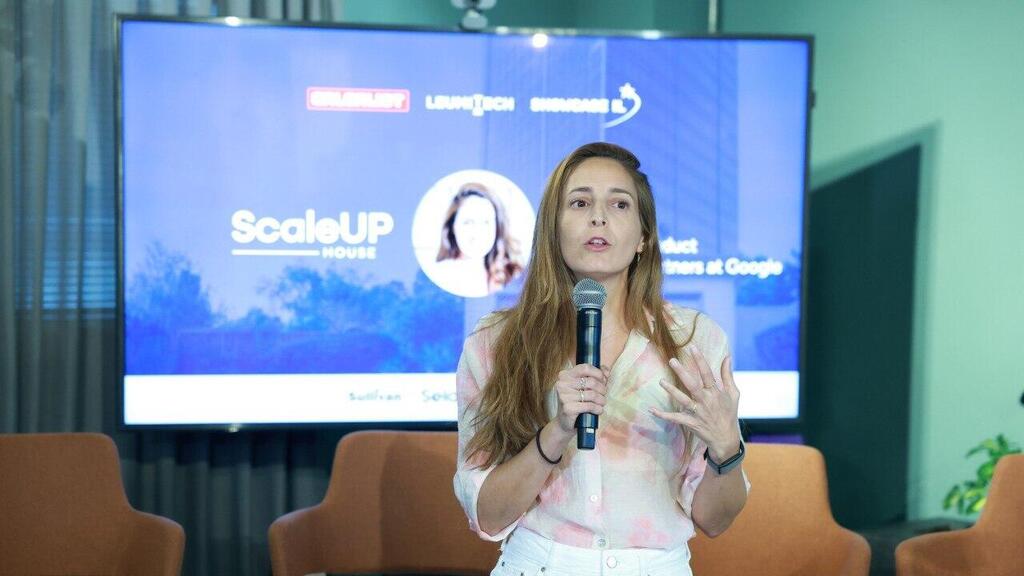
“Our ability to sit at this intersection and see, in this crazy time, how uncertainty meets the largest companies and startups, is an amazing initiative,” she said.
According to Faran, the goal is to “help companies just like you, startups that have proven they have it, open the door to Google’s infrastructure and people.” She called on startups to use “not only the place but also the network, to take it to the next level.”
Alongside LeumiTech, the partners in ScaleUp House are Phoenix ESOP, Google for Startups, Sullivan & Worcester and Sela. Throughout the year, participating startups are expected to take part in professional meetings, build connections with investors and funds in Israel and around the world, meet strategic partners and industry leaders, and gain exposure to Calcalist’s international activities.
“Basically, ScaleUp House is designed to address the need to understand how to make the big leap into the global market,” Ovil-Brenner said. “Now, instead of one person you can ask and consult with, entrepreneurs will have a whole network of experienced people around them who already know the way.”



