








Head of Google Research: “AI will enhance human innovation, but the role of humans is greater than ever”
Prof. Yossi Matias, Vice President at Google and Head of Google Research, says AI will accelerate discovery but cannot replace human scientific judgment.
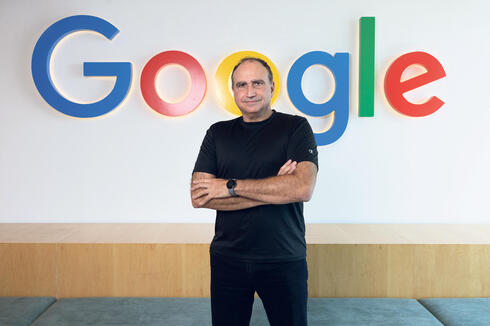
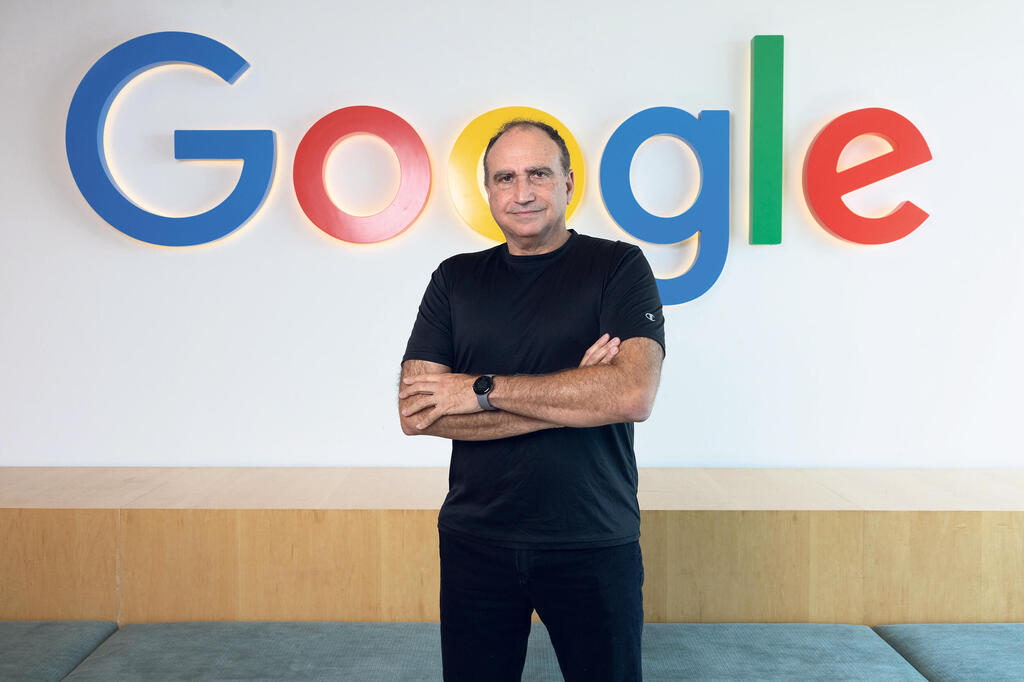
On a quiet morning commute through the streets of California, Yossi Matias is already surrounded by the future he is helping to build. Autonomous Waymo vehicles glide past as he speaks about a world where machines increasingly assist, and sometimes reshape, scientific discovery itself. For Matias, Vice President at Google and Head of Google Research, the question is no longer whether AI will enter science, but how deeply it will change the way science is done, who gets to do it, and what it will take to ensure the process remains trustworthy.
We begin the conversation while you are on your way to work in a Waymo. An intriguing question: if you grab the wheel, can you make it deviate from its path?
“No, it has a lot of safeguards, of course. Here, as I speak, several Waymos are passing in front of me. It went from a situation where people waited a long time for it to happen, and now that it works, it’s just a robotaxi, and the statistics speak for themselves. It’s exactly in line with the well-known saying that things take longer than you think in the short term, but come sooner than you think in the long term.”
Let’s move on to our topic: AI and science. When ChatGPT and Gemini arrived, people said this technology would cure cancer and lead to scientific breakthroughs. When will this promise be fulfilled?
“Let’s start by saying that this is not new. This year marks the 10th anniversary of a paper we published in JAMA, one of the leading journals in health, which showed that we were able to use machine learning to identify an eye disease called diabetic macular edema from retinal imaging. This is a disease that, if left untreated, can lead to blindness. We worked with partners in Thailand and India and brought this to the clinic.
“About two and a half years ago, I visited Bangkok and saw how patients sit in front of a machine, and within two minutes they receive a diagnosis that can save them from blindness. We also recently published a research paper with the NHS in England, which uses AI as a second reader for breast cancer mammograms. The study showed that AI helps identify 25% of the cases missed by human experts.
“Now, the world of generative AI opens up a whole new realm of opportunity. The most exciting chapter today in AI, science, and medicine is how AI is being used to accelerate research itself. We still have a long way to go before we can solve all diseases, but we see a path where we can use AI to accelerate scientific research toward solving major problems.”
At the Google Developers Conference in May, you launched three tools that are supposed to promote this. How will Literature Insights save the hours that academics invest in reviewing research literature?
“On the subject of literature, there are two major problems that consume a significant portion of researchers’ time. One is understanding what literature is relevant to the problem you want to solve. In many fields, there is an explosion of scientific publications. The second issue is that there are many papers that could be relevant, but you don’t know it, because they are in slightly different fields. Even after you already have the articles, reading them and extracting what is relevant is very difficult.
“With Insights, we are able to take an article or any written text, summarize it, show insights about it, create an infographic, translate it into a presentation, or turn it into a podcast. One of the powerful things we tested in Co-Scientist is how we can help with the basic operations of a literature review. Once we ask a scientific question, we still need to conduct the full literature review, but then the real work begins: how do I synthesize everything I see, build hypotheses based on it, generate many hypotheses, filter them, rank them, and present them back to the researcher?”
“The researcher essentially becomes the facilitator”
Now we’re talking about hypothesis generation. I thought that was a uniquely human domain, but you’re introducing a tool that brings in AI.
“Absolutely. In the traditional research path, you need to understand each paper individually, and that is certainly the right thing to do for the most relevant papers. A researcher must read and understand those deeply. But think about situations where you are conducting a literature review based on hundreds of publications, or even 100,000 articles. It is beyond human ability to read all of them and synthesize them. That’s where we want to empower the researcher with AI, not only to help read papers, but to conduct the entire literature review and start answering the research question.
“The researcher becomes something like a facilitator. Looking ahead, I see a world where every researcher and every research student has a virtual lab that does much of the work they do today. It allows people to take on roles that once required very senior researchers: asking questions, forming hypotheses, iterating, and asking the next question.”
The third tool is computational discovery, and it already concerns the research process itself.
“Correct. Computational discovery relies on a development called the Empirical Research Assistant. When you think about research work, once you have a scientific hypothesis to test, for example in medicine, building models of a pandemic outbreak, finding correlations, and so on, one of the most time-consuming tasks is building models. This can take days, weeks, or months of testing different models, tuning parameters, and finding the right configuration for the problem.
“This development addresses that. It says that if I have a problem that is scorable, where progress can be measured, and I have the inputs, the system uses generative AI to search for the best model among thousands of options, doing work that would otherwise take months of specialized effort. You can input a research question like ‘I want to build a model for this problem’ and get a solution that can be tested and used.
“One of the limitations of scientific research today is that we train researchers to go very deep in narrow fields. But often the most significant breakthroughs happen when fields are connected, chemistry, physics, mathematics. One of the most important qualities in research is the ability to connect disciplines. We call them polymaths. You can think of the AI Co-Scientist system as a kind of polymath in your pocket. Each of us can have a partner that connects across fields and helps make those links.”
“There must be no cracks in the scientific approach”
Does a researcher still need a PhD, postdoc, and years of training, or in the new world can someone with a master’s degree or even a bachelor’s degree become a researcher?
“This opens an opportunity for more people to participate in advanced research. Education remains extremely important, we need to accelerate education and the ability to ask research questions. All these tools must remain grounded in the scientific method. We need strict discipline when using AI for scientific research to ensure everything follows a rigorous verification process. In a world where you can generate infinite hypotheses, the ability to test them becomes even more important. Validation is essential to ensure reliable science.
“The scientific method is one of humanity’s most important achievements. It allowed us to build knowledge in a decentralized way so researchers around the world can rely on it, and there must be no cracks in it.”
Still, what is the advantage of a senior researcher with decades of experience and vast theoretical and practical knowledge compared to a researcher who has a master’s degree and uses all these tools?
“The tools that accelerate scientific research will raise the bar of the problems we try to solve. One of the most important shifts is that we will ask bigger questions. The fact that anyone can use these systems to solve certain problems means that an entire class of problems will be solved more widely.
“Now we move to more complex problems that systems cannot solve alone. That is where the researcher becomes essential, to define the scientific question and drive it forward. We are not trying to solve the same questions as before; we are trying to ask bigger ones.”
If we return to the beginning of our conversation, can we cure all diseases?
“That is our goal. We want to understand the world, physics, the planet, the human body, cells, and biological systems, in full. To understand how to detect diseases early and how to invent solutions. There is no limit to the scientific and medical challenges we need to solve.
“The AlphaFold system, which contributed to the Nobel Prize awarded to my colleagues Demis Hassabis and John Jumper (2024 Nobel Prize laureates in Chemistry), took a problem that once required PhD-level work, protein folding, and today provides solutions for hundreds of millions of proteins.
“My hope is that AI will enhance human innovation. That it will empower doctors, teachers, researchers, and scientists. The role of humans in this equation is greater than ever. Human creativity and human connection remain essential. Many things that seem out of reach today, I believe we will reach, in health, education, and our planet, by empowering people in every field.”



