










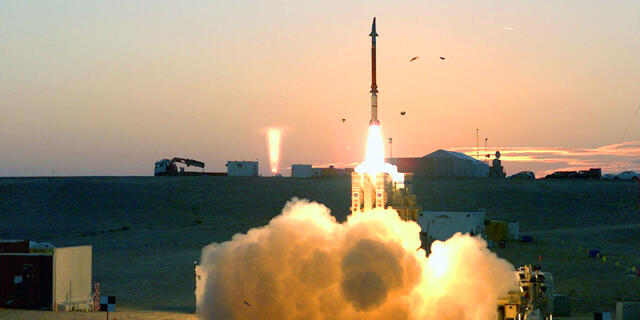
Estonia weighs David’s Sling in billion-euro missile defense decision
The Baltic state is comparing Israel’s system with the U.S. Patriot and European SAMP/T, while delivery times and ammunition availability complicate the choice.
Estonia is expected to decide within weeks whether to acquire a long-range air defense system, with Israel’s David’s Sling among the three leading candidates for a procurement that could ultimately exceed €1 billion.
According to Estonian website ERR, Defense Minister Hanno Pevkur said the government plans to make a fundamental decision during September’s state budget discussions on both the supplier and the size of the purchase. The Estonian Center for Defense Investments, known as RKIK, has completed a market study and is now finalizing details with potential suppliers.
“[The] goal is to make a fundamental decision within one or two months,” Pevkur said. After that, RKIK could begin contract negotiations.
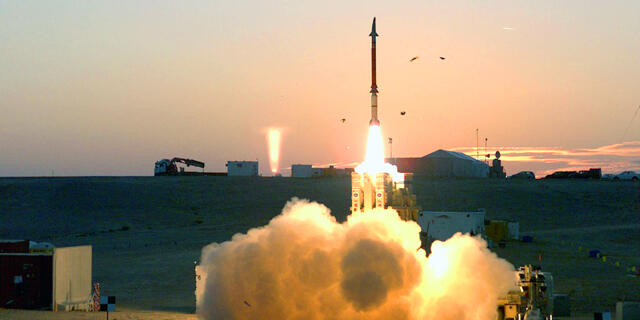
Estonia is considering David’s Sling alongside the U.S. Patriot system and the French-Italian SAMP/T. Offers have been requested from four or five companies, but the systems differ significantly in price, delivery schedules and development status.
Some suppliers have indicated they could deliver within two to three years, while others would require eight to nine years. Pevkur said some of the proposals also involve systems that are not yet in production but are in advanced stages of development.
That makes the decision particularly important for Estonia, which is seeking a system capable of defending strategic targets such as airports, ports and military command centers against long-range threats, including ballistic missiles.
Estonia already operates the medium-range IRIS-T system, for which it signed a €400 million agreement covering three batteries, radars and command centers. The new system is intended to provide a higher layer of protection.
The choice is also being made against a backdrop of intense demand for air defense systems following Russia’s invasion of Ukraine. Pevkur said the availability of U.S. systems is particularly complicated because Patriot equipment and ammunition are heavily used in Ukraine.
David’s Sling, developed by Israel’s Rafael Advanced Defense Systems with U.S. technology, has emerged as one of the systems Estonia is examining for the upper tier of its air defense network.
The system made its combat debut during the Gaza war and has also attracted interest elsewhere in Europe. Finland signed a €317 million ($339.6 million) agreement for David’s Sling in November 2024, while Greece recently approved a much larger Israeli-based air defense program incorporating the system as part of its “Achilles Shield.”
Estonia, however, has different requirements from countries seeking a broader national air defense architecture.
Mati Tikerpuu, a category manager at RKIK, previously said Estonia was looking for a system with a range of more than 100 kilometers and an altitude reach of around 20 kilometers, including the ability to intercept ballistic missiles during their descent.
The country has little need for a system such as Israel’s Arrow 3, which has a range of about 2,500 kilometers and is designed to intercept much longer-range ballistic missiles.



