










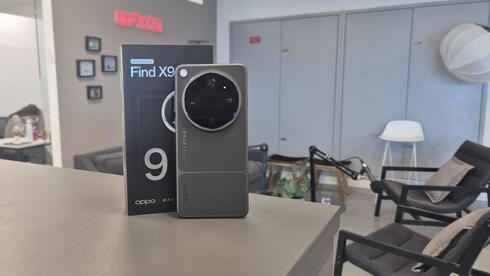
Gadget review
The best Chinese smartphone money can buy? OPPO's Find X9 Ultra makes a serious case
With a 200-megapixel camera system, Snapdragon's latest chip and premium design, OPPO has created a true flagship, but one facing tough competition.
Top Line
Chinese smartphones are often perceived as affordable alternatives, although several manufacturers have already proven that they can compete in the premium segment with expensive flagship devices. OPPO is one of the companies leading this shift. Recently, I tested the company's foldable smartphone, which costs more than NIS 8,000, and earlier this year it launched a premium model priced at around NIS 5,000, with support for an external professional camera lens.
Now OPPO is raising the bar again with the Find X9 Ultra, a more advanced flagship model priced at around NIS 6,000 ($1,960). Is it worth the premium price? We tested the device, courtesy of Ronlight, OPPO's Israeli importer.
As with previous OPPO flagship devices, the main challenge here is not the hardware, it is the price. The Find X9 Ultra is an excellent smartphone, with a large display, impressive cameras, powerful specifications and almost everything expected from a flagship device. But at NIS 6,000, consumers have many alternatives. For example, Samsung's new Galaxy Fold 8 costs a similar amount. While it belongs to a different category and offers different capabilities, it remains a competing option for premium buyers.
Looking at direct competitors, Apple's iPhone 17 Pro Max with the same storage capacity is slightly cheaper than the Find X9 Ultra. Among Android devices, Samsung and Xiaomi flagship models are also significantly cheaper, with price differences ranging from several hundred shekels to around NIS 1,500. Against this backdrop, OPPO's latest flagship will face a difficult challenge convincing consumers, regardless of how impressive the device itself is.
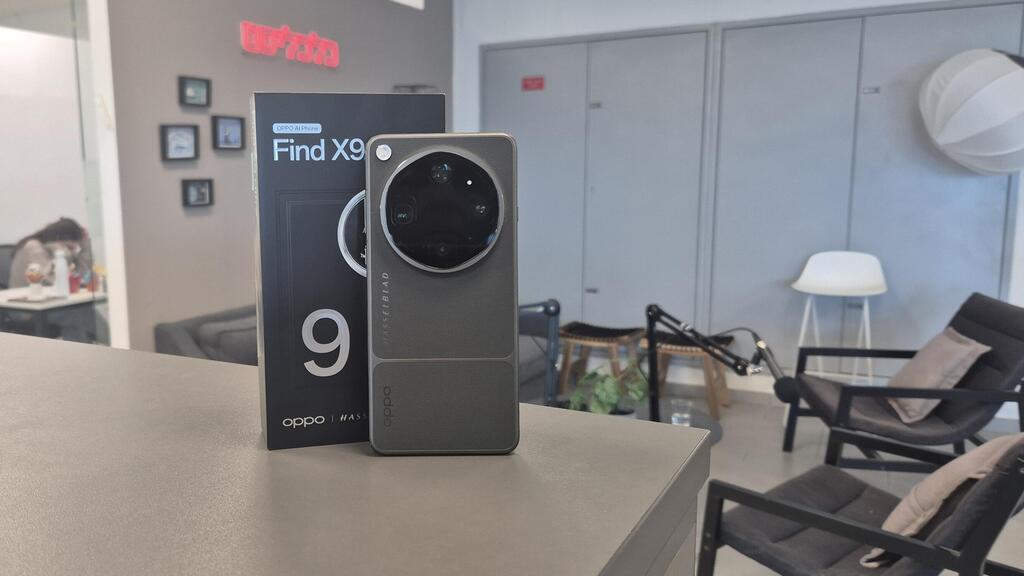
Design: A premium phone with clear Apple influences
The Find X9 Ultra is a large and heavy device, similar to its predecessor, and even slightly heavier. It features a 6.82-inch display and weighs 235 grams, a weight that is noticeable during everyday use.
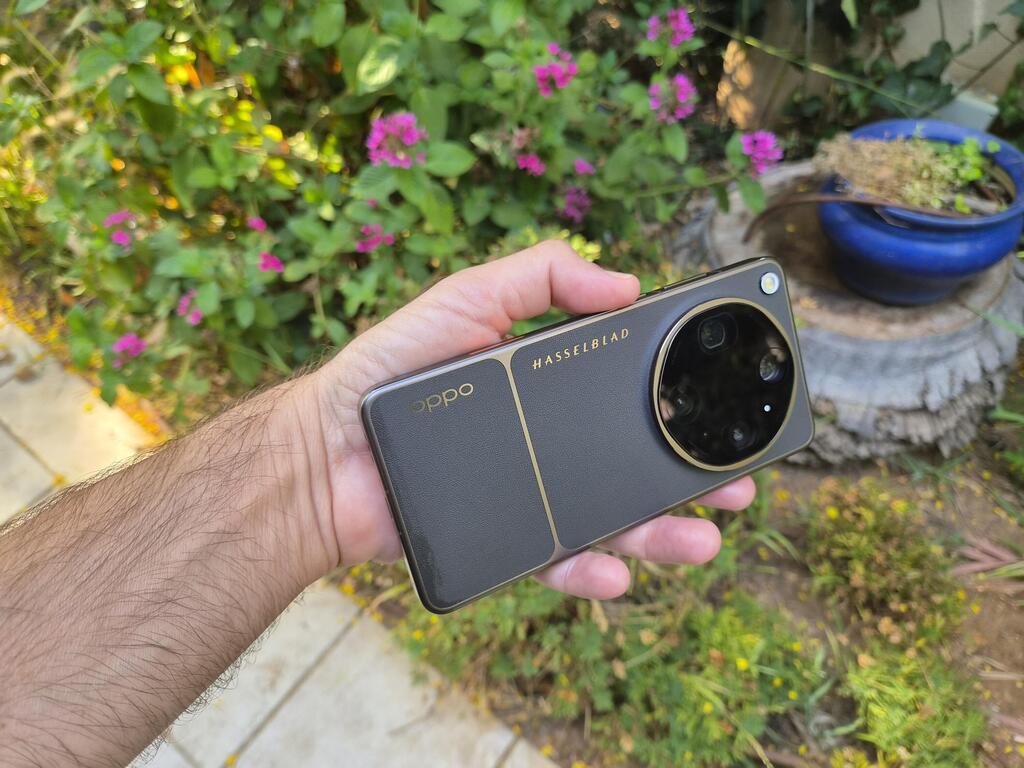
OPPO's collaboration with Swedish camera manufacturer Hasselblad continues with this model. The rear of the device is dominated by a large circular camera module that protrudes significantly from the body and houses the various lenses. The design clearly draws inspiration from professional cameras, with the Hasselblad logo receiving a prominent position.
The front is more conventional, with a flat edge-to-edge display and a small selfie camera cutout at the top.
On the left side, OPPO includes an action shortcut button similar to Apple's Action Button on the iPhone. Users can configure it for functions such as silent mode, flashlight activation or opening the camera.
On the right side are the volume controls, power button and another feature inspired by Apple, a dedicated camera shortcut. The button does not physically protrude from the body but is highlighted in orange. A double press opens the camera, a full press captures an image, and a light press allows users to adjust zoom, similar to Apple's camera control button.
The device is also well protected. The front is covered with Gorilla Glass Victus 2, and the smartphone carries IP68/IP69 certification, meaning it is protected from dust and can withstand immersion in water up to 1.5 meters for 30 minutes, as well as powerful water jets.
Hardware: Flagship performance without compromise
The Find X9 Ultra is powered by Qualcomm's fifth-generation Snapdragon 8 Elite processor, the same chip found in competing Android flagship devices. It comes with 12GB of RAM and 512GB of storage.
As with other OPPO devices, users can allocate part of the storage as virtual memory expansion. The default setting adds another 12GB of virtual RAM at the expense of storage space.
In practice, the specifications deliver exactly what consumers expect from a premium smartphone. The device responds quickly, handles demanding applications easily, runs games smoothly without excessive heat and performs every task without difficulty.
The large display delivers excellent colors and high brightness levels, making it comfortable to use even under direct sunlight. The speakers are also impressive for a smartphone, although they cannot replace a dedicated external speaker.
Battery life is another strong point. The Find X9 Ultra features a 7,050mAh battery, enough for between a day and a half and two days of typical use. It supports 100W fast charging, although a compatible charger is not included in the box.
Using a 65W charger, the battery charged from 15% to 50% in about 30 minutes, while reaching a full charge required around an hour. Given the battery's endurance, this is more than acceptable.
Interface and software: Smooth experience, but incomplete Hebrew support
The device runs Android 16 with OPPO's ColorOS 16 interface. While it differs from the standard Android experience, users familiar with Google's operating system will quickly adapt.
Navigation is based by default on gestures, while the app drawer opens from the bottom of the screen. Both settings can easily be changed.
The phone comes with several pre-installed applications, including Amazon Music, Temu, CapCut and AliExpress. While some smartphones arrive with even more unnecessary software, a premium device costing nearly NIS 6,000 should arguably offer a cleaner experience with fewer pre-installed apps.
OPPO has also integrated a feature similar to Apple's Dynamic Island. A small window surrounding the selfie camera changes depending on activity, displaying information such as a Spotify player running in the background or a timer countdown.
In AI capabilities, there are no major surprises. The device includes standard AI tools for writing assistance, image editing and recording transcription, although not all features support Hebrew.
OPPO also offers Mind Space, an application designed to organize screenshots and reminders, similar to tools offered by other smartphone manufacturers. Another feature, Mind Pilot, allows users to ask questions or issue instructions regarding information saved in Mind Space, while also integrating Google's Gemini AI assistant.
For example, users could save screenshots containing travel recommendations and later ask an AI assistant to create an itinerary based on the collected information.
However, there is a significant limitation: the tool does not officially support Hebrew. During testing, a Hebrew voice recording was transcribed into English. While the direction was correct, the transcription contained errors and inaccurate translations. For example, "Amit" became "Ami" and "Hila" became "Hillel."
Cameras: The device's strongest feature
Photography is where the Find X9 Ultra truly stands out, thanks largely to OPPO's continued collaboration with Hasselblad.
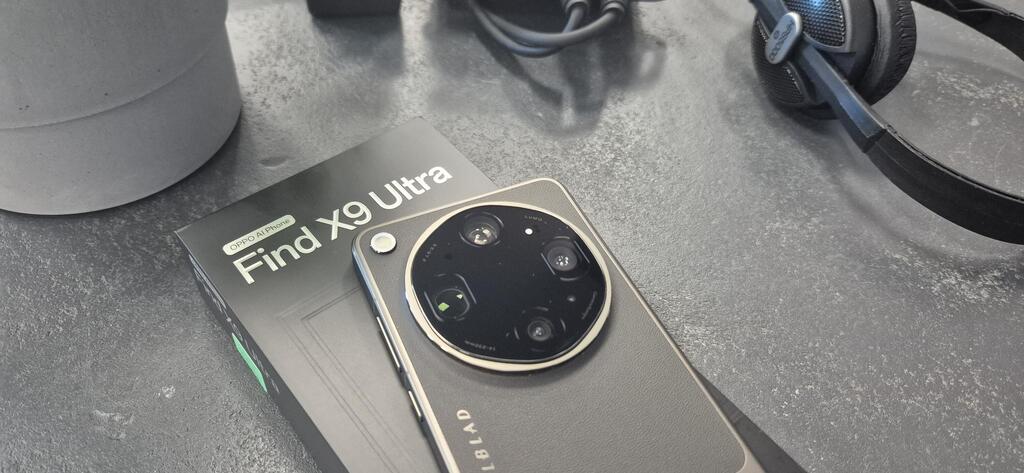
The large circular camera module houses four rear cameras. The main camera features a 200-megapixel sensor, alongside a periscope telephoto camera with a 200-megapixel sensor and 3x optical zoom, another periscope telephoto camera with a 50-megapixel sensor and 10x optical zoom, and a 50-megapixel ultra-wide camera. The front-facing selfie camera also features a 50-megapixel sensor.
Together, these cameras deliver excellent results, particularly in good lighting conditions. Images are sharp, detailed and vibrant, while optical zoom maintains impressive quality.
Digital zoom can reach up to 120x magnification, but as expected, image quality deteriorates significantly at extreme levels. OPPO uses AI-based sharpening technology to improve results, and the improvement is noticeable, although images remain blurry. This is partly due to the difficulty of stabilizing shots at such extreme zoom levels.
Night photography is also impressive. The sensors capture significant amounts of light, producing bright and detailed images even in challenging conditions.



