










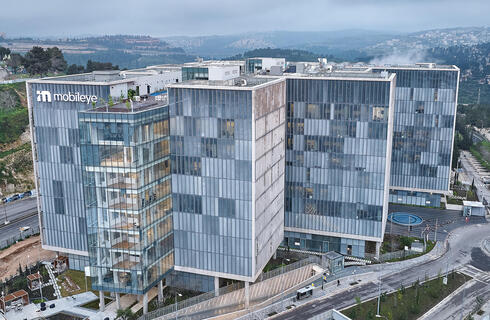
Mobileye set for record low as earnings fail to revive growth
Shares are expected to fall, bringing the Israeli autonomous-driving company’s market value to roughly $5.5 billion. Third-quarter revenue beat Wall Street estimates but declined year on year, while the full-year forecast barely changed.
Mobileye shares are set to fall after the Israeli autonomous-driving technology company reported third-quarter results that beat Wall Street estimates but offered little evidence of a meaningful recovery in growth. The decline would bring its market capitalization to approximately $5.5 billion, a new all-time low.
Revenue fell 2.4% year on year to $492 million, beating analysts’ consensus estimate of $476.8 million. Adjusted earnings came in at 11 cents per share, in line with expectations, while adjusted operating income reached $89 million, ahead of the $77.5 million analysts had forecast.
The company raised its full-year revenue forecast slightly, to approximately $2.01 billion from $2 billion previously. The update leaves its outlook broadly unchanged and does little to address concerns about slowing demand. Revenue grew at an annualized rate of 8% over the past five years, but that pace slowed to 5.5% over the past two years. Analysts expect revenue to increase just 2.7% over the next 12 months.
Mobileye CEO Amnon Shashua pointed to stronger demand for the company’s driver-assistance technology. EyeQ chip shipments rose 11% in the first nine months of 2026 compared with the same period last year, while global automotive production declined an estimated 1%.
“Mobileye delivered another quarter of strong results from its ADAS products,” Shashua said, referring to advanced driver-assistance systems.
He also highlighted new design wins for Surround ADAS and Cloud-Enhanced ADAS, which could increase the amount of technology Mobileye supplies in each vehicle. The company is also pursuing robotaxi opportunities, although Shashua said achieving driver-out performance remains a critical milestone.
Those longer-term opportunities have yet to translate into a clear rebound in revenue. Mobileye is seeking to expand beyond its traditional role supplying chips and self-driving systems, but its latest results show that sales are still declining and its full-year forecast has barely changed.
Profitability remains another challenge. Mobileye reported a negative operating margin of 16.7% in the third quarter, an improvement from negative 21.6% a year earlier. Adjusted earnings per share rose to 11 cents from 9 cents in the same quarter last year, but analysts expect full-year adjusted earnings per share to decline from $0.48 to $0.45 over the next 12 months.
The expected share-price drop would extend a prolonged decline in Mobileye’s market value. Intel paid $15.3 billion for Mobileye in 2017. Mobileye returned to the public markets in 2022 at a valuation of approximately $16.7 billion.



