










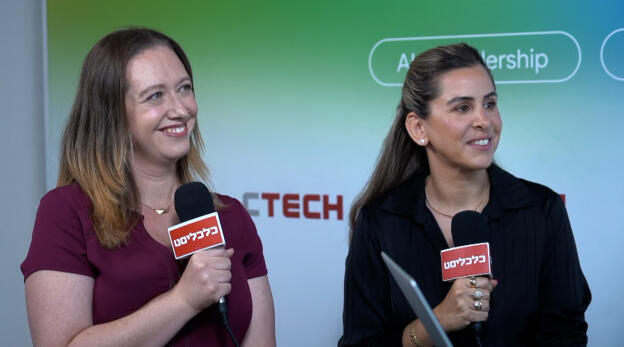
"I no longer grade tests late into the night. I have AI agents that do it for me"
Dora Solovey, an artificial intelligence teacher and AI implementer at the ORT school system, spoke at a panel held as part of Google's AI Week and Calcalist. According to her, "homework is not dead, it's just changed its face." Noga Jacobi, English teacher at the RAG: "In the future, there will be AI tools that function like a private tutor who personally accompanies each student."
"I no longer grade tests late into the night. I have agents that do it for me," said Dora Solovey, an artificial intelligence educator and AI implementation specialist in the ORT school network, during a panel held as part of Google's AI Week and Calcalist. Joining Solovey on the panel was Noga Jacobi, an English teacher at the Hamatmid School in Ramat Gan. The two discussed the impact of artificial intelligence on the education system, the future of homework, the changing role of teachers, and what classrooms might look like in a few years.
So we keep hearing about AI, but what does it actually look like on the ground? What AI tools do you use on a daily basis?
Dora Solovey: "Artificial intelligence is part of the network's overall strategy. We bring tools such as Gemini and NotebookLM into the classroom and turn them into learning tools for research, critical thinking, and independent learning. The goal is not only to use technology, but to teach students how to work with it in an informed and responsible way."
Noga Jacobi: "AI is one of the most effective tools I've ever had in my classroom. It not only allows me to give more to my students, but also removes a huge burden from me as a teacher. Thanks to it, I can devote more time to the students themselves and less time to technical tasks. It's much more than a buzzword, it's a technology that is already transforming education."
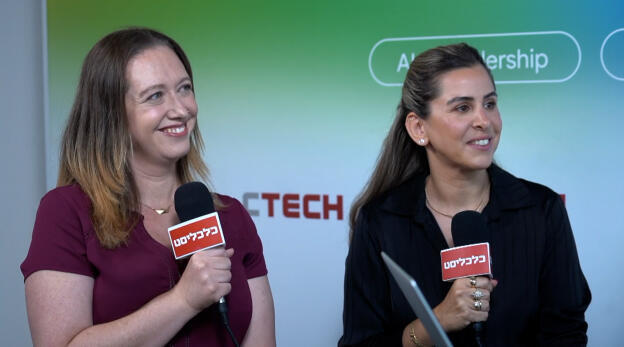
We are in Israel. The education system is facing significant challenges. Is it prepared to deal with this revolution?
Solovey: "It's not an easy challenge, but we see it as an opportunity. Technology allows us to reduce a great deal of the teacher's workload. I no longer grade tests until the early hours of the morning. I have agents that do the grading for me. There are systems that can create tests, grade them, and even evaluate open-ended questions."
Jacobi: "I think this will have to come from both the grassroots level and the top. In the field, I already see many teachers who understand the benefits and are beginning to adopt these tools. At the same time, there is growing recognition at the institutional and governmental levels that implementation needs to happen in an organized way. The more teachers use these tools, the more deeply they will become integrated into the system."
Let's talk about a sensitive topic, homework. Is homework dead?
Solovey: "Homework hasn't died; it has changed. In the past, students were primarily expected to memorize information. Today, there are tools that can instantly provide information. That's why we are focusing on different things, the work process, critical thinking, and how students use AI tools. One of the most important lessons is understanding that not every answer generated by a machine is correct. Students need to learn how to verify, question, and refine information. Homework isn't dead, it has simply evolved."
Jacobi: "I've never completely believed in homework, but even when you assign it, you have to think differently. Once we learn how to build tools that function as personal tutors accompanying each student individually, we'll see students making remarkable progress at home as well. In the future, every student will be able to receive far more personalized guidance than is possible today."
What is the role of teachers today? What is still needed, and what can we realistically do without?
Solovey: "Teachers will always be needed. The role of the teacher may evolve into that of a facilitator or mentor, someone who develops skills and helps students navigate new learning challenges. But I don't believe any tool can replace a teacher's attention or a reassuring hand on a child's shoulder during a difficult moment."
Jacobi: "If you look at human history, tools have always changed. One thing has remained constant—the guiding human hand. Ultimately, a teacher helps a student become a capable, responsible, and contributing member of society. That's something no tool can do, no matter how advanced it becomes. The role of teachers will change, but the need for them will not disappear."
Take me into a classroom five years from now, an eternity in AI terms. What will the classroom and the lesson look like?
Solovey: "I imagine a completely different classroom. We have a term that refers to a teacher standing at the front of the room and lecturing throughout the lesson. In my vision, teachers will no longer spend most of their time standing in front of the class. The classroom will be far more digital, allowing for collaborative work, independent learning, and less formal instruction. The goal is to develop skills and ultimately graduate students who are independent and know how to use these tools effectively in real life."
Finally, give me one tip for teachers about AI, or one tool every teacher should adopt.
Jacobi: "For me, NotebookLM is a must-have tool. Its ability to take reliable information and transform it into presentations, infographics, and content tailored to different types of learners is extraordinary. Every teacher in Israel should know how to use it."
Solovey: "I bring NotebookLM directly into the learning process. Students can conduct their entire research and thinking process through it—from the initial idea to the final product. There are many tools available, but for me, this one is a clear winner."



