









Analysis
Teva’s comeback is real. The harder part is still ahead
The company has cleaned up its balance sheet and rebuilt its pipeline, but investors are still waiting to see whether the new strategy can deliver sustained growth.
Last week, Richard Francis stood on the famous floor of the New York Stock Exchange, surrounded by a long line of senior Teva executives, and rang the bell to mark the first day of trading for the Israeli pharmaceutical company’s ordinary shares. The transition from trading via American Depositary Shares (ADSs), linked to the Tel Aviv-listed stock, to trading ordinary shares directly on the NYSE may look like a technical event. In reality, it carries significant business and financial implications, as well as profound symbolic importance.
The Teva of 2026 is not the same company that was Israel’s “people’s stock” for decades before becoming the “people’s disappointment” in 2016. Back then, over the course of two years, and before Kåre Schultz stepped in as CEO to try to rescue the company, Teva’s stock lost more than 80% of its value.
Now, one of Israel’s oldest and largest companies is marking a decade since the crisis that brought it to the brink of collapse. Teva has not yet returned to its peak valuation of approximately $70 billion or its peak annual sales of $21 billion. But for the first time in a decade, it is possible to argue that Teva’s future may be more interesting than its past.
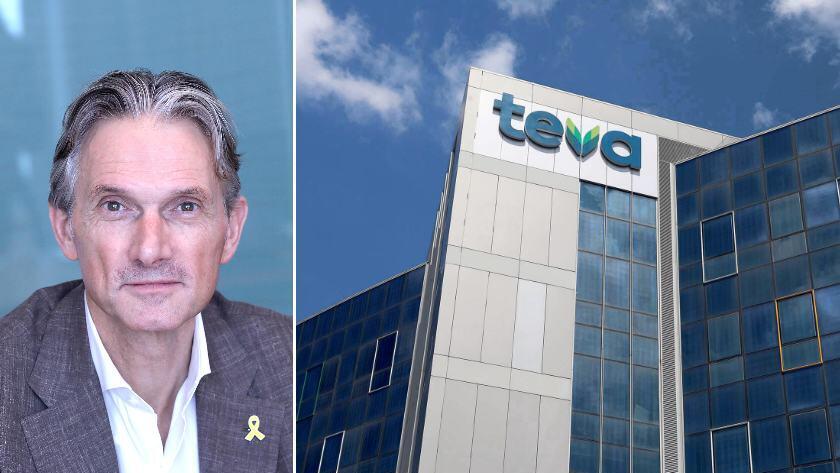
That helps explain the significance of the shift to trading ordinary shares on the NYSE after decades of trading through ADSs. Teva can now approach institutional investors in the U.S. that were previously unable to trade the stock because of internal investment rules. The change could also eventually open the door to inclusion in major U.S. stock indexes, which generally exclude ADSs.
As Eli Kalif, Teva’s CFO, put it: “There is no reason why Teva shouldn't be included in the Russell 1000 index. And if our valuation continues to rise, perhaps the S&P 500 as well, although, technically, under current rules, only US-listed companies can be included in that index. We are receiving more and more inquiries from investors who want to hear Teva’s story.”
The stock quadrupled in five years
Teva’s story is indeed interesting. Over the past five years, the stock has nearly quadrupled, rising from around $10 to $38. Most of those gains have come in the three and a half years since Francis became CEO.
Teva is also outperforming the broader market, with a 25% gain since the beginning of 2026, and has reclaimed its position as Israel’s most valuable company, excluding Palo Alto Networks, which is listed in Tel Aviv. Its market capitalization is now approximately $45 billion (NIS 140 billion).
Despite the surge in value, Teva has not regained the unique status it once enjoyed as an investor favorite and a “must-have” stock in every portfolio. Israeli investors today have far more options, particularly in the financial, energy, defense and semiconductor sectors. Teva occupies a rather peculiar position in the Tel Aviv market, and is not yet an obvious choice for investors.
It was once the dominant player, combining an American corporate identity with a uniquely Israeli success story. Today, however, the market offers a much wider and more diverse range of opportunities.
Teva also remains something of an enigma to Wall Street investors. While investors generally favor pharmaceuticals as a defensive sector, they are accustomed to a clear distinction between generic-drug manufacturers and innovative drug developers. Teva remains a hybrid of the two models, making it a more complicated investment proposition. It trades at a premium to many companies focused primarily on generics, but at a discount to biotechnology companies.
At the same time, the Teva of 2026 is operationally more organized, leaner and more focused than it was a decade ago. It is no longer simply a generics company, but a biopharmaceutical company. And, for the first time in a decade, it is no longer burdened by the massive debt load that once threatened its future.
That transformation is reflected in credit-rating upgrades from all three major agencies. Teva’s bonds have returned to investment-grade status, enabling the company to raise $4.9 billion last week to refinance existing debt at relatively low interest rates.
Above all, today’s Teva has something it lacked for many years: a clear strategy.
Francis quickly identified Teva’s chronic problems, having known the company from the other side as a competitor during his time running Sandoz, the generics business that had long competed with Teva.
Less than six months after taking over as CEO, he formulated a strategic plan called “Pivot to Growth.” Unlike many corporate strategies that remain little more than attractive presentations, Francis has been implementing the plan point by point, and investors are taking notice.
The strategy is built around focus, something Teva lacked for years as it benefited from the extraordinary success of Copaxone, a drug that generated both enormous revenue and exceptional profitability. In retrospect, that success also became a liability. It allowed successive CEOs to avoid developing a strategy for the post-Copaxone era and instead pursue growth by acquiring more and more generic-drug companies, in effect, “buying revenue.”
The culmination of that approach was the $40 billion acquisition of Allergan’s generics business, announced just as the U.S. administration began cracking down on drug prices and squeezing corporate profits, particularly in generics.
Copaxone itself also came under increasing pressure. The annual cost of treatment in the U.S. reached $60,000, compared with $20,000 for the same treatment in Europe. Teva was left facing a shrinking growth engine while carrying an inflated cost structure and an enormous debt burden.
Fortunately for Francis, he inherited a company in far better shape operationally than the one Schultz had taken over.
“Francis is doing an excellent job”
Schultz led Teva through its darkest period, from 2018 to 2023. He inherited a company saddled with massive debt and an inflated cost structure while the Copaxone cash cow was declining. Revenue from the drug fell year after year, dropping below $500 million by 2025, and is expected to decline further this year.
Schultz also had to deal with a series of legal battles. Chief among them was the opioid crisis. Although the events in question predated his arrival at Teva, the scandal erupted just as he took over as CEO. He never had the luxury of focusing primarily on new growth engines; instead, he was occupied with putting out operational and legal fires while Teva’s debt burden made raising capital extremely difficult.
Teva was not the only pharmaceutical company caught up in the legal fallout from the aggressive distribution of opioids in the United States, but it was one of the companies least able to absorb the financial consequences.
Francis, by contrast, arrived at a company that had stabilized. Cost controls had improved profitability, even though revenue remained largely stagnant.
“In recent years, Teva played not to lose, but now we are shifting to playing to win. Sometimes we will lose, but we won't play defense anymore,” Francis said during a visit to Israel in February 2024, amid the war.
“Francis is doing an excellent job, and the decision to appoint him, given his background managing Sandoz, was the right one. Schultz also did a good job, but he inherited a company in crisis; he had to balance cash flow and start paying down debt, so he cut costs wherever he could,” says Eyal Desheh, who served as Teva’s CFO a decade ago.
“Francis understands the generics market intimately, but he also has a grasp of biopharma. That is why he isn't abandoning the generics business, yet is bold enough to take the promising molecules he found at Teva and invest in their development. He realizes that in today’s world, if you want to grow, you can no longer rely solely on generics, there are no major acquisition targets left, and the market itself has limited growth potential.
“Regarding innovative operations, he is bringing in partners to develop new drugs, and rightly so, just as was done with Copaxone. He understands that Teva lacks the marketing muscle needed to reach every physician and medical center, capabilities possessed by a giant like Sanofi, for instance,” he adds.
Francis is now steering Teva toward developing drugs for conditions that may appear unrelated but share an important characteristic: chronic diseases for which patients have few effective treatment options beyond symptom relief. As a result, many patients simply forgo treatment.
If Teva succeeds in bringing its new drugs to market, targeting conditions ranging from Crohn’s disease and colitis to Tourette syndrome, vitiligo and celiac disease, the commercial opportunity could be significant.
The strategy bears some resemblance to the story of Copaxone. During the drug’s development, Teva estimated that peak annual revenue would reach $300 million. But the drug’s effectiveness drove widespread adoption, with annual revenue eventually surpassing $4 billion and generating approximately $2 billion in profits.
In the meantime, Teva has several existing products that could eventually generate revenue on a scale approaching what Copaxone once produced, although not necessarily with the same profit margins. The U.S. pharmaceutical market has changed significantly, with pressure on high drug prices becoming one of the few areas where Democrats and Republicans have found some common ground.
The star performer is Austedo, a treatment for tardive dyskinesia. Revenue is projected to reach $2.5 billion in 2027, with peak sales of approximately $3 billion.
Unlike the past, when Teva depended heavily on a single proprietary drug, it now has several growth engines. Ajovy, a migraine treatment, is expected to generate peak revenue of $1 billion. Teva is also launching a combination therapy for schizophrenia based on Uzedy and olanzapine, with combined peak revenue projected at $2 billion.
At the same time, roughly half of Teva’s revenue still comes from generics. The business is neither high-growth nor highly profitable, but it provides stability and serves as a safety net.
In recent years, Teva has increasingly focused on biosimilars, complex versions of high-selling biological drugs such as Truxima, Herzuma and Simlandi. Because biosimilars are more difficult to develop, manufacture and secure FDA approval for, competition can be lower and profitability higher.
Yet despite the transformation, Teva’s growth is not fully visible in its financial results. Much of the change so far has been internal, involving a shift in the revenue mix. Further appreciation of the stock will depend heavily on the forecasts Teva can provide for 2027 and beyond, after years of stagnation and profitability setbacks that also brought its long-standing dividend payments to a halt.
“Teva's transformation is not yet complete,” says Sabina Levy, head of research at investment firm Leader. “When looking at the revenue mix, the majority still comes from generic drugs. However, the market likes the pipeline of drugs under development and, crucially, understands that the associated risk level is now relatively low.
“While Teva previously struggled to develop proprietary drugs, it now possesses both the leadership and the management capabilities required to complete such a complex and costly process.”
Many pieces still need to fall into place for Teva’s proprietary drug portfolio, but some of the most important programs have already reached advanced stages.
Duvakitug, Teva’s most important drug candidate and the one with the greatest potential, targets colitis and could generate $2 billion to $5 billion in annual revenue. It has completed Phase II clinical trials and is entering Phase III. That represents a meaningful shift: only around 30% to 40% of drugs successfully complete Phase II, while the probability of success in Phase III leading to FDA approval is considerably higher.
First acquisition in a decade
Teva still faces significant competition, particularly around the market for treatments such as Dupixent. But its molecule has produced strong results to date and benefits from the backing of Sanofi.
Bringing the pharmaceutical giant on board to develop Duvakitug was one of Francis’s first major moves as CEO. Some critics argued that Teva received too little money for the asset, but the decision may prove more valuable over the long term given the importance of speed to market and development expertise, particularly when competing against companies of Sanofi’s scale.
Another important program involves IL-15, which Teva is developing for two indications: vitiligo and celiac disease. The program has received expedited treatment from the FDA and special status because of the lack of adequate treatment options. Combined sales from the two indications could reach $3 billion annually.
Taken together, these products represent potential annual revenue of approximately $10 billion, although reaching that figure would take years, and the products would not necessarily reach peak sales simultaneously.
Another sign of Teva’s turnaround is its first acquisition in a decade. In early 2026, Teva acquired Emalex for $700 million. The company’s flagship product is ecopipam, a drug being developed to treat Tourette syndrome. Teva has not yet provided revenue projections for the drug, but it has been submitted to the FDA for approval and the company is preparing for a commercial launch.
One of the things Francis is doing differently is refusing to rely on Teva’s existing proprietary drugs. Instead, he is continually advancing new molecules into development.
In retrospect, it is notable that Teva’s previous non-Israeli CEOs, Phillip Frost and Jeremy Levin, had also sought to move the company toward proprietary drugs. Israeli CEOs, by contrast, were more reluctant to depart from the model established by the legendary Eli Hurvitz and remained committed to generics.
Last week, in a presentation to institutional investors, Francis outlined Teva’s path forward.
“We launched the 'Pivot to Growth' plan in 2023. It was a three-part strategy: returning to growth, accelerating growth, and sustaining growth. We are now in the second phase, so to speak. There is still a great deal ahead of us, but throughout this period, we have demonstrated that we began with the ambition of transforming Teva from a pure-play generics company into a leading global biopharma company. And very quickly, within three and a half years, what seemed somewhat implausible in 2023 has become something that now appears entirely achievable.”
“The reason for this,” he added, “is that when you look at our current products, our pipeline, and our momentum, it is clear that we are executing this plan effectively and advancing toward that goal. This process will continue for at least the next seven years.”
Ultimately, however, the test for Teva will be whether the transformation translates into sustained financial growth.
“Ultimately, the only thing that matters is the share price,” says a senior capital market figure. “Teva was never truly comparable to other pharmaceutical companies because it was a hybrid, and even today, it is still searching for its identity. What is clearer now than in the past, however, is that its resources are being invested in proprietary drugs, and that is the identity it is trying to build.
“By pharmaceutical industry standards, its valuation is low, so there is significant potential for value creation. The market likes Francis, but he now needs to demonstrate that he can secure FDA approvals for the new drugs.”



