











Classiq founders set to pocket up to $100 million each in Intel’s $2.3 billion deal
Nir Minerbi, Amir Naveh and Yehuda Naveh are each expected to receive $80 million to $100 million from the acquisition, while Entrée Capital stands to collect more than $300 million on an investment of just a few million dollars. Team8 Capital and The Phoenix are also poised for substantial returns.
Intel’s $2.3 billion acquisition of Israeli quantum computing startup Classiq is set to create a major windfall for its founders and early investors, with the three co-founders expected to receive between $80 million and $100 million each and venture capital firm Entrée Capital poised to collect more than $300 million.
The deal, structured as a combination of cash and Intel shares, values the six-year-old company well above its most recent private funding valuation. Classiq has raised approximately $200 million since its founding in 2020, making the acquisition a substantial return for investors who backed the company when quantum computing software was still an emerging market.
1 View gallery
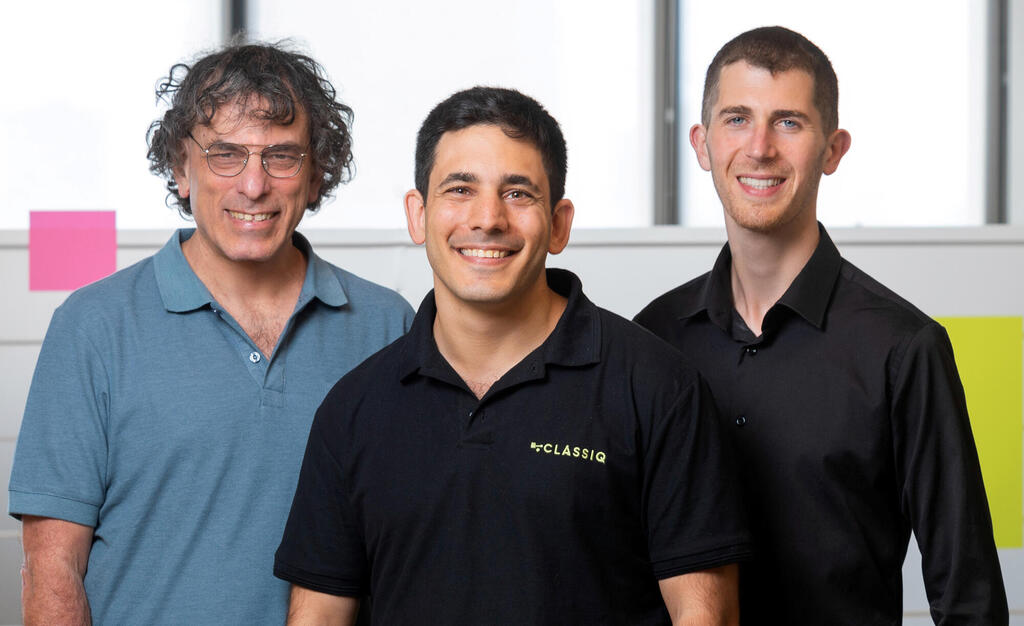
Classiq founders Nir Minerbi, Amir Naveh and his father, Prof. Yehuda Naveh.
(Photo: Eyal Toueg)
The founders’ expected proceeds are particularly striking given the company’s relatively small size. Classiq employs around 150 people, and its employees collectively hold approximately 10% of the company, a stake worth about $230 million at the acquisition price. Intel has also allocated more than $100 million in retention grants to encourage employees to remain with the company.
Classiq was founded by Nir Minerbi, CEO, Amir Naveh, CPO, and Prof. Yehuda Naveh, the company’s CTO and Amir’s father. Minerbi and Amir Naveh are graduates of the Israel Defense Forces’ Talpiot program, while Yehuda Naveh previously held a senior position at IBM’s Israeli development center.
The company develops software that allows users to design and run quantum algorithms across different hardware platforms. Rather than manufacturing quantum computers, Classiq aims to provide the software layer that makes increasingly complex machines easier to program and use.
Entrée Capital emerges as the biggest venture capital winner
Among the investors, Entrée Capital stands out as the largest expected beneficiary. The fund was one of Classiq’s first investors, led its pre-seed round and continued participating in later funding rounds. It is expected to receive more than $300 million from the acquisition after investing just a few million dollars at the outset.
Team8 Capital, another early backer, is Classiq’s second-largest shareholder, with a 9% stake. At the $2.3 billion acquisition valuation, that holding would be worth approximately $207 million before accounting for the deal’s final terms and any adjustments to the equity value.
The Phoenix, the Israeli insurance and financial services group, holds a 7.5% stake, equivalent to approximately $172.5 million at the headline valuation. Its investment means the acquisition is expected to benefit not only venture capital funds and founders but also investors whose savings are managed through institutional financial products.
Classiq’s other investors include NightDragon, led by former McAfee chief executive Dave DeWalt, as well as Norwest, Wing Venture Capital, HSBC, Samsung Next, QBeat and others. The company’s investor base also includes strategic players such as AMD Ventures, Qualcomm Ventures and quantum computing company IonQ. Their individual proceeds will depend on their respective stakes and the final transaction structure.
The acquisition’s headline value should not be confused with the amount shareholders will immediately receive in cash. Because the consideration includes Intel stock, part of the value will remain exposed to movements in Intel’s share price, and the precise proceeds for each shareholder depend on the final terms.



