










Two Israeli quantum startups target Wall Street in multibillion-dollar SPAC deals
Quantum Art and Classiq are seeking valuations of up to $5 billion as investor enthusiasm for quantum computing fuels a new IPO wave.
It was perhaps only a matter of time. As investor enthusiasm for quantum computing accelerates, Israeli startups are also seeking to capitalize on the boom.
Calcalist has learned that two Israeli quantum computing companies, Quantum Art and Classiq, are in advanced negotiations to go public on Wall Street through mergers with special purpose acquisition companies (SPACs). The companies are targeting valuations of between $2 billion and $5 billion each, according to people familiar with the discussions. Both companies declined to comment.
According to industry sources, roughly 30 SPACs are currently searching for acquisition targets in the quantum computing sector, including the Israeli SPAC founded by Tom Livne and Eyal Waldman, which recently raised $172 million.
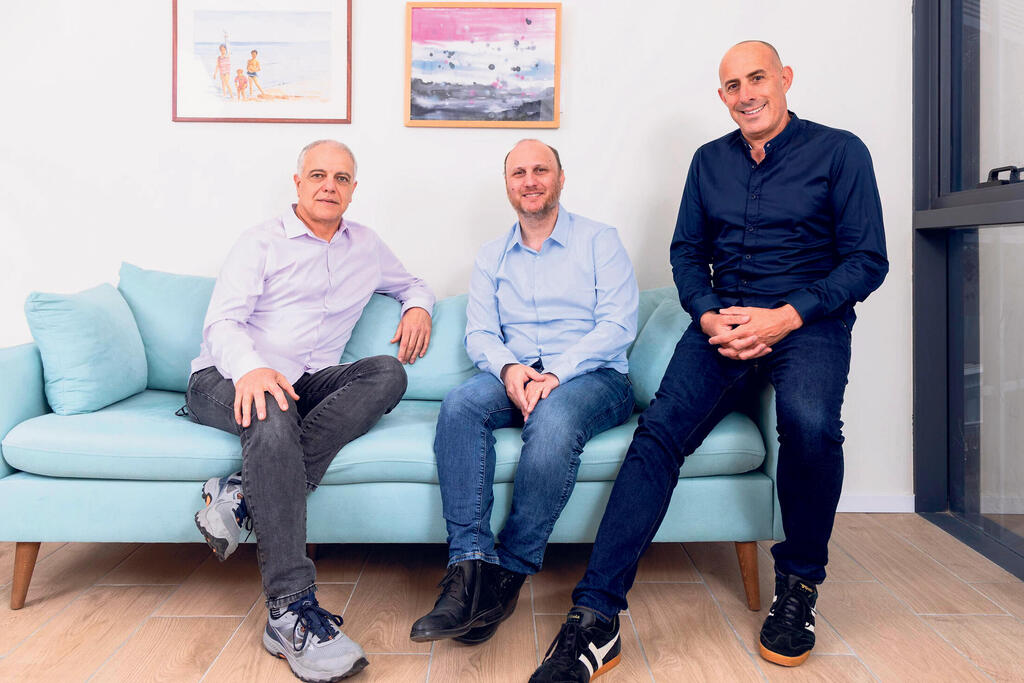
Quantum Art, which is developing a full-scale quantum computer based on trapped-ion technology, is further advanced in the process. Classiq, which is building an operating system for quantum computers that could become the industry's equivalent of Microsoft Windows, is also considering pre-IPO round and then a standard IPO, a longer process than SPAC, but which could lead to a higher valuation.
Both companies are already working with investment banks, and a decision is expected in the coming weeks. If the plans proceed, Quantum Art could become the first Israeli quantum computing company to list on Wall Street, potentially before the end of 2026.
Quantum Art was founded in 2022 as a spin-off from Prof. Roee Ozeri's group at the Weizmann Institute of Science. Quantum Art’s leadership team includes internationally recognized experts in trapped-ion quantum computing, large-scale system engineering, and quantum market strategy. The company, founded by Dr. Tal David (CEO), Dr. Amit Ben Kish (CTO), and Ozeri (CSO), has spent years developing proprietary techniques for implementing multi-qubit gates, scalable modular architectures, and robust quantum error correction.
The company extended its Series A to $140 million in April, bringing its total funding to approximately $200 million. Its Israeli investors include Entrée Capital, QBeat, Vertex, StageOne, Disruptive AI, Amiti Ventures and Harel Insurance.
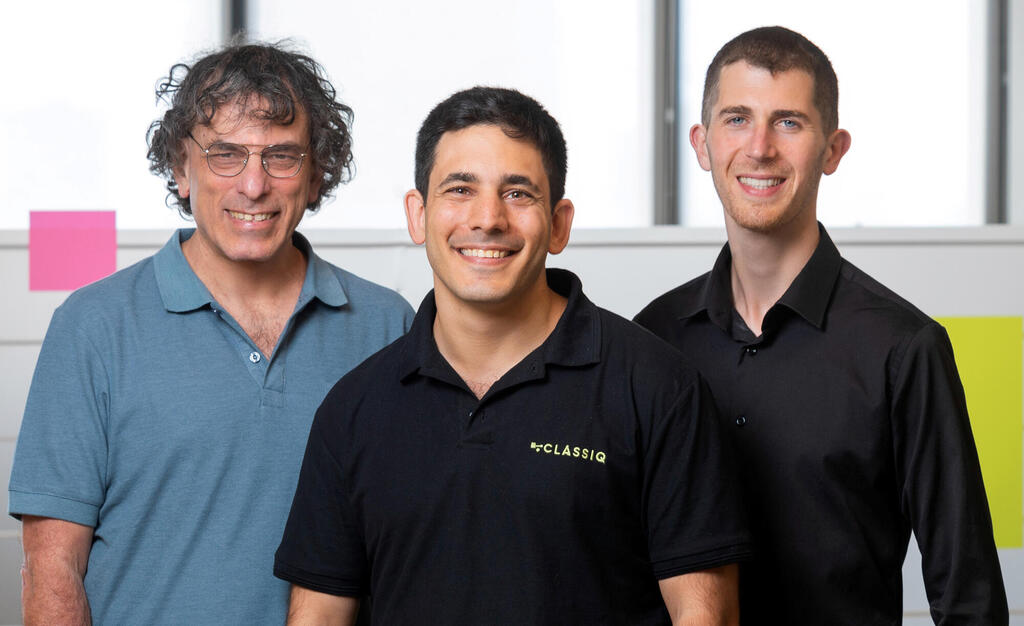
Classiq was founded in 2020 by Talpiot graduates Nir Minerbi and Amir Naveh, together with Dr. Yehuda Naveh, Amir's father and a former senior member of IBM's quantum computing team.
Rather than building quantum hardware, Classiq is developing an operating system designed to work across quantum computers, a niche with relatively few competitors that could eventually become an industry standard.
The company raised $30 million at the end of 2025, bringing its cumulative funding to approximately $200 million. Its investors include AMD, Qualcomm, IonQ, SoftBank and others. It also collaborates with Nvidia, Microsoft and AWS, and is estimated to generate tens of millions of dollars in annual revenue from customers including Comcast, BMW, Rolls-Royce, Citi and Toshiba.
Classiq employs about 100 people, including roughly 75 in Israel.
Quantum IPOs are becoming Wall Street's latest boom
SPAC mergers have emerged as one of the preferred routes for quantum computing companies seeking public listings. Since the beginning of 2026, five quantum startups have already gone public through SPAC mergers, while another five are in advanced stages of similar transactions.
Together, the listed companies are worth around $70 billion. Most command valuations of $1 billion to $3 billion, although two of Quantum Art's trapped-ion rivals, IonQ and Quantinuum, are each valued at roughly $20 billion.
Quantum Art is not expected to command comparable valuations, as it has yet to generate meaningful revenue. However, the company hopes to benefit from growing investor enthusiasm surrounding trapped-ion quantum technology.
Israel is widely regarded as one of the world's leading quantum computing ecosystems, but it has yet to translate its scientific strengths into major public-market success.
While Israeli startups have attracted substantial venture capital investment, industry executives increasingly believe private funding alone will not be sufficient as the industry approaches what many expect to be a commercial inflection point between 2027 and 2029. Access to public capital markets could allow companies to raise hundreds of millions of dollars more quickly.
Around 20 quantum startups currently operate in Israel, out of roughly 270 worldwide. Most were founded on research originating at institutions including the Weizmann Institute and the Technion.
To date, Israeli quantum startups have attracted about $800 million in private investment. A successful SPAC merger could inject an additional $200 million to $300 million into a company, giving it greater financial resources in the increasingly competitive race to build commercially viable quantum computers.
Israel currently ranks fifth globally in total investment in quantum companies and seventh in overall ecosystem strength and innovation.
In 2025 alone, Quantum Art, Quantum Source and Classiq raised a combined $500 million. Industry sources also estimate that Quantum Machines is currently in the midst of another major fundraising round.
On a per-startup basis, Israel is producing quantum companies at one of the highest rates in the world. Roughly one in every 300 Israeli startups operates in quantum computing, compared with about one in every 2,000 startups in the United States.
Despite the stigma attached to SPACs following the market's collapse in 2021, they have become an increasingly popular route to the public markets for quantum companies, many of which remain years away from generating substantial revenue.
Their valuations are based largely on expectations of future commercial breakthroughs rather than current financial performance. Revenue multiples frequently exceed 100 times sales. Rigetti Computing, for example, is currently valued at about $7 billion despite generating annual revenue of only around $7 million.



