










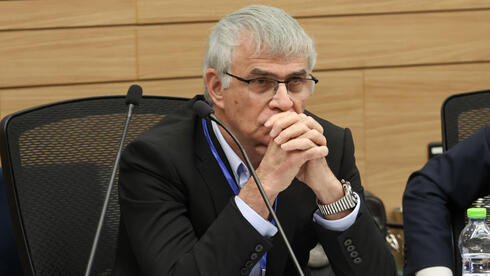
"Zim has faced bankruptcy twice in the past. The new Zim will definitely be profitable from day one."
Ishay Davidi, CEO of FIMI, said at the Economic Committee that the new Zim will be established with equity of $700 million and no debt, and that "There will be no situation in which the new Zim fails to meet the requirements of the State of Israel."
“We are going to establish a new Zim that will ensure maritime and economic security and be financially strong. FIMI will own the new Zim 100%,” said Ishay Davidi, CEO and founder of the FIMI fund, on Sunday during a discussion in the Knesset Economic Committee regarding the sale of Zim.
Under the deal, first revealed by Calcalist, the Israeli shipping company Zim will be sold to the German company Hapag-Lloyd for $4.2 billion. Zim’s Israeli operations and certain other assets will be sold to FIMI. The transaction has drawn criticism because investors from Saudi Arabia and Qatar hold shares in Hapag-Lloyd.
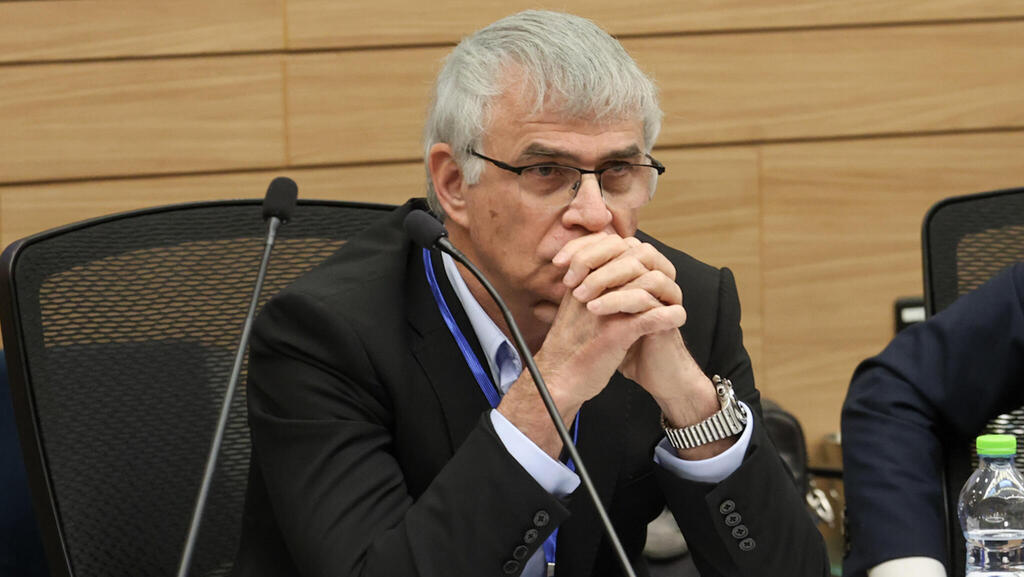
Davidi said: “We are establishing a company with $700 million in equity and no debt. As of today, Zim has $5-6 billion in ship-related obligations, while we will have none. The 16 ships, 12 of which will be fully owned by us, will be newer than those currently operated by Zim.”
The chairman of the committee, MK David Bitan (Likud), asked whether in the next war Zim would be able to meet all of the state’s needs. Davidi replied: “Yes, with an exclamation mark.” Davidi added that “Zim has faced bankruptcy twice in the past and did not meet the conditions of the golden share, while the new Zim will definitely be profitable from day one. There will be no situation in which the new Zim fails to meet the requirements of the State of Israel,” he said.
Bitan remarked that “the Saudis and Qataris could buy everything in a minute, but that doesn’t mean we will allow it.” He asked Zim to transfer full details of the transaction to the state and requested that the Companies Authority conduct a preliminary review with FIMI to ensure it can meet the required conditions and provide appropriate guarantees. He added that he intends to hold a confidential meeting to address the security implications and necessary safeguards.
Davidi responded: “We would not have entered into this deal if we had not met all the conditions required by the state.”
According to the deal’s structure, the majority of Zim’s global operations, including 99 chartered vessels, its main trade routes (particularly between Asia and the United States), international customer contracts, and its brand outside Israel, will be integrated into Hapag-Lloyd. Under FIMI’s plan, a more limited core operation will remain in Israel: 16 owned ships, national shipping lines to and from Israel, the company’s headquarters in Haifa, and the obligations stemming from the state’s golden share.
However, as reported by Calcalist, the Companies Authority has argued that “the proposed split between the buyer and the FIMI Fund does not align with the terms of the golden share,” and that if the published details are accurate, “the state may not be able to approve the deal.” The Authority’s position is critical, as it administers the golden share on behalf of the state, and completion of the transaction depends on its approval.
MK Oded Forer (Yisrael Beiteinu), who initiated the discussion, described the sale as a strategic event for Israel. Based on published reports, he said, the structure of the deal raises serious concerns that a weakened company would be left in Israel, potentially unable to fulfill the national responsibilities of an Israeli shipping line.
A representative of Zim’s board, Ariel Aminetzah, said the company has responded to the Companies Authority’s letters and is preparing the required documents. “When the documents are ready, we will submit them according to procedure. In our view, the discussion may be somewhat premature,” he said.
Dr. Yoram Zeva, president of the Shipping Chamber, disagreed, saying the discussion was not premature. He noted that Zim’s fleet is relatively old and will need to be replaced within about a decade at an estimated cost of $1 billion.
Galit Widerman, deputy commissioner of the Companies Authority, said she had sent four warning letters stressing the need to comply with the golden share conditions and to provide details even before the agreement was signed. “The company could have engaged the best lawyers and provided all the information requested by the Authority,” she said. She also criticized the absence of company management representatives from the discussion, suggesting that Zim was not showing sufficient respect to state officials or the Knesset.
MK Forer added: “Something very troubling emerged here, namely that the current Zim did not comply with the golden share conditions. That should concern all of us. The government must ensure that Israel maintains continuous maritime transport, even during wartime.”
Captain Tzadok Radker, director of the Administration of Shipping and Ports, said: “Based on the information available to us from the media, we do not see anything positive for the country. We know the global shipping industry is entering a downturn, which strengthens concerns that a lean Israeli company may lack economic viability. I would like to understand how it will be profitable from the first year. Shipping involves enormous expenses, and financial deterioration can happen very quickly. We were not provided with information directly and learned details mainly through the press.”
Oren Caspi, chairman of the Zim workers’ union, said that in a future war Israel could become dependent on Hapag-Lloyd, which includes investors from Qatar and Saudi Arabia, for imports from the East. “There will be no independence,” he said.
Regarding employees, Caspi added: “Out of about 1,000 workers, only 120 are being offered one-year contracts. Workers learned about this through the newspapers. We expect the state to intervene.”
Histadrut representative Nir Eisenberg said: “They are asking us to exchange an apartment in Tel Aviv, even with a mortgage, for an apartment in Kiryat Gat without debt. There are a thousand families here who received the news through the press. This is shameful, and we will fight it.”
Shai Halperin, head of international security coordination at the Defense Ministry, said: “Since October 7, we have been in a security crisis, and Zim has provided essential support where needed. It is crucial that the state retains the ability to transport security equipment. Without that capability, we will not be able to bring in what the IDF and the defense establishment require.”



