










Analysis
Nvidia helps drive Israeli tax revenues up 13.3% as S&P raises growth forecasts
The rating agency says tax payments from the chipmaker were a major contributor to the increase in government revenues between January and September. S&P now expects Israel's economy to grow 5.5% in 2026 and 7% in 2027, but warns that security risks remain a major constraint.
S&P published a comprehensive analysis of the Israeli economy this week, three days after affirming the country's credit rating at 'A' with a stable outlook. The report sheds light on the factors behind the agency's decision and the economic conditions that could eventually lead to an upgrade.
According to S&P's assessment, Israel's economic fundamentals would justify a credit rating of 'AA-', the level it held before the war. However, the agency has lowered the rating by two notches to 'A' because of security risks stemming from the conflict with Iran and its proxies. In other words, without the geopolitical risks, Israel could have retained its pre-war rating. This assessment is based on the scores S&P assigned to the country across four areas: economic performance, external trade and financial relations, the state of public finances, and monetary policy.
S&P says the rating could be upgraded if regional security risks decline significantly and sustainably, or if economic growth and fiscal performance prove substantially stronger than currently projected. Its baseline scenario, however, assumes that the conflict in the Middle East will continue into 2027 and that another direct confrontation involving the United States, Israel and Iran remains possible.
The agency has raised its growth forecast for Israel to 5.5% in 2026, up from the 3.1% projected in its previous forecast in May. For 2027, it now expects growth of 7%, compared with its earlier estimate of 5.9%. The upward revision partly reflects a change in the Central Bureau of Statistics' methodology for calculating GDP, which now includes production abroad by Israeli technology companies, most notably Nvidia.
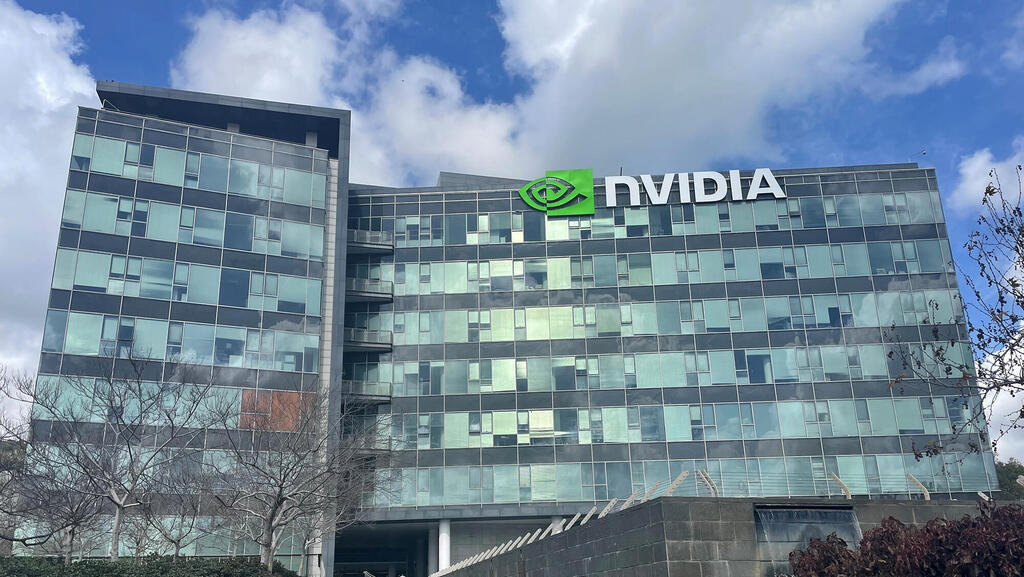
According to S&P, tax revenues rose by 13.3% between January and September, driven largely by tax payments from Nvidia. The overall government deficit is projected to reach 5.2% of GDP this year and 4.9% in 2027, while government debt is expected to stand at nearly 68% of GDP in 2026 and 67.1% in 2027.
The projected decline in the debt-to-GDP ratio does not necessarily signal an improvement in the government's financial position. The country's debt is expected to continue growing, but because GDP is forecast to expand more rapidly, the ratio will temporarily fall. S&P warns that without a multi-year plan to reduce the deficit, the debt-to-GDP ratio will begin rising again, reaching 68.2% by 2029, above its projected level for 2026.
Defense spending is expected to exceed 7% of GDP in 2026. With expenditure on civilian services already relatively low, S&P believes the government will have limited room to reduce the deficit through further spending cuts. It is therefore likely to rely more heavily on increasing state revenues, potentially through tax hikes.
The agency also points to political uncertainty. The elections did not produce a decisive outcome, and Israel is expected to enter 2027 without an approved state budget. On security policy, S&P sees little difference between the country's political blocs: both support high defense spending and maintaining freedom of action against Iran. The distinction, according to the agency, is that the opposition is more receptive to diplomatic initiatives. A government led by the opposition would also likely place greater emphasis on strengthening state institutions and reducing exemptions for the ultra-Orthodox (Haredi) community from military service, as well as increasing its participation in the workforce.