











Israeli startup unveils world’s first chocolate bars made with lab-grown cocoa butter
Celleste partners with Mondelēz to test ingredient as cocoa supply faces climate pressure.
An Israeli food technology startup says it has succeeded in producing chocolate using cocoa butter grown in a bioreactor, a development that could signal a shift in how one of the world’s most climate-sensitive commodities is sourced.
Celleste Bio announced it has produced milk chocolate bars using cocoa butter grown through cell suspension culture technology, rather than harvested from cocoa trees. The bars, created in collaboration with Mondelēz International, are described as meeting the same consumption and quality standards as conventional chocolate products.
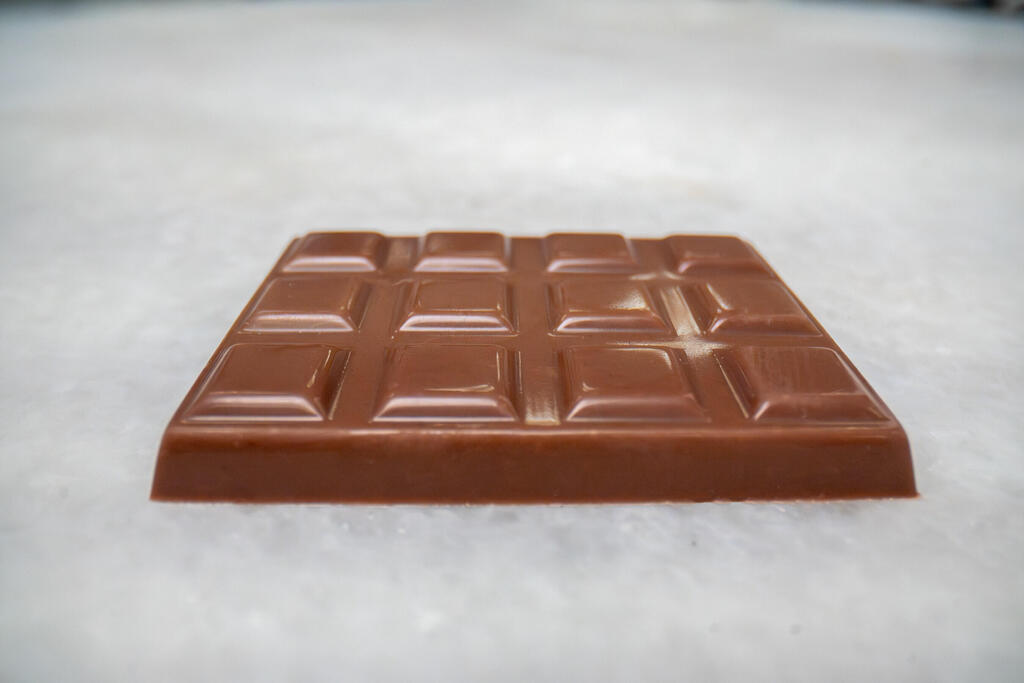
The development marks a notable step in efforts to address mounting pressures on the global cocoa supply chain, which has been strained by climate change, crop disease, and geopolitical instability. Cocoa butter, the fat extracted from cocoa beans, is a critical ingredient that determines chocolate’s texture, melting behavior, and overall sensory experience. Replicating it has posed a significant technical challenge.
According to the company, its cell-cultured cocoa butter is “bio-identical” to conventionally produced cocoa butter, delivering the same melt profile and texture. The milestone, it says, demonstrates that its ingredients can function as direct replacements in existing manufacturing processes, a requirement for large-scale adoption.
The chocolate bars themselves were produced by Mondelēz, Celleste’s strategic partner, which tested the ingredient across nearly a dozen prototypes. The involvement of a major global manufacturer suggests the technology is being evaluated not only in laboratory settings but also under the constraints of industrial production.
Celleste, founded in 2022 by Chief Technical and Scientific Officer Hanne Volpin, Orna Harel, Avishay Levy and Daphna Michaeli, with support from The Trendlines Group, has focused on developing cocoa ingredients using cell suspension culture, a process that grows plant cells in controlled environments rather than in soil. The company says it has already established a pilot facility and is aiming to scale production to commercially viable quantities within two years.
Beyond replicating existing ingredients, the company is positioning its technology as a way to reshape how chocolate is made. Its platform incorporates artificial intelligence-based computational modeling, which it says could allow manufacturers to tailor cocoa butter to specific requirements, such as altering melting points or modifying flavor profiles.
If realized, such capabilities would represent a shift from agriculture-defined inputs to engineered ones, potentially giving manufacturers greater control over product characteristics.
The environmental argument is equally central to the company’s pitch. Traditional cocoa cultivation requires significant land use and is closely linked to deforestation in some regions. Celleste says its process could dramatically reduce that footprint. According to its chief technical and scientific officer, a single cocoa bean could be used to generate up to one ton of cocoa butter annually in a 1,000-liter bioreactor, an output that would otherwise require about a hectare of cocoa trees.
"Celleste launched in 2022 with the mission to secure a sustainable future for the global chocolate industry amidst increasing supply chain pressures of climate change, disease, traceability and geopolitical instability," said Michal Beressi Golomb, CEO of Celleste Bio. "In three years we've made unprecedented progress to meet this formidable scientific challenge. We've validated our ingredients as drop-in replacements, created an operational R&D pilot facility to scale up our volumes and now proven our cocoa butter performs identically to conventional cocoa, clearing the next phase to commercial scale."



