










Greece will get Israel’s air defense technology but not its source code
Israel says it will transfer know-how and work with Greek forces and companies on software and technology, while the source code for its existing systems remains outside the licensing agreement.
The most revealing new details about Greece’s $3 billion air defense deal with Israel concern not the weapons themselves, but how they will be connected, deployed and controlled.
The Achilles Shield system will combine three Israeli air defense systems with several types of radar and an overarching command-and-control network. But the architecture is being designed specifically around Greece’s geography, while questions over software, source code and U.S. technology could determine how much control Athens ultimately has over the system.
Moshe Patel, head of Israel’s Missile Defense Organization and one of the main architects of the project, told Greek outlet Kathimerini that Greek and Israeli teams spent years working on the design. Greek Air Force and planning officials repeatedly visited Israel, while Israeli teams traveled to Athens.
The two sides used a terrain-specific planning tool to determine where radars should be positioned and how to maximize coverage. Greece will receive the planning tool itself, allowing its officials to conduct their own analysis and make decisions about the deployment.
That is particularly important for Greece, where the air defense network must cover both the mainland and a large number of islands with very different geographic requirements.
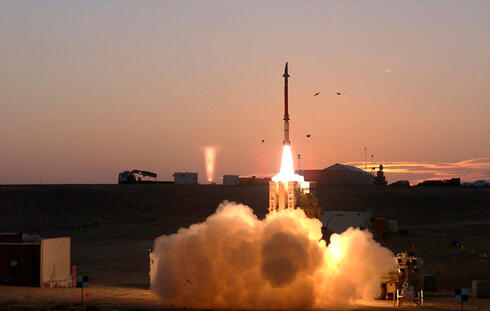
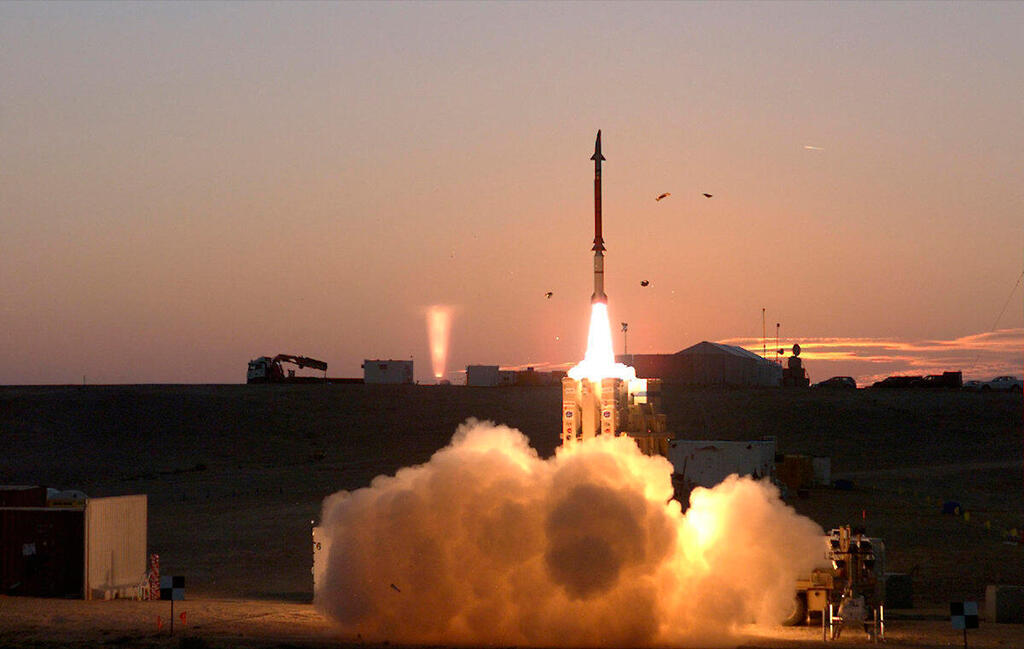
The system will use Rafael’s SPYDER as the lower layer, primarily for islands farther from the mainland. Barak MX will cover more islands closer to the mainland, while David’s Sling will provide longer-range protection over the mainland and some surrounding islands.
The network will also include ELTA radars and external MMR radars. Each of the individual Israeli systems has its own command-and-control capabilities and radar, while an overarching command-and-control system will coordinate the different systems and sensors.
The result is intended to be a single defensive architecture rather than a collection of separate missile batteries.
The systems themselves are also being delivered after extensive Israeli combat experience. Patel said the wars involving Iran and Hamas were among the factors considered by the Greek government in deciding to proceed with the project, and that lessons from the fighting over the past three years had been incorporated into the systems.
He described the systems Greece will receive as being at a “very mature” stage.
Patel declined to provide specific interception rates or costs. Instead, he said Israel evaluates air defense by considering the potential damage from an incoming threat rather than simply comparing the price of an interceptor with the cost of the threat.
The source-code question
One of the most significant new details concerns the software behind the network.
Asked directly whether Greece would receive the source code, Patel said no. He explained that the source code was not included in the licensing agreement, while Israel would provide support, maintenance and assistance.
The Israeli Defense Ministry subsequently clarified that Israel will transfer know-how and jointly use software and technology with the Greek armed forces. The cooperation will also extend to Greek companies participating in co-production.
The system also illustrates how Achilles Shield is not exclusively an Israeli-Greek technology arrangement.
Patel said all of the Israeli systems have Link 16 capabilities and can connect with other military systems. But David’s Sling requires a U.S.-approved integration plan because it includes technology licensed by the U.S. government.
SPYDER and Barak MX do not require the same U.S. approval.
Iron Beam could come later
Another new detail concerns a system that is not part of the current deal.
Israel’s Iron Beam laser air defense system is not included in Achilles Shield. Patel said the Greek government had not asked to discuss lasers as part of the current project.
But he said Iron Beam could potentially be integrated into the architecture in the future if Greece requests it.
That leaves open the possibility of adding another layer to the network later, rather than requiring Greece to redesign the entire architecture if it decides to incorporate laser interception technology.
For now, however, Iron Beam is outside the agreement.



