










$3.5 billion Greece deal could help Israel replenish its own air defense stocks
Defense officials say the increase in production needed to fulfill the agreement could expand manufacturing capacity and improve Israel’s ability to rebuild its weapons inventories.
After about three years of negotiations and lengthy approval procedures, Israel and Greece signed the “Achilles Shield” deal on Monday, worth about €3 billion (more than NIS 10 billion). Under the agreement, Rafael and Israel Aerospace Industries (IAI) will establish a multi-layered air defense system for Greece.
The deal is the largest arms agreement ever signed between Israel and Greece and is considered the second-largest in the history of Israel’s defense industry, after the Arrow 3 deal that IAI signed with Germany in 2023.
The agreement is significant not only because of its financial scope. Unlike previous contracts in which Israeli companies supplied individual air defense systems to countries around the world, Rafael and IAI will jointly establish an integrated, multi-layered system for Greece capable of addressing a broad range of threats, from low-altitude drones and UAVs to fighter jets and ballistic missiles at higher altitudes.
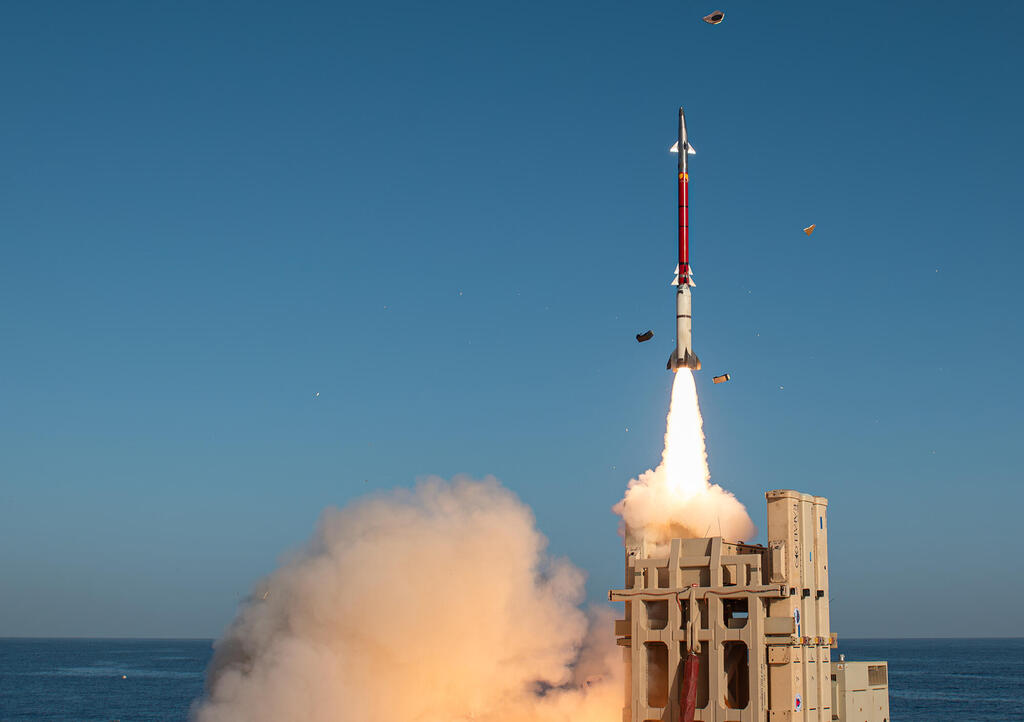
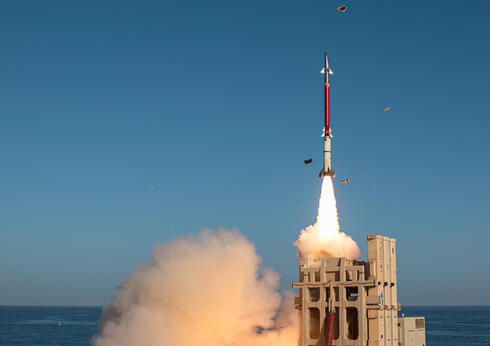
Over the next three years, Rafael and IAI will supply Greece with four different types of air defense systems that will operate in coordination with one another. IAI’s share includes the Barak MX system, which has a range of up to 150 kilometers, as well as radars developed and manufactured by its Elta subsidiary. Tomer, the government-owned defense company, may also benefit from the deal, as it manufactures the engines for the Barak missiles.
Rafael will supply Greece with David’s Sling and SPYDER defense systems. This will be the second time Rafael has exported David’s Sling, which is designed to intercept cruise missiles, rockets and ballistic missiles. The first country to receive the system was Finland, which signed a deal worth more than €300 million with Rafael in 2023 as part of an effort to upgrade its capabilities following Russia’s invasion of Ukraine.
Rafael will also supply Greece with its Drone Dome system, designed to protect against drones and unmanned aerial vehicles, in a deal worth €26 million. The systems will be used to protect strategic installations throughout Greece and strengthen the country’s existing defenses.
All of the systems supplied by the Israeli companies under the “Achilles Shield” program will be operated through a new command-and-control unit, whose development will be led by Rafael.
A senior official familiar with the deal told Calcalist that the unusual combination of systems, and the challenge of connecting them into a single integrated architecture, were among the reasons for the lengthy negotiations.
Greece’s extensive acquisition of defense systems from IAI and Rafael continues a chain of deals with Israeli defense companies that has expanded significantly since the beginning of the decade. Their cumulative value is approximately €6 billion.
In April, Greece ordered artillery rockets with ranges of up to 300 kilometers and launchers from Elbit Systems. Before that, it ordered Rafael’s Spike anti-tank missiles, which can be launched from air, sea and land platforms.
Greece’s broader defense procurement is part of a multi-year plan to upgrade its military over the coming decade, with a total budget of approximately €30 billion. The buildup also includes an order for F-35 aircraft from the United States and an upgrade of the Greek air force’s F-16 fleet.
The scale of the new agreement could also have implications for Israel’s own ability to replenish its air defense stockpiles.
Yair Koles, head of the Defense Export Division at Israel’s Ministry of Defense, told Calcalist that the deal could ease some of the challenges Israel faces in procuring air defense systems as the IDF prepares for future conflicts and works to replenish weapons stocks.
“The increased production enables increased procurement of raw materials and expansion of production capabilities in a way that also benefits the IDF’s rearmament processes,” Koles said.
Like most major defense agreements between Israel and Greece in recent years, the “Achilles Shield” deal was concluded between the Israeli Ministry of Defense and the Greek Ministry of Defense, with the Israeli defense companies serving as subcontractors.
Such government-to-government, or G2G, agreements offer regulatory advantages and government guarantees for implementation under the terms agreed by the two countries.
The program also includes cooperation between Israeli companies and the Greek defense industry, including the transfer of knowledge and technology that will allow some components of the project to be manufactured in Greece.
That arrangement reflects a broader trend in the European arms market, where countries purchasing weapons increasingly demand that part of the production take place locally in an effort to strengthen their domestic industrial capabilities.
Turkey in the background
The growing defense relationship between Israel and Greece comes against the backdrop of the two countries’ shared tensions with Turkey.
Greece and Turkey have long-standing territorial disputes and growing tensions in the Aegean Sea. Relations between Israel and Turkey have also deteriorated sharply, amid Turkish attempts to establish new facts on the ground and expand its influence in Syria and Gaza, as well as increasingly harsh attacks on Israel by Turkish President Recep Tayyip Erdogan.
At the same time, Turkey has spent the past decade strengthening its military through extensive defense procurement, much of it from its domestic defense industry. More recently, U.S. President Donald Trump promised to sell Turkey F-35 aircraft, despite Israeli protests that failed to prevent the move.
Against this backdrop, Israel’s Defense Ministry said on Monday that, at a time when “elements with hegemonic ambitions seek to expand their influence and destabilize the region,” Israel and Greece would continue to deepen their security and strategic cooperation based on shared interests.
Defense Ministry Director General Amir Baram said the agreement reflects Israel’s strategy of using defense exports to strengthen the IDF, expand domestic defense production and deepen Israel’s international influence.
“The deal implements the Defense Ministry’s strategy to expand defense exports as a key tool for ensuring the IDF’s force building and strengthening, influencing foreign policy, and strengthening the defense industry and the national economy,” Baram said.
“Agreements between governments of such scope are not only a first-rate political and economic asset, but a direct driver for expanding local production lines in Israel, increasing inventories, and establishing Israel’s weapons independence.”
The comments come as Israel’s defense industries face extraordinary pressure following the October 7 war. They are simultaneously being asked to increase production for the IDF while fulfilling increasingly large export contracts, requiring Rafael and IAI to expand production lines, recruit workers and invest in infrastructure.
From the Defense Ministry’s perspective, long-term export agreements can help justify investments in additional production capacity that can also be used to meet IDF requirements during an emergency.
The backdrop to the ceremony at the Defense Ministry marking the signing of the deal is also the heavy debt that the Israeli government has accumulated toward the country’s three major defense companies: IAI, Elbit Systems and Rafael.
The total debt stands at approximately NIS 15.5 billion ($5.18B). The increase is linked to ongoing disagreements between the Finance Ministry and Defense Ministry over the size of the 2026 defense budget.
The Defense Ministry owes Rafael approximately NIS 7 billion. On Tuesday, Rafael CEO Yoav Turgeman sharply criticized the Finance Ministry for failing to provide the funds needed to repay the debt and accused it of violating the law. The Finance Ministry did not respond.
IAI, meanwhile, moved to negative cash flow in the second quarter because of more than NIS 5 billion owed to it by the Defense Ministry. The ministry’s debt to Elbit is estimated at approximately NIS 3 billion.
No agreement has yet been reached between the Defense and Finance ministries on compensating the companies for the financing costs associated with carrying the debt, which are estimated at about NIS 1 billion a year.
While officials in both ministries told Calcalist in recent days that they recognize their obligations to the defense companies, they also argued that the companies’ strong financial positions have allowed them to absorb some of the impact of the delayed payments.
One source said the companies are also benefiting from the state’s efforts to broker defense deals abroad, which can help them continue to cope with the growing debt.
Israel’s defense exports reached a record of approximately $19 billion in 2025, an increase of 30% from the previous year. More than one-third of the deals were with European countries, while more than half of global deals were government-to-government agreements brokered by the Defense Ministry’s Defense Exports Division. Those G2G agreements accounted for approximately $10 billion.
Air defense systems represented about 30% of all Israeli defense exports that year.
The Greek agreement adds to a series of recent Israeli air defense deals around the world. Over the past two years, Israeli defense companies have signed agreements with Slovakia for a Barak MX system from IAI worth more than €55 million, with Germany for additional Arrow missiles from IAI, and with Thailand for Barak MX missiles as well as launch and command-and-control systems.
The broader European arms buildup is being driven in large part by Russia’s invasion of Ukraine in February 2022 and fears that the war could expand, including through the use of drones and ballistic missiles.



