







After six years in stealth, Hemispheric emerges with $52 million to build a foundation AI model for the human brain
Founded by a computational neuroscientist and the co-founder of RealFace, the Israeli startup unveiled Descartes, a six-billion-parameter NeuroAI model trained on more than 250,000 hours of brain data from over 100,000 participants.
Hemispheric, an Israeli NeuroAI company developing a foundation model for measuring and interpreting human brain activity, has emerged from more than six years of stealth with $52 million in funding and the launch of Descartes, a six-billion-parameter AI model designed to decode brain activity and convert it into quantitative insights for clinicians and researchers.
The company describes Descartes as the first frontier NeuroAI model built to decode non-invasive brain activity. Similar to how large language models understand the meaning of text and vision models interpret images, Hemispheric's model is designed to translate the brain's electrical signals into an objective understanding of brain function.
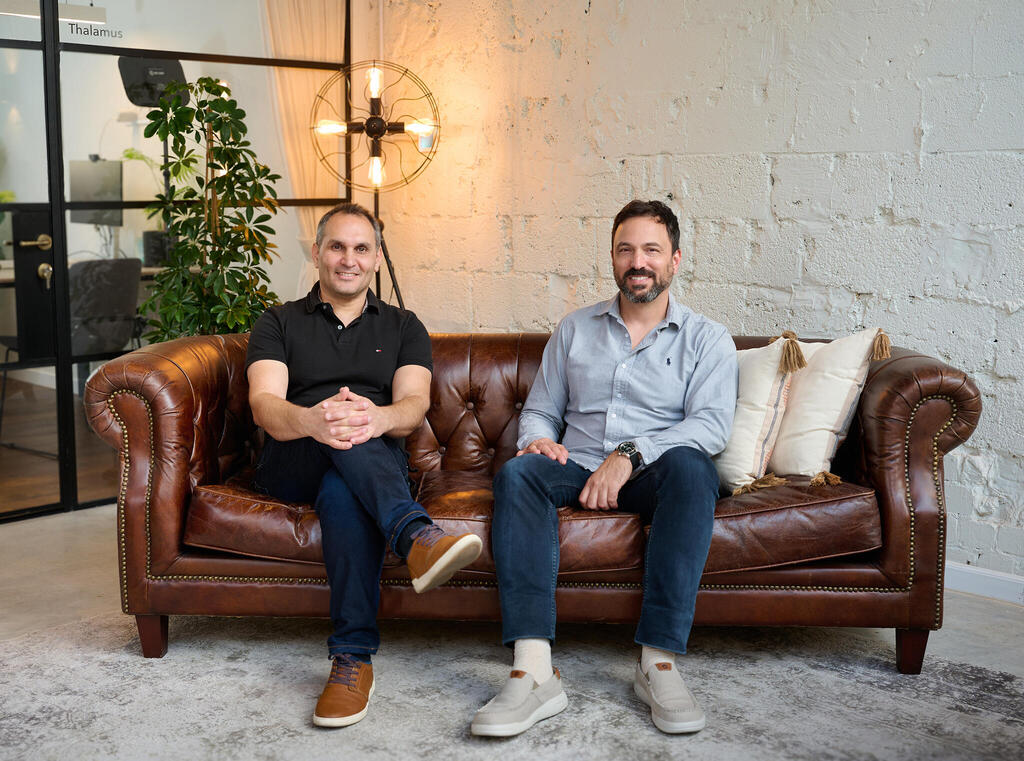
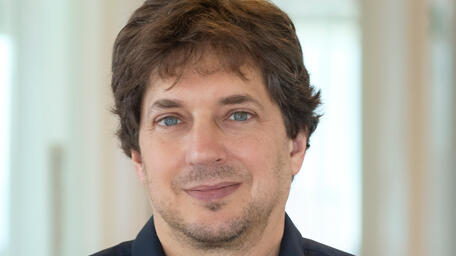
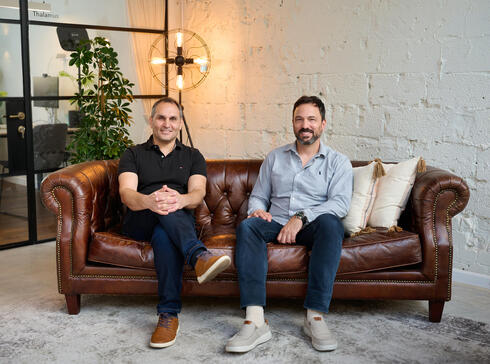
The company was founded by Dr. Hagai Lalazar, a computational neuroscientist who serves as CEO, and Gidi Littwin, an artificial intelligence entrepreneur who co-founded RealFace, the Israeli facial recognition startup acquired by Apple in 2017 and integrated into the technology behind Face ID. Littwin serves as Hemispheric's CTO and is one of the co-inventors of Face ID.
The $52 million in funding was raised across three early-stage rounds, including pre-Seed, Seed and a Series A round completed earlier this year. Investors include Hanaco Ventures, Arkin Capital, OurCrowd, Artofin VC, OneMind/Awareness Capital, Protocol Labs, L Catterton, Howard Morgan, Naomi Azrieli, Yasmin Lukatz, Scott Belsky and others.
The funding will be used to expand deployment of the Descartes platform with healthcare, government and pharmaceutical partners, grow Hemispheric's global brain-data network, advance regulatory efforts and expand its U.S. operations.
"The world has seen foundation models create a revolution in language and computer vision. We are building a foundation model to decode human brain activity," Lalazar told Calcalist. "The brain is the most important organ in the human body, yet we still know remarkably little about how to measure it objectively."
Unlike the heart, lungs and other major organs, which have had quantitative diagnostic tools for decades, the brain remains one of medicine's biggest challenges. Conditions including depression, PTSD, Parkinson's disease and early cognitive decline are still diagnosed primarily through questionnaires, behavioral observations and clinical assessments.
"Every major organ in the body has objective tests, except the brain," Lalazar said. "Each person's brain is unique, like a snowflake, which is why current attempts at one-size-fits-all treatments often fall short. We are working toward a future where you walk into your primary care office, receive a brain test as routine as a blood test, and leave with information that you and your clinician can actually use."
Hemispheric believes the lack of objective brain measurements has contributed to a global healthcare challenge. According to the company, neuropsychiatric disorders affect roughly one in three people worldwide and create an annual economic burden estimated at more than $5.3 trillion, while many patients continue through years of trial-and-error treatments before finding effective solutions.
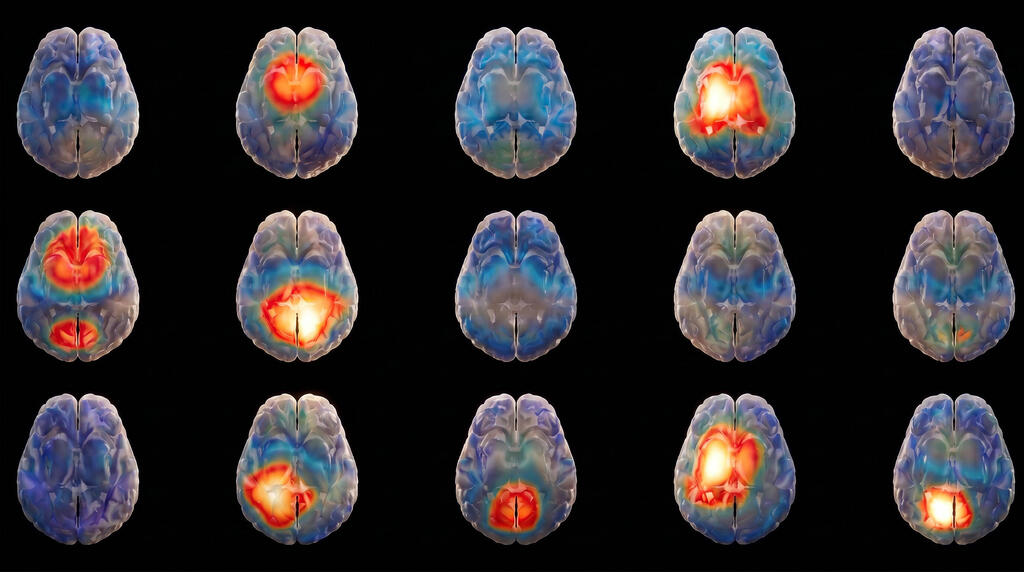
At the core of Hemispheric's platform is Descartes, which was trained on what the company describes as one of the world's largest private brain-activity datasets. The model was trained on more than 250,000 hours of multimodal EEG and behavioral data collected from more than 100,000 participants through Hemispheric's global research network.
The company does not sell access to its underlying data. Instead, it provides access to models trained on that data.
"We do not sell data. We enable the use of a model trained on the data," Lalazar said. "Our model decodes the brain and creates the foundation on which brain-health products can be built."
The first applications of Descartes focus on precision brain health, including PTSD, mild traumatic brain injury (mTBI), depression, anxiety, schizophrenia and Alzheimer's disease.
"We have built tools for PTSD that can help measure disease severity and eventually identify which treatment is most appropriate for a person's individual brain profile," Lalazar said. "The next step is separating diseases into biological subtypes based on the patient's physiological condition rather than only a doctor's assessment."
The platform requires no surgery or invasive procedures. During a 15-minute test, patients wear a lightweight EEG headset with dry electrodes while interacting with an application on a tablet or smartphone. The system captures brain activity and generates objective measurements designed to assist clinicians in diagnosis, treatment selection and monitoring improvement over time.
"Non-invasive neurotechnology is the only path to making brain health accessible at scale," Littwin said. "The challenge has always been variability. The same brain signal can look completely different across individuals. At a very large scale, it becomes something that can be modeled, allowing us to measure brain function accurately in real-world settings without surgery."
Building Descartes required more than six years of neuroscience research, software and hardware development, data collection and AI infrastructure development. Hemispheric has built proprietary data collection laboratories and model-training infrastructure designed specifically for neural data.
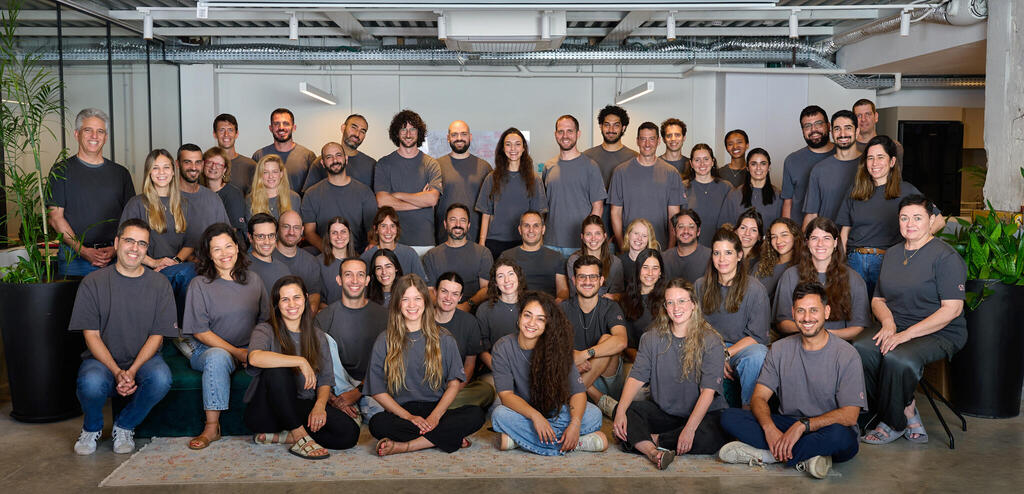
The company currently employs 112 people across Israel, the United States and Asia, with a multidisciplinary team spanning neuroscience, clinical-grade medical systems and large-scale artificial intelligence.
"We built everything from scratch," Lalazar said. "We created the data collection infrastructure, the laboratories and the computing systems needed to train models on brain activity. We understood where AI was heading and believed there would be an opportunity to apply the same revolution to the brain."
Littwin said the project represents the biggest challenge he has taken on during his career.
"I have always been attracted to problems that don't work and where there is an opportunity to be at the forefront," he said. "That was true in medical devices, facial recognition and at Apple working on Vision Pro. But this cannot be compared to anything I have done before. This is a global-scale revolution."
Hemispheric has presented Descartes and its applications to the leadership of the U.S. Food and Drug Administration's Center for Devices and Radiological Health (CDRH) and is pursuing a broad regulatory strategy. The company is also working with government agencies and pharmaceutical companies to expand the use of the technology, initially targeting the United States and European markets.



