










Iran missile damage near Tel Aviv still haunts Israel's rebuilding strategy
Eight months after Iranian missile strikes, Ramat Gan faces complex urban renewal challenges as municipalities and developers navigate planning delays and reconstruction hurdles.
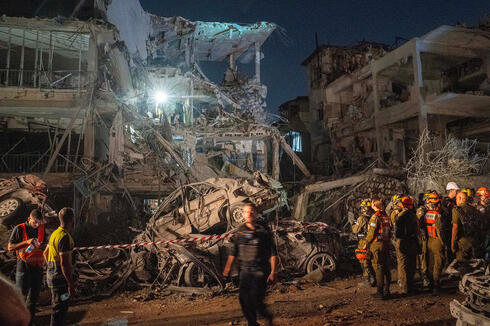
An entire residential compound on Tirzah Street and Yerushalayim Boulevard in Ramat Gan was severely damaged by an Iranian missile in June 2025. The site is one of two major areas hit in the city and among the few damaged complexes where all residents were already in advanced stages of urban renewal processes with developers, unlike other affected cities such as Bat Yam.
In the immediate aftermath of the strike, assessments suggested the area would be relatively straightforward to redevelop due to the existing renewal plans. However, the project now stands at a crossroads. The municipality must decide whether to wait for new legislation that would grant local authorities expanded powers to fast-track such projects, or proceed through the standard planning route via the district planning committees, a longer and more complex process.
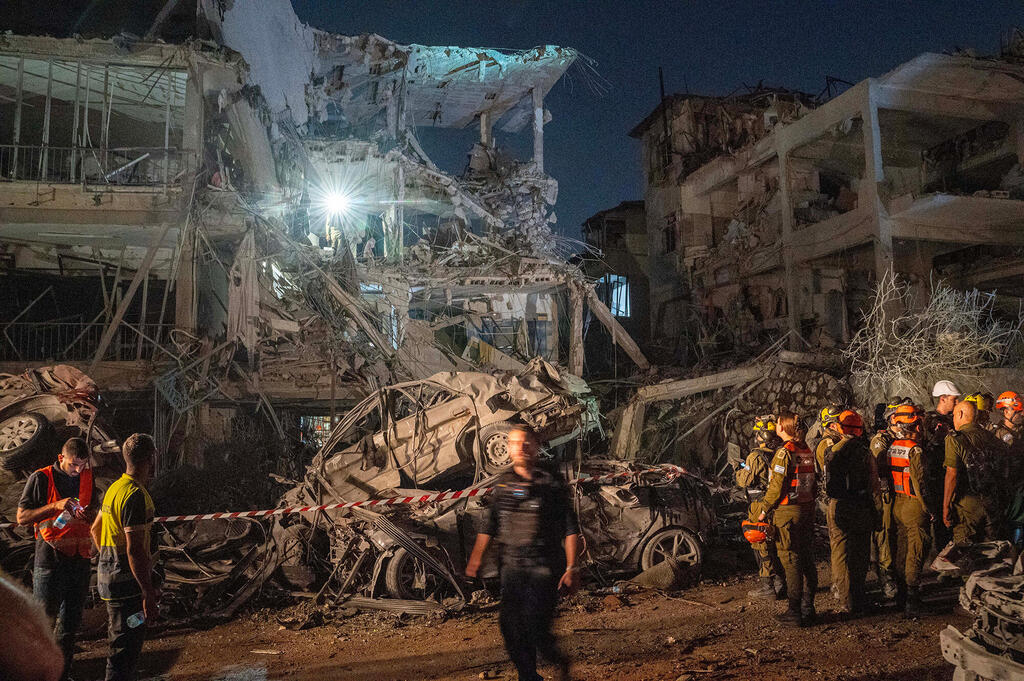
Two areas in Ramat Gan were struck: the western zone near the Diamond Exchange district and the eastern Tirzah-Yerushalayim Boulevard complex.
In the eastern complex, approximately 15 buildings containing around 125 apartments were damaged. Four buildings were declared uninhabitable and demolished.
Even before the strike, several developers were active in the neighborhood. In the northern section, known as Complex A (also referred to as the Victory Complex), Canaan was promoting renewal plans covering about 60 apartments in seven buildings, along with two ground-floor units. Three buildings, Tirzah 12, Tirzah 14, and Yerushalayim Blvd. 75, were destroyed.
In the southern section, Complex B, Carasso Real Estate and Shaked Real Estate were jointly advancing an evacuation-and-reconstruction project in four buildings along Yerushalayim Boulevard. At the same time, SHBN. was promoting a TAMA 38 reinforcement project in two adjacent rear buildings, one of which was destroyed in the strike. Even before the damage, the municipality had sought to unify all six buildings in Complex B into a single urban renewal plan, but the effort had stalled. The complex includes approximately 65 apartments.
A recent breakthrough has brought progress: in coordination with the municipality, the developers in Complex B agreed to consolidate into a single evacuation-and-reconstruction plan covering all six buildings. Additionally, since developers in both Complex A and B were working with Miloslavsky Architects, it was decided that the firm would prepare a unified master plan for both complexes, promoting a coordinated urban scheme expected to accelerate progress and create planning synergy.
Initially, the municipality examined constructing a single tower to serve both complexes. However, that approach would have required unifying land rights and coordinating all developersת a lengthy and complex process. Instead, it was decided to build two towers: in Complex A, a 35-story tower with 180 apartments; and in Complex B, a 38-40 story tower with approximately 200 apartments.
While the eastern compound remains in procedural uncertainty, the western area near the Diamond Exchange district has seen more rapid progress.
Last week, Ramat Gan Municipality inaugurated a new road connecting Arlozorov Street and Jabotinsky Street, including a new intersection designed to improve traffic flow and accessibility to the city’s northern neighborhoods. The road opening marks a key milestone in the rehabilitation of the Taharlev-Hamatmid complex in the Rishonim neighborhood.
Immediately after the missile strike, the municipality concentrated planning and engineering efforts on a comprehensive redevelopment strategy. Rather than limiting the response to repairing damaged structures, city officials advanced a broader urban renewal plan in coordination with the District Committee, government ministries and private developers.
The plan, initiated by Tidhar in cooperation with the municipality, calls for the demolition of 11 damaged buildings and the construction of a 60-story residential tower. It also includes a new modern school for the community, expanded public spaces, infrastructure upgrades and a broader environmental enhancement of the area. The project was advanced on an accelerated track after various planning alternatives were examined in the aftermath of the strike.
The contrasting pace between the western and eastern zones highlights the municipality’s dilemma: where planning alignment and legal clarity exist, projects can move forward quickly; where legislative uncertainty remains, progress slows.
The proposed War Damage Restoration through Urban Renewal Law, which has passed the Ministerial Committee for Legislative Affairs, would grant municipalities broader authority to approve plans locally and lower approval thresholds for projects in damaged areas.
Ramat Gan Municipality would prefer to advance the eastern complex under this proposed law. However, because there is no certainty about when, or whether, the legislation will pass, the municipality may ultimately choose to proceed through the standard planning track requiring district committee approval. That route would extend timelines and reduce local control.



