










Oil surges on Iran tensions, but Israeli energy stocks lag
Brent up 16% this year as Tel Aviv Oil and Gas Index rises just 3.9%.
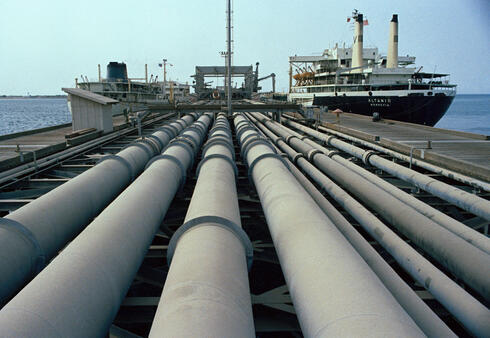
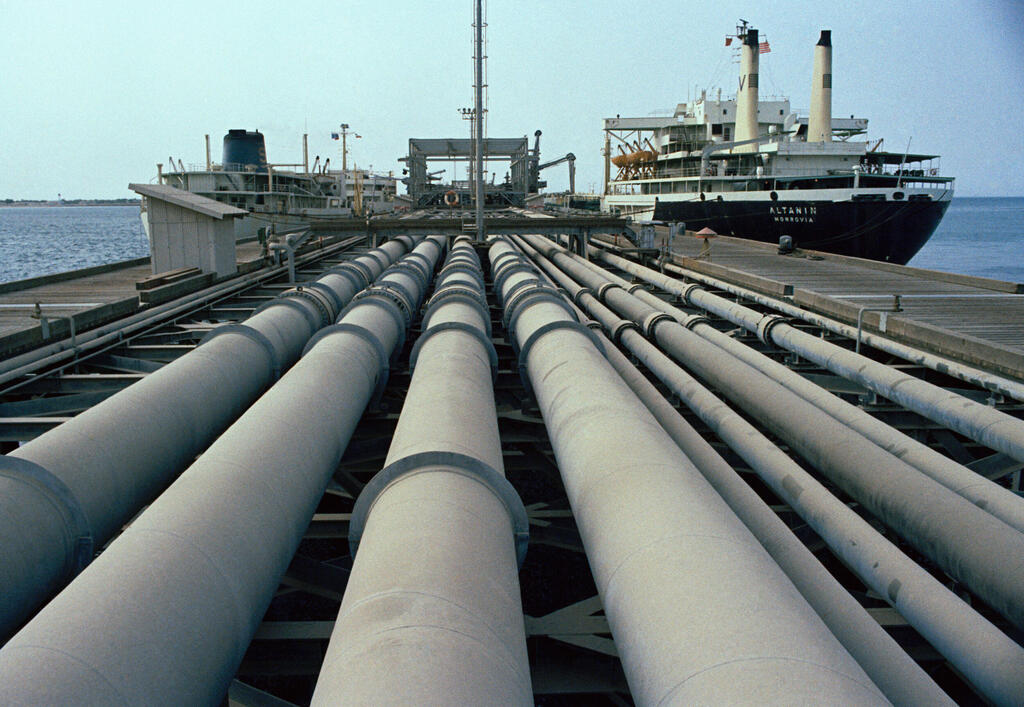
In recent weeks, amid the escalating tension between the United States and Iran, fears have grown that a broader war could lead to the closure of the Strait of Hormuz and disrupt tanker traffic in the Persian Gulf. Such a development could significantly affect global energy supply, as shipments through the Strait account for roughly 20% of global oil consumption.
Against this backdrop, oil prices have risen sharply. The price of Brent crude, a global benchmark alongside U.S. WTI crude, stood at $61.98 at the beginning of the year. It rose 14% by the end of January, fell 4% in the first week of February, and then climbed another 6% to its current level of $71.76. Overall, Brent has gained 16% since the start of the year.
In theory, rising oil prices should support the share prices of Israeli companies engaged in oil and gas exploration, production, and marketing. Natural gas prices are often linked to oil prices, and heightened tensions in the Gulf could also pose risks to gas transportation. This comes at a time when the Tel Aviv Stock Exchange is rallying, with the benchmark TA-125 index up 14.8% since the beginning of the year.
However, the Tel Aviv Oil and Gas Index, which tracks 12 listed oil and gas producers, has lagged behind, rising just 3.9% year to date. Only five of its constituent stocks posted double-digit gains, led by Delek Group, which climbed 19%, while five others generated negative returns. Tamar Petroleum stands out with a 9% decline.
Gilad Ben-Zvi of Lider Capital Markets explained the gap in a conversation with Calcalist. According to him, “The local oil and gas sector entered this period after several years of sharp gains and outperformance relative to the broader market. Much of the expected upside, particularly from increased production volumes at local reservoirs, is already reflected in valuations.”
Indeed, over the past three years, the Tel Aviv Oil and Gas Index has surged 206%, compared with a 132% gain for the TA-125. Shares of NewMed Energy, Delek Group, and Navitas Petroleum, the three largest companies in the index by market capitalization, have risen 265%, 273%, and 667%, respectively, during that period. In 2025 alone, NewMed, Delek, and Navitas shares gained 70%, 94%, and 59%, respectively.
Ben-Zvi added that recent developments at the Leviathan reservoir, including a gas export agreement with Egypt and the final investment decision (FID) to expand production capacity from 12 BCM to 21 BCM, are largely already reflected in valuation models under current macroeconomic conditions.
He noted that, despite recent gains, global oil prices remain relatively moderate in a broader historical context, following sharp declines in previous months. During 2025, Brent crude fell 20%, from $77.20 per barrel in January to $61.98 at year-end.
According to Ben-Zvi, “The business environment for Israeli producers has become more challenging. Although sales are governed by long-term contracts rather than spot-market pricing, they are linked to global oil prices. In the absence of an extreme scenario involving physical damage to infrastructure, the conflict with Iran does not create new upside for the partnerships’ valuations. Therefore, the share price reaction has been relatively muted.”
Regarding the divergence among leading stocks, Ben-Zvi explained that most of the recent increase in Delek Group shares stems from a recovery in its 50.5%-owned subsidiary, Ithaca Energy, rather than from a fundamental repricing of the local gas sector. Ithaca, which explores, produces, and markets oil and gas in the North Sea, fell 29% in the final eight weeks of 2025, partly after Goldman Sachs issued a sell recommendation with a target price below the market price. Since the start of 2026, Ithaca shares have rebounded 23%.
By contrast, Tamar Petroleum, which holds a 16.75% stake in the Tamar gas reservoir, has been under pressure since November 2025. The decline began following the release of third-quarter results that showed lower revenue and profit amid falling natural gas prices. Additionally, after a period of share-price gains driven by a battle for control of the company, investor interest cooled once Aaron Frenkel completed his takeover in recent months.
First published: 10:37, 24.02.26



