










Is the AI bubble finally bursting, or is Wall Street just catching its breath?
The Nasdaq has suffered its worst week since the pandemic, erasing its gains for the year. But with AI infrastructure spending still expanding and demand remaining strong, the downturn may prove to be a painful correction rather than the beginning of a prolonged collapse.
The major corporate news investors had been awaiting over the past week was positive. And then came the sell-off.
It is easy to forget amid the turmoil, but on Tuesday Nvidia released excellent results and an upbeat forecast. Yet this did little to support its shares, which lost more than 20% over the past week alone and nearly 40% since the beginning of November. On Thursday, the highly anticipated IPO of Anthropic got off to a spectacular start, with demand far exceeding supply and the stock surging at the start of trading.
So what happened? How did Wall Street go from celebrating a record-breaking offering that raised more than $81 billion, at an initial valuation of $1.5 trillion, to one of the most severe market routs in recent years? And why has the sell-off intensified over the past two months?
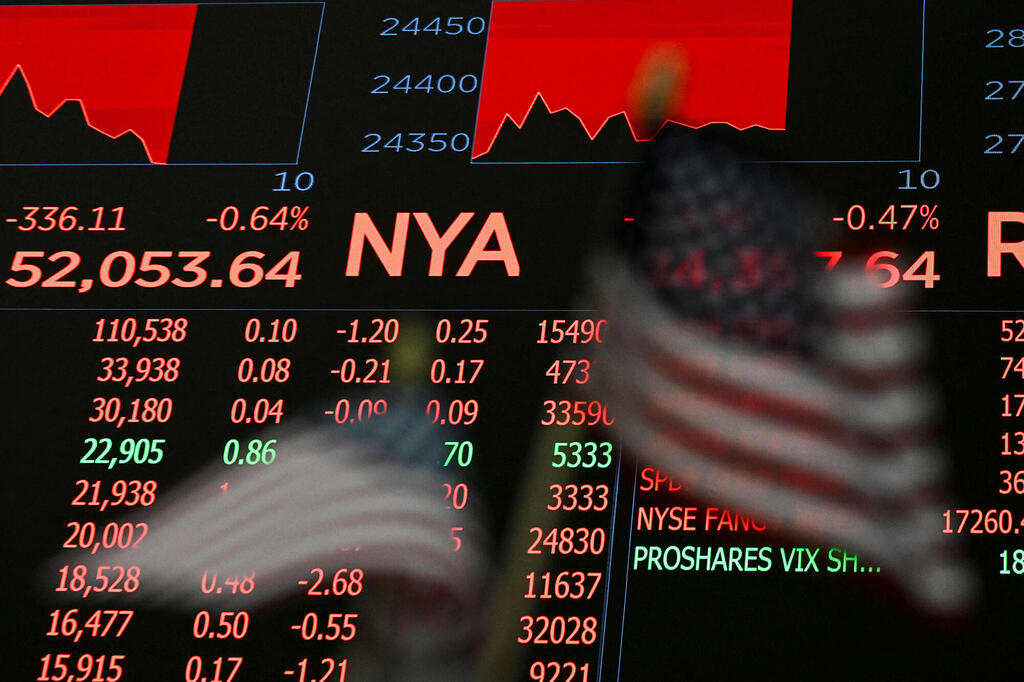
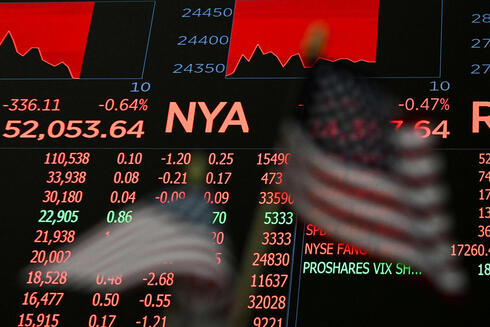
Fear has gripped the market, wiping trillions of dollars off the value of U.S. stocks in the 45 days since the leading indices reached record highs on October 6. Some estimates put the decline in total market value at around $6 trillion. The Nasdaq was the "star" of the week, posting a 10% decline, its worst weekly performance since March 2020, at the onset of the COVID-19 pandemic. The S&P 500 shed 8.6%, marking its worst weekly showing since the sell-off triggered by Trump's tariff announcements in April 2025.
Just as the record highs reached earlier this year appeared increasingly difficult to justify, particularly in light of elevated U.S. bond yields, the carnage of the past month and a half also lacks a single, clear explanation. Instead, it is a collection of fears that have built up one after another, compounding one another.
The initial concerns centered on the liabilities and high leverage levels of the companies driving the AI revolution, the very engine that propelled the stock market to double-digit annual gains over the last three years. This is a rather unusual sequence of events. Even now, following one of the most painful 45-day periods Wall Street has experienced in recent years, much of what has happened is the erasure of gains recorded by the Nasdaq and the S&P 500 since the beginning of 2026. The Nasdaq slipped into negative territory for the year after a 5.28% drop last Friday, while the S&P 500, down 3.7% on the day, still maintained a slight positive return for the year. This follows three extraordinary years of strong gains. The S&P 500 averaged annual returns of around 20% over that period, while the Nasdaq posted even stronger gains, particularly in 2023. Such performance has led investors to lose sight of the long-term historical average for the S&P 500, which is closer to 10% annually when dividends are included, or around 6% to 7% after inflation.
Compounding the fears surrounding excessive leverage were the results of the U.S. midterm elections, which saw the Democrats win control of both chambers of Congress, and concerns about a slowdown in the construction of data centers for AI. The Democrats are due to take control of Congress in January, raising the prospect of greater scrutiny of data center development and financing.
But before these concerns could fully play out on Wall Street, another major shock struck: the scandal involving Nvidia's former CEO, Jensen Huang. This is arguably one of the most unpredictable developments of all, making a conventional economic analysis of its potential consequences particularly difficult. As often happens when a scandal breaks, the initial revelations have opened the door to further disclosures, and the news is already weighing on the market.
Beyond reports of extramarital relationships and Huang's connection to Chinese businesswoman Alice Huang, whom U.S. authorities suspect of spying for China, it has emerged that the former CEO allegedly misled senior Nvidia executives about the nature of the relationship. Huang resigned from his position in November, and Nvidia's board has appointed an independent law firm to investigate the matter. The U.S. Securities and Exchange Commission is also investigating potential accounting issues at Nvidia, according to reports, although the agency has not disclosed the scope of its inquiry.
With so many questions hanging over the company that has become the flagship of the AI revolution, regaining momentum is becoming increasingly difficult.
Amid this widespread tension and unease, even the success of Anthropic's historic IPO has turned into a double-edged sword. Investors had, quite reasonably, anticipated the landmark event: a company only five years old raising $81.3 billion in its public offering at an initial valuation of $1.5 trillion. Anthropic also raised an additional $26 billion through a private placement, bringing the total amount to more than $107 billion.
And indeed, the IPO was a major success. Demand was strong, leaving some investors without an allocation. The shares opened at $111.50, 34% above the $83 offering price, and briefly climbed higher before closing their first day of trading at $97.17, up approximately 17%. But that was Thursday. By Friday, the stock had fallen by 8.5%, along with the broader market.
Some argued that the IPO marked the climax of the AI dream, prompting a classic case of "buy the rumor, sell the news." Rather than fueling the AI stock rally with the arrival of one of the New Economy's most prominent companies on the public market, the listing failed to revive investor enthusiasm. The sheer scale of the offering also highlighted the enormous amount of capital now concentrated in the AI industry. However, there is no clear evidence that the IPO itself caused the wider market sell-off.
It is easy to analyze these fears and explain them in hindsight, but the question on everyone's mind is naturally: what happens now?
Fear is currently approaching its peak. A day featuring a drop of more than 5% in the Nasdaq is no longer a one-off event. It happened this past Friday, but also exactly two weeks earlier. The U.S. stock market has suffered a series of steep daily losses over the past month, with the total decline in market value running into trillions of dollars.
High volatility may well persist, but the sharp swings themselves suggest that we have not yet reached the truly dangerous and painful stage: "despair."
Despair is the truly frightening state, a point where no one dares to buy anything and investors are instead consumed by depression and mourning over lost returns. During the two previous major Wall Street sell-offs, in April 2025 and March 2020, the market did not descend into a prolonged period of despair. In both cases, the recovery was relatively rapid, supported by a shift in sentiment and, particularly in 2020, extraordinary intervention by policymakers.
Are we now witnessing the bursting of the AI bubble, a scenario investors have been warned about for years? If so, market behavior might more closely resemble the aftermath of the dot-com bubble burst in 2000 or the 2008 financial crisis, periods in which despair not only set in but persisted for an extended period. Investors were unwilling to take responsibility for declaring that the market decline had ended, and confidence took considerable time to return.
No one is willing to declare that the current market decline has run its course, particularly while the indices remain relatively close to their record levels. Yet rather than succumbing to fear, investors should ask themselves a few key questions and act based on the answers.
Seeking refuge in "boring" stocks
Is this truly the bursting of an AI bubble? That is far from certain. A more plausible scenario is that this is merely a correction, one that in hindsight will appear as little more than a blip on a chart.
While the correction could be swift and sharp, the development and construction of AI infrastructure are far from complete. Furthermore, demand remains strong, and there is not yet clear evidence of the kind of widespread oversupply that preceded the bursting of the dot-com bubble in 2000, when much of the telecommunications infrastructure built during the boom ended up sitting idle.
It is possible that, despite the steep declines seen over the past month and a half, this is simply a pause, a breather following three consecutive years of exceptionally strong returns across the major indices. A correction of this nature will require investors to become more selective and less aggressive. Not every company that labels itself an "AI company" or an "AI chipmaker" actually fits the description. At the same time, the sharp declines have brought down valuations across parts of the sector, making some of the leading companies considerably cheaper than they were just a few months ago.
Meanwhile, the declines remain largely concentrated in the AI and technology sectors, rather than spreading evenly across the broader market. The U.S. economy continues to expand at a solid pace, according to the Federal Reserve's latest assessment, and investors have been finding refuge in the "boring" stocks of retailers and other defensive businesses such as Costco, Walmart and Johnson & Johnson.
Another concern that has loomed over Wall Street this past month, the prospect of a renewed conflict involving Iran, has also failed to materialize. The political landscape in Washington is changing as well. Democrats are set to take control of Congress in January, potentially making it more difficult for Trump to secure legislative support for some of his policies, including military action. However, the change in congressional control would not in itself prevent a president from ordering military strikes.
Wall Street currently lacks one key element that could help bring about a rapid change in direction, the kind seen during the COVID-19 pandemic or the tariff sell-off: external intervention. The Federal Reserve is unlikely to step in to support investors as it did during the pandemic. On the contrary, market expectations have shifted toward an interest rate increase in December, as the central bank continues its battle against persistent inflation. The Fed has not announced such a move, but minutes from its latest meeting showed that nearly all officials expected a rate increase in December.
Unlike the situation with tariffs, there is also no sign of a reversal in Trump's stance or a strategic retreat that might otherwise spark renewed optimism among investors. With rate cuts or extraordinary liquidity support unlikely in the near term, the impetus for a sustained market recovery will have to come from within, driven by the AI revolution itself.
Ultimately, the truly significant question for any investor is: Do you believe in the AI revolution? If the answer is yes, then the current downturn may offer an opportunity to gain exposure to the industry at prices significantly below those seen as recently as October. That does not mean every AI stock has been cut in half, or that every company is now cheap. The extent of the decline and the valuation of each business need to be considered separately.
The underlying business figures have not suddenly changed. The third-quarter financial reports and forward-looking forecasts from many of the leading companies in the sector were strong, certainly not the kind of results that would appear to justify the sharp double-digit declines in some of their share prices. Trillions of dollars continue to flow into AI infrastructure, and businesses across almost every sector are using the technology to achieve levels of efficiency that were difficult to imagine just three years ago.
This does not necessarily mean the sell-off has run its course. The negative trend and volatility are likely to persist, as fear has taken a firm grip on investors, particularly younger retail investors who have never experienced a truly prolonged market crisis.
However, if the rationale that led investors to buy chipmakers two months ago, based on their belief in the AI revolution, data centers and cloud computing, remains valid, then the current lower share prices may offer an opportunity. The decline in valuations is significant, but the price-to-earnings multiples of individual companies vary considerably, and investors should not assume that every stock has moved from a triple-digit multiple to a low double-digit one.
Paradoxically, Nvidia's current predicament could also pave the way for increased competition in the AI chip industry. Greater competition could drive down costs and make the AI revolution more affordable, potentially unlocking further growth and profitability for companies that, until recently, had to settle for the scraps left behind by Jensen Huang.