










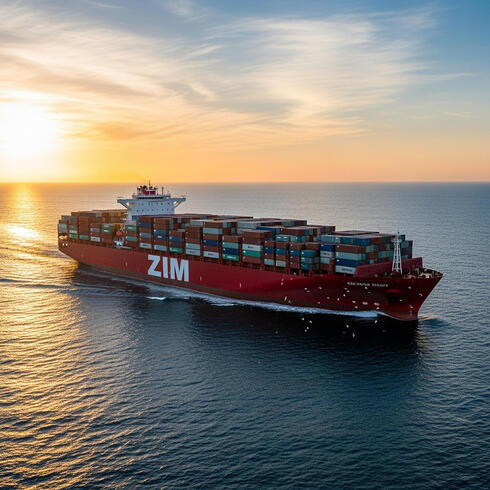
Maersk could re-enter race for Zim if Hapag-Lloyd’s $4.2 billion deal unravels
Danish shipping giant is said to be preparing a contingency plan as regulators review the Hapag-Lloyd-FIMI acquisition of the Israeli carrier.
German shipping giant Hapag-Lloyd and private equity fund FIMI are preparing to complete the $4.2 billion acquisition of Zim, signed last month, and to delist the company from trading.
But waiting in the wings is Danish rival Maersk, which is formulating a plan to acquire Zim if the current deal fails to secure regulatory approval.
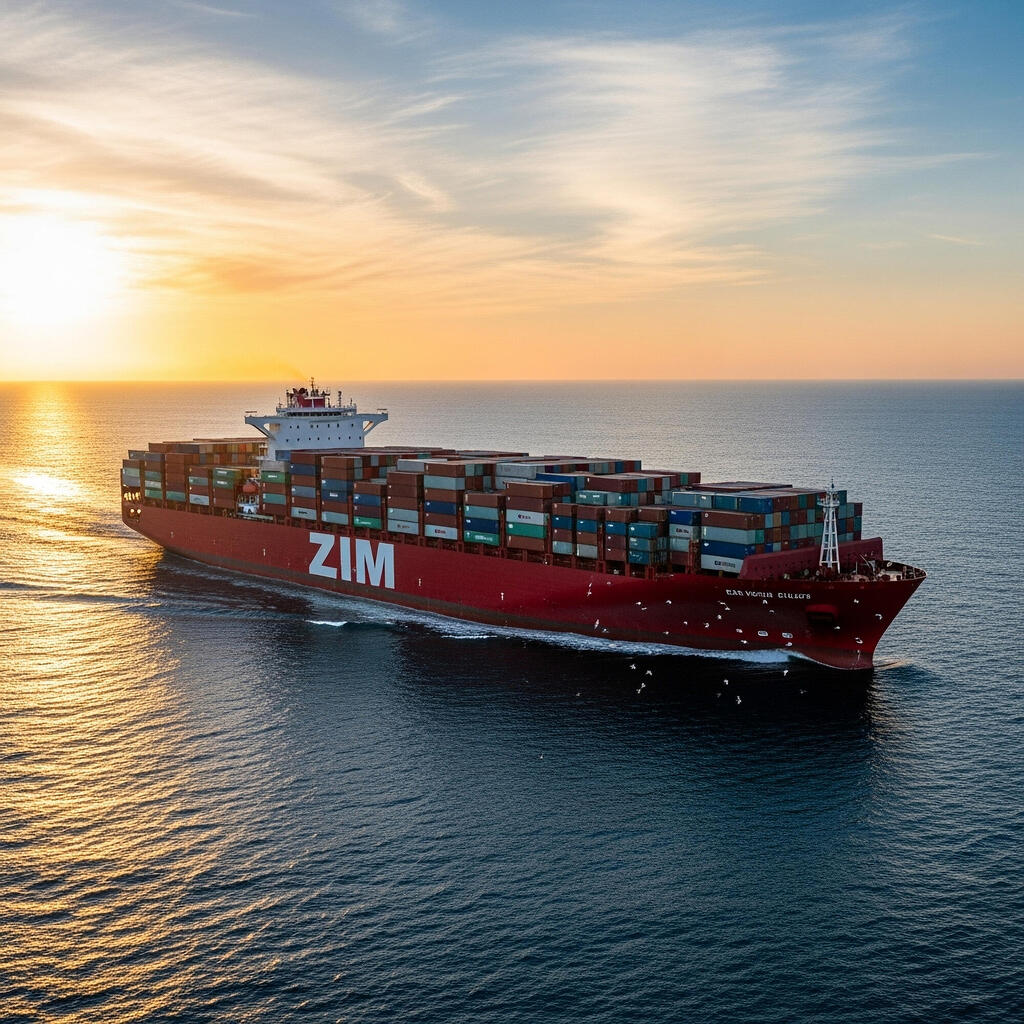
Maersk, the world’s second-largest container shipping company, lost the acquisition tender after offering $29 per share, compared with Hapag-Lloyd’s winning bid of $35 per share.
However, industry sources say Maersk remains prepared to acquire Zim if the current transaction collapses.
According to shipping industry sources, Maersk could potentially use its veto power within the Gemini framework to block Zim from becoming a full member of the agreement. It may, however, be unable to prevent Zim from using slots on Hapag-Lloyd vessels under certain arrangements.
Sources close to Maersk argue that the Danish group faces fewer regulatory complications tied to Israel’s golden share. Unlike Hapag-Lloyd, whose shareholder base includes Saudi and Qatari sovereign wealth funds holding roughly a quarter of its shares, Maersk does not have investors from countries Israel defines as hostile.
Maersk believes it could complete an acquisition of Zim without an Israeli partner while meeting regulatory requirements. Although the company has held discussions about potentially including XT, controlled by Udi Angel and Idan Ofer, as a local partner, it has also prepared for the possibility of acting independently.
Maersk declined to comment.
Hapag-Lloyd, for its part, stated at the outbreak of the war that it would continue calling at Israeli ports and remains committed to serving the Israeli market in a responsible and safe manner, in both routine and emergency situations.
Calcalist has learned that Avi Licht, who served as Israel’s Deputy Attorney General for Economic and Fiscal Affairs between 2009 and 2016, will lead discussions with regulators on behalf of Zim and Hapag-Lloyd to secure approval for the transaction. Licht, now a partner at the Meitar law firm, is advising Zim on the deal and coordinating with Hapag-Lloyd and FIMI to prepare the formal application.
The request has not yet been submitted to the Government Companies Authority, which has raised a series of issues that the parties must address. Those points have not yet been consolidated into a final submission document.
Licht is closely familiar with Zim. He represented the state during the company’s 2014 debt restructuring, the largest in Israeli corporate history, totaling approximately $3.4 billion. As part of that arrangement, $1.4 billion of debt was converted into equity, while Israel Corporation, controlled by Idan Ofer, injected about $200 million into the company.
At the time, according to a document prepared for the Knesset Finance Committee by economists Victor Fattal and Eyal Kofman, Zim operated 82 vessels, 28 of which were fully or partially owned, with the remainder leased. The company employed approximately 5,900 workers.
Today, the scale is markedly different. Under the proposed transaction structure, the “new Zim,” to be held by FIMI and focused on the company’s Israeli operations, would own 16 vessels. The workforce has shrunk to roughly 1,000 employees.
Financially, Zim recorded losses of $428 million in 2012 and $391 million in 2011. At that time, it carried $2.76 billion in debt, in addition to $724 million owed to ship lessors.
According to the framework agreed between Hapag-Lloyd and FIMI, the new Zim will assume obligations stemming from the state’s golden share in the company. The inclusion of FIMI, an Israeli fund, is intended to help address potential regulatory sensitivities linked to that golden share.
The restructured company would retain the right to operate two container lines in the Middle East and one line between Israel and the United States. It would also gain access to Hapag-Lloyd’s global network, enabling it to use slots on the German carrier’s vessels.
In addition, Zim could benefit from access to the Gemini cooperation agreement between Hapag-Lloyd and Maersk, which covers joint operations on 26 routes between Asia and the U.S. West Coast, as well as other Asian routes.



