










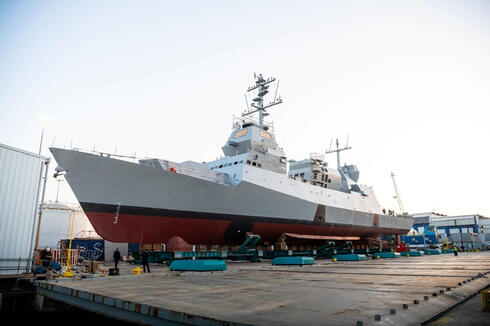
Israel is rebuilding a 35-year-old missile ship into an Iron Dome-equipped naval shield
INS Lahav is being stripped down and rebuilt with Rafael’s naval Iron Dome, advanced radar and Israeli technology as the Navy races to protect offshore infrastructure from missile and drone threats.
The Navy ship (INS) Lahav is one of three Saar 5-class missile ships built in the United States and delivered to the IDF Navy about 35 years ago. While its sister ships, INS Hanit and INS Eilat, have spent the past two years carrying out missions across the Mediterranean and Red Sea amid the regional war, Lahav was taken into the Navy shipyard in Haifa for an extensive overhaul.
The ship was dismantled, stripped of its systems, and is now being rebuilt almost from the ground up. The unusual project, expected to be completed within about five months at a cost of approximately NIS 250 million ($82M), is designed to extend the ship’s operational life and equip it with capabilities that bring it close to the level of Israel’s newer Saar 6-class ships.
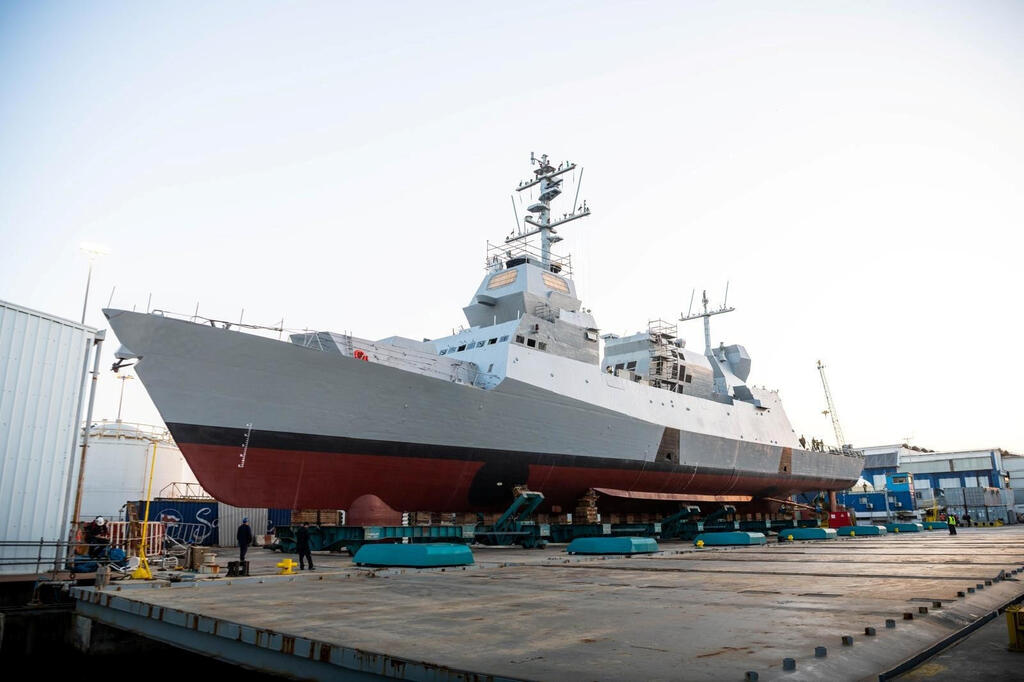
Among the new systems being installed are a naval version of Rafael’s Iron Dome air defense system and an advanced radar developed by Elta, designed to help defend Israel’s offshore natural gas platforms and other critical infrastructure in its economic waters against missile and drone threats from Iran, Yemen and Lebanon.
“These are not standard operations,” said Lt. Col. Roy, who heads the dedicated Navy administration overseeing the upgrade of the aging vessel, which under different circumstances may already have been retired.
“Normally, when we want to improve capabilities, we go through established processes of planning and purchasing new ships that arrive with built-in systems adapted to operational needs,” he said. “But these processes take eight to 10 years, and the cost of a single ship can exceed NIS 800 million ($262M). In this case, we needed a much faster solution.”
The Navy’s urgency was driven by the war that began on October 7. When the conflict erupted, the Navy was already in the final stages of preparing four advanced Saar 6-class ships built for Israel at ThyssenKrupp shipyards in Germany. Those vessels were intended to strengthen protection of the Tamar, Leviathan and Karish natural gas platforms and secure maritime traffic in Israel’s territorial and economic waters.
But the scale of the threats quickly changed the Navy’s requirements. The growing threat to energy infrastructure, repeated Houthi missile and drone launches from Yemen, and expanded Israeli naval operations in the Red Sea demonstrated that the new fleet alone would not be sufficient.
“About a month after the war began, we started looking for ways to increase the air defense capabilities of Navy ships through relatively short and inexpensive processes,” Lt. Col. Roy said. “We decided to upgrade Lahav to a level very close to the Saar 6 ships. In our terms, this was a ‘zero-time’ solution.”
“When Lahav was built in the United States, it was designed for 30 years of operational service,” said Col. Barak, head of the Combat Systems Department at the Navy’s Equipment Shipyard. “Instead of removing it from the fleet, we are extending its life by at least another 15 years.”
The upgrade does have limitations. Saar 5 ships are smaller than the newer Saar 6 vessels, and their physical dimensions prevented the installation of Rafael’s Barak MX air defense system, which is carried by the newer ships.
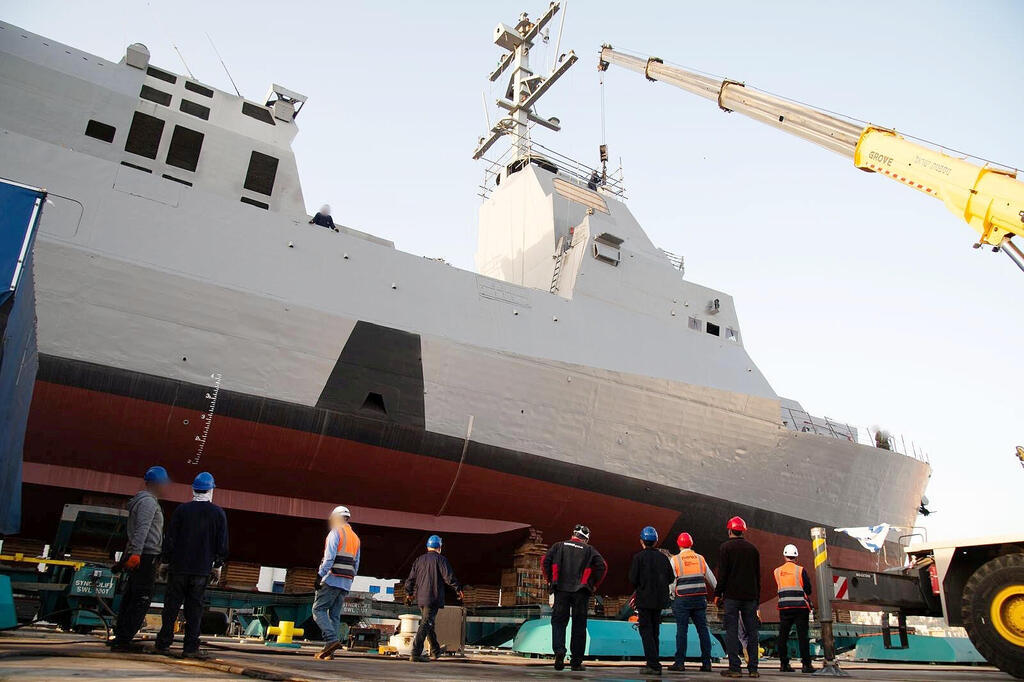
Instead, Lahav will receive a naval Iron Dome system, an adapted radar, upgraded computing, navigation, sonar and communications systems, most of which were developed by Israeli defense companies and remain classified.
“We have completed the dismantling and infrastructure construction stages,” said Lt. Col. Roy. “We replaced tens of thousands of kilometers of cables and wires with new ones, and we are now installing the systems that the ship will carry so that within a few months it will be able to perform missions similar to the new ships.”
The Navy is also preparing the future crews of the upgraded vessel. “The training process for the teams operating the improved ship will be identical to that of the Saar 6 crews,” he said.
At the same time, the modernization comes with practical challenges. The original Saar 5 design dates back more than three decades, and the addition of modern systems has created significant space constraints.
“This is a ship that was designed more than 30 years ago,” Lt. Col. Roy said. “With all the new additions, there is a problem of space and overcrowding, both in living areas and passageways. Our engineers did an excellent job calculating everything down to the centimeter. We did what we could.”
While Lahav is still undergoing upgrades, the Navy is already preparing similar plans for INS Hanit and INS Eilat, which were built alongside Lahav at the Ingalls shipyard in the United States, now owned by Northrop Grumman.
The plans have been presented to IDF Chief of Staff Lt. Gen. Eyal Zamir and Navy Commander Maj. Gen. Eyal Harel. A successful completion of the Lahav project could strengthen the case for upgrading the remaining Saar 5 ships.
Hanit has a particularly notable history. During the Second Lebanon War in 2006, the vessel was struck by a Hezbollah-launched C-802 anti-ship missile while operating off the coast of Beirut. Four sailors were killed, and the ship underwent extensive repairs before returning to operational service.
According to Col. Barak, experience gained from integrating the Saar 6 systems helped give the Navy confidence in upgrading the older vessels.
“We received the Saar 6 ships from Germany as ‘empty platforms’ and installed their unique systems ourselves here in the Navy,” he said. “That process gave us a great deal of experience and knowledge. We transferred the lessons learned from Saar 6 to Saar 5, and it worked far beyond what we expected. We made pretty good lemonade out of this lemon.”
Beyond upgrading older ships, Israel is also expanding its fleet with new vessels. Israel Shipyards is currently building five Reshef-class combat ships for the Navy, which will replace the aging Nirit vessels from the Saar 4.5 class that have been in service for more than 30 years.
The Reshef ships were ordered in late 2024 in a deal worth approximately NIS 2.8 billion and are scheduled to be delivered over the next four years. The Navy and the Ministry of Defense are also considering additional Reshef-class purchases as part of a broader effort to expand naval capabilities following lessons learned from the war.



