










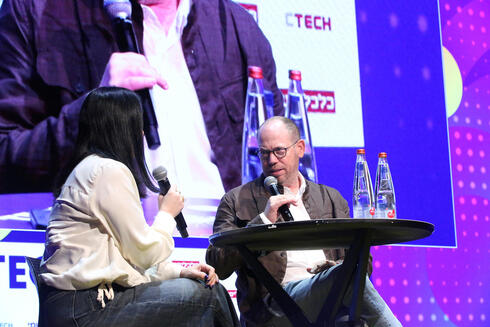
Gili Raanan: “Wiz’s sale to Google shattered the glass ceiling, and it’s not a one-off”
The Cyberstarts founder and early Wiz investor explains how recent Israeli cybersecurity exits are reshaping entrepreneurship, bringing billions into the economy, and signaling a new era where AI-driven companies set the pace.
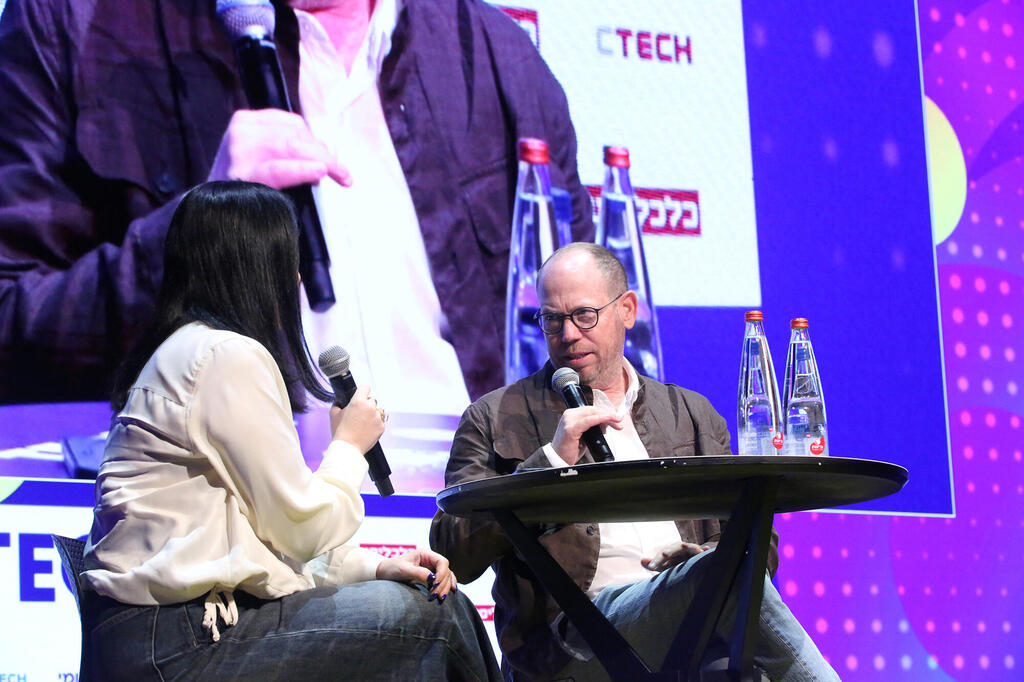
“The sale of Wiz to Google is an amazing story. Its main importance, beyond the financial implications, is that it completely shatters the glass ceiling of what is possible,” said Gili Raanan, founder of Cyberstarts and one of Wiz’s early investors, at Calcalist's Tech TLV conference in collaboration with Leumi.
Raanan spoke in a conversation with Calcalist reporter Sophie Shulman. “If someone had told me five years ago that Wiz would be worth $32 billion, it would have amused me,” he added. “Today everyone says it was obvious, but you have to remember that when they started, they had sold a company for $300 million to Microsoft. They were no different from any other entrepreneur here. They worked brilliantly, got in at the right time, and built an amazing product.”
Are they a one-off, or will there be another Wiz?
“Not a one-off at all. CyberArk is a good example in terms of numbers, but it’s an older company that took many years to reach this point. With companies like Cyera or Island, all of which happen to be in the Cyberstarts portfolio, we now have the recipe for how to get into this game and how to win it. You see that this process, which sometimes starts with a team without an idea, or even with a bad idea, can be turned into a real business with hundreds and thousands of employees and customers within just a few years.”
Isn’t the “textbook” encouraging quick exits?
“Obviously, exits are not encouraged. The model of a fund is to take risks. Almost by definition, we prefer to take a little more risk and move forward. Entrepreneurs only have one company, and their risk model is different. If the Wiz team had insisted on continuing independently, the company might have gone public. But there were strong reasons to take Google’s offer. They will no longer reach the status of a $100 billion independent company. In my opinion, an IPO has always been more of a branding event, a way for a company to tell customers and employees that we are here to stay. As a financial event, it has little meaning; in fact, it’s almost the opposite, because of the restrictions it imposes. It’s a marketing event, an important one, and there will always be entrepreneurs who choose to go down this path, and others who do not.”
The coming months will see exits at Wiz, CyberArk, and Armis. How will this influx of capital impact Israel?
“This cyber event is changing the country. Wiz’s sale is bringing billions of shekels into the state coffers, though I don’t even know exactly how much. These are enormous sums, and this is not a one-time event. It will continue, on one scale or another, generating huge amounts of capital. It will transform the cash flow of the State of Israel and create a new generation of entrepreneurs who think much bigger. Today, young founders no longer dream of selling a company for $300 million to Microsoft, that is no longer the big dream. Israel will continue to evolve. Yes, this creates challenges, including gaps between two economies and two societies, but it also presents immense opportunities for young people who want to build, create, and dream big. The foreign capital entering Israel, seeking talent capable of building great companies, will continue to finance these future dreams.”
How is AI changing the field?
“There is a revolution underway in which value is moving from the product to the model. Products are no longer measured by their user interface or by the collection of features they offer, these have become commodities in a world where software can easily be produced in the cloud. The real value lies in data, domain expertise, and the ability to analyze it. Customers have changed too: they don’t want to buy products or raw data, they want decisions. We need to provide that. If I were founding a cybersecurity company today, I would make it AI-native from day one, focusing on areas with lasting, deep value.”



