










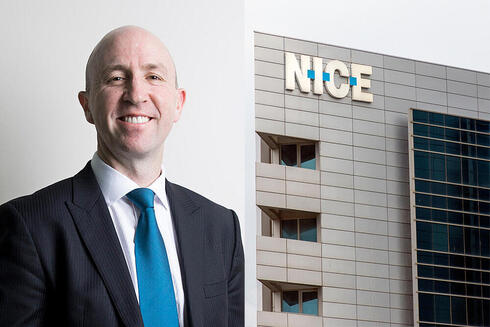
Nice shares jumps as strong results help ease AI disruption fears
Cloud growth and upbeat 2026 outlook reassure investors wary of SaaS crisis.
Israeli software company Nice reported strong 2025 results, pushing its shares up 10% in early trading on Thursday, as investors found reassurance in the company’s performance amid broader concerns that artificial intelligence could disrupt traditional SaaS business models.
The results came in at the top end of expectations. Revenue grew 8% to $2.9 billion, while cloud revenue increased at a faster pace of 13%. Annual net income surged 38.4% to $612 million, compared with 16% growth in 2024. Earnings reached $9.67 per share.
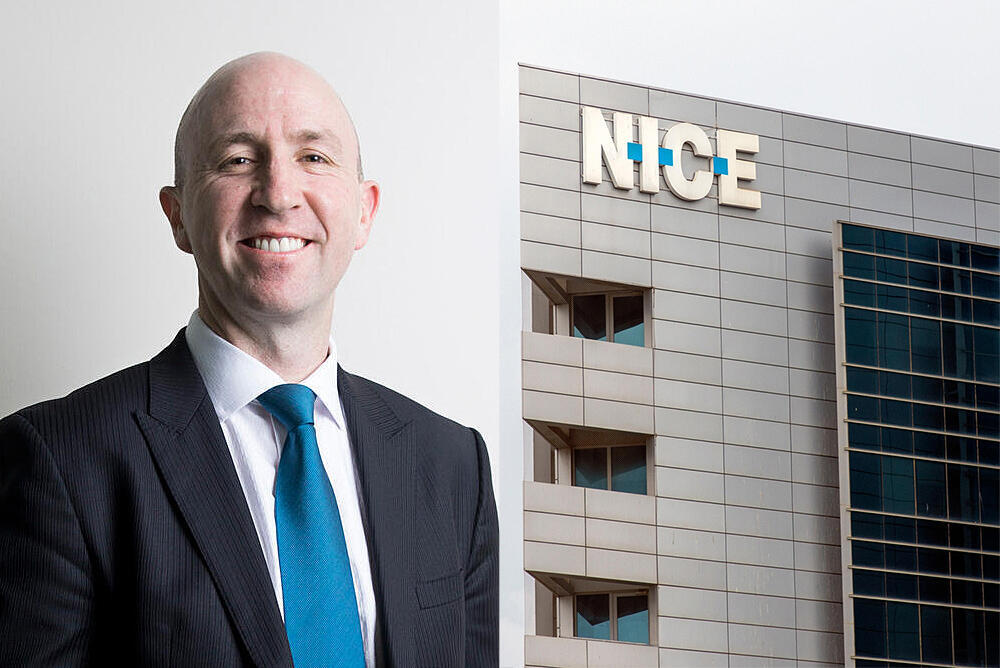
Nice’s 2026 outlook reflects a similar growth trajectory, with revenue expected to reach approximately $3.2 billion. Cloud revenue is projected to grow around 15%, and the company forecasts earnings per share of $10.90 to $11.00. In addition, Nice announced a $600 million share buyback program, further signaling confidence in its financial strength.
The strong share price reaction stands in contrast to the broader weakness seen in many SaaS stocks this year, as investors worry that AI-native tools could undermine established software providers.
Despite today’s rally, Nice shares remain down 8% since the start of the year, reflecting lingering caution across the software sector.
In a conversation with Calcalist, Scott Russell, CEO of Nice, said he was not surprised by the strong results and the company’s outperformance of forecasts.
“The fourth quarter of 2025 reflects what we have been seeing in our business for quite some time,” Russell said. “There is a significant gap between investors’ perception of what is happening in the software and SaaS market and what is actually happening within organizations. The reality is that our market is growing, and AI is a tailwind for that growth.”
Russell has led Nice for the past year, after replacing veteran CEO Barak Eilam. The company develops customer relationship management (CRM) systems for large enterprises, a segment some investors fear could be disrupted by cheaper, simpler AI-based coding and automation solutions.
“Every major deal over $1 million has included AI components, whether developed internally or acquired through Cognigy,” Russell added. “But organizations still require the full range of complex capabilities that enterprise-grade CRM systems provide.”
Last summer, Nice completed the largest acquisition in its history, purchasing German startup Cognigy for $955 million. The deal is expected to enhance Nice’s ability to provide AI-powered, human-like customer service in more than 100 languages. These AI agents can handle routine customer interactions, allowing human representatives to focus on more complex and higher-value tasks. Cognigy’s solutions are already deployed at companies including Mercedes-Benz, Nestlé, and the Lufthansa Group.
Nice financed the Cognigy acquisition in cash, using a significant portion of its reserves. The company has now signed a $300 million credit line agreement to strengthen its balance sheet, although Russell said there are no immediate plans to use the facility.
“We currently have all the assets we need to win, along with strong cash flow,” Russell said. “But this agreement gives us financial flexibility in a market that is evolving very quickly.”
Nice ended 2025 with operating cash flow of $716 million. As of year-end, the company held $417 million in cash and had no debt.



